














Gjør som tusenvis av andre bokelskere
Abonner på vårt nyhetsbrev og få rabatter og inspirasjon til din neste leseopplevelse.
Ved å abonnere godtar du vår personvernerklæring.Du kan når som helst melde deg av våre nyhetsbrev.

When we or our loved ones fall ill, our world is thrown into disarray, our routines are interrupted, our beliefs shaken. David Morris offers an unconventional, deeply human exploration of what it means to live with, and live through, disease. He shows how desire-emotions, dreams, stories, romance, even eroticism-plays a crucial part in illness.
Pigeonholed as a Jazz Age epicurean and an emblem of the Lost Generation, Fitzgerald was at heart a moralist struck by the nation's shifting mood and manners after WWI. Placing him among Progressives such as Charles Beard, Randolph Bourne, and Thorstein Veblen, David Brown reveals Fitzgerald as a writer with an encompassing historical imagination.
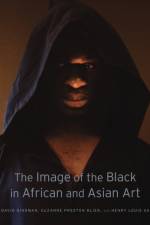
The Image of the Black in African and Asian Art asks how the black figure was depicted by artists from the non-Western world-Africa, East Asia, and the Indian subcontinent. The aesthetic traditions represented are as diverse as the political and social histories of these regions.
Andrzej Franaszek's award-winning biography of Czeslaw Milosz-winner of the Nobel Prize in Literature-recounts the poet's odyssey through WWI, the Bolshevik revolution, the Nazi invasion of Poland, and the USSR's postwar dominance of Eastern Europe. This edition contains a new introduction by the translators, along with maps and a chronology.
Charles Withers explains how the choice of Greenwich to mark 0 Degrees longitude solved problems of global measurement that had engaged geographers, astronomers, and mariners since ancient times. This history is a testament to the power of maps, the challenges of global measurement, and the role of scientific authority in creating the modern world.
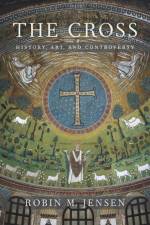
The cross stirs intense feelings among Christians and non-Christians alike. Robin Jensen takes readers on an intellectual and spiritual journey through the 2,000-year evolution of the cross as idea and artifact, illuminating the controversies and forms of devotion this central symbol of Christianity inspires.
The seventh-century CE Hebrew work Sefer Zerubbabel (Book of Zerubbabel)-a tale of two messiahs-is the first full-fledged messianic narrative in Jewish literature. Martha Himmelfarb offers a comprehensive analysis of this rich understudied text, illuminating its distinctive literary features and the complex milieu from which it arose.
Hearing across media is the source of innovation in a uniquely African American sphere of art-making and performance, Brent Hayes Edwards writes. He explores this fertile interface through case studies in jazz literature-both writings informed by music and the surprisingly large body of writing by jazz musicians themselves.
Why are all persons due equal respect? Andrea Sangiovanni rejects the view that human dignity is grounded in our capacities for reason, love, etc. Rather than focus on the basis for equality, we should focus on inequality: Why and when is it wrong to treat others as inferior? Moral equality, he writes, is best explained by a rejection of cruelty.
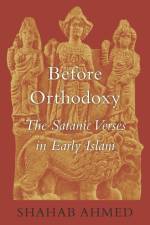
A controversial episode in the life of the Prophet Muhammad concerns an incident in which he allegedly mistook words suggested by Satan as divine revelation. Muslims now universally deny that the Satanic verses incident took place. But Muslims did not always hold this view. Shahab Ahmed uses this case to explore how religions establish truth.
Momentous changes swept Spain in the fifteenth century: royal marriage united its two largest kingdoms, the last Muslim emirate fell to Catholic armies, and conquests in the Americas were turning Spain into a great empire. Yet few people could define "Spanishness" concretely. Antonio Feros traces Spain's evolving ideas of nationhood and ethnicity.
Apuleius (born ca. 125 AD), one of the great stylists of Latin literature, was a prominent figure in Roman Africa best known for his picaresque novel Metamorphoses or The Golden Ass. This edition, new to the Loeb Classical Library, contains Apuleius' other surviving works that are considered genuine.
Aelius Aristides (117-after 180), among the most versatile authors of the Second Sophistic and an important figure in the transmission of Hellenism, produced speeches and lectures, declamations on historical themes, polemical works, prose hymns, and essays on a wide variety of subjects.
As a study of Confucian government in action, this intellectual history describes a mode of public policy discussion far less dominated by the Confucian scriptures than expected. It offers a detailed view of members of an ostensibly Confucian government pursuing divergent agendas around the question of "state or merchant?"
This biography of the most visible U.S. pediatrician of the twentieth century describes his illustrious medical family and his remarkable tenure of nearly three decades as professor of pediatrics at Harvard Medical School and as head of the department of medicine at Children's Hospital, Boston.
China's efforts to modernize yielded a kleptocracy characterized by corruption, wealth inequality, and social tensions. Rejecting conventional platitudes about the resilience of Party rule, Minxin Pei gathers unambiguous evidence that beneath China's facade of ever-expanding prosperity and power lies a Leninist state in an advanced stage of decay.
Challenging the modern belief that democracy and bondage are incompatible, Paulin Ismard directs our attention to ancient Athens, where the functioning of civic government depended on skilled, knowledgeable experts who were literally public servants-slaves owned by the city-state rather than by private citizens.
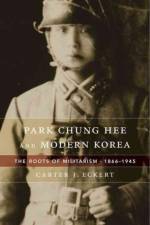
For South Koreans, the early 1960s to late 1970s were the best and worst of times-a period of unprecedented economic growth and deepening political oppression. Carter J. Eckert finds the roots of this dramatic socioeconomic transformation in the country's long history of militarization, personified in South Korea's paramount leader, Park Chung Hee.
The U.S. Army has always regarded preparing for war as its peacetime role, but how it fulfilled that duty has changed dramatically between the War of 1812 and World War I. J. P. Clark shows how differing personal experiences of war and peace among successive generations of professional soldiers left their mark upon the Army and its ways.
Laura Weinrib shows how a coalition of lawyers and activists made judicial enforcement of the Bill of Rights a defining feature of American democracy. Protection of civil liberties was a calculated bargain between liberals and conservatives to save the courts from New Deal attack and secure free speech for both labor radicals and businesses.
Civil rights historian Fairclough chronicles the odyssey of black teachers in the South from emancipation in 1865 to integration 100 years later. This book is indispensable for understanding how blacks and whites interacted after the abolition of slavery, and how black communities coped with the challenges of freedom and oppression.
Civil War provides a vigorous, direct, clear, third-personal, impassioned account of Caesar's campaigns during the civil war of 49 -48 BC, drawn from his three books of commentarii.
Volume IV of the nine-volume Loeb edition of Early Greek Philosophy presents Pythagoras and the Pythagorean School, including Hippasus, Philolaus, Eurytus, Archytas, Hicetas, and Ecphantus, along with chapters on doctrines not attributed by name and reception.
The British Empire governed more than half the world's Muslims. John Slight traces the empire's complex interactions with the Hajj-the annual pilgrimage to Mecca-from the 1860s, when an outbreak of cholera led Britain to engage reluctantly in medical regulation of pilgrims, to the Suez Crisis of 1956. He gives voice to pilgrims and officials alike.
Maoism at the Grassroots challenges state-centered views of China under Mao, providing insights into the lives of citizens across social strata, ethnicities, and regions. It reveals how ordinary people risked persecution and imprisonment in order to assert personal beliefs and identities, despite political repression and surveillance.
As railways, steamships, and telegraph communications brought distant places into unprecedented proximity, previously minor discrepancies in local time-telling became a global problem. Vanessa Ogle's chronicle of the struggle to standardize clock times and calendars from 1870 to 1950 highlights the many hurdles that proponents of uniformity faced.
Brahmanical Theories of the Gift constitutes the first critical edition and translation into any modern language of a dananibandha, a classical Hindu legal digest devoted to the culturally and religiously important topic of gifting. David Brick has included an extensive historical introduction to the text and its subject matter.
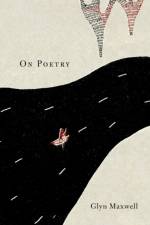
On Poetry will be prized by writers and readers who wish to understand why and how poetic technique matters. Long regarded as one of Britain's major poets, Glyn Maxwell shows that the greatest verse arises from a harmony of mind and body, and that poetic forms originate in human necessities: breath, heartbeat, footstep, posture.
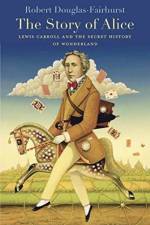
Robert Douglas-Fairhurst illuminates two entangled lives: the Oxford mathematician Charles Dodgson (Lewis Carroll) and Alice Liddell, the child for whom he invented the Alice stories. This relationship influenced Carroll's imaginative creation of Wonderland-a sheltered world apart during the stormy transition from the Victorian to the modern era
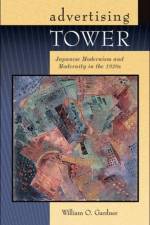
This book examines responses of Japanese authors to the aesthetic transformation of Tokyo influenced by the activities of Japanese advertisers in the early 20th century. Gardner shows how modernist works offer new constructions of subjectivity amid the social and technological changes that provided the ground for the appearance of "mass media."
Abonner på vårt nyhetsbrev og få rabatter og inspirasjon til din neste leseopplevelse.
Ved å abonnere godtar du vår personvernerklæring.