













Gjør som tusenvis av andre bokelskere
Abonner på vårt nyhetsbrev og få rabatter og inspirasjon til din neste leseopplevelse.
Ved å abonnere godtar du vår personvernerklæring.Du kan når som helst melde deg av våre nyhetsbrev.

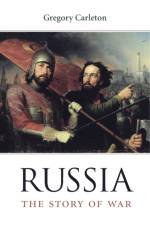
Outsiders view Russia as an aggressor, but Russians see themselves as surrounded by enemies, defensively fighting off invader after invader, or called upon by history to be the savior of Europe, or Christianity, or civilization itself, often at immense cost. As Gregory Carleton shows, war is the unifying thread of Russia's national epic.
Recent Supreme Court decisions in Citizens United and other high-profile cases have sparked disagreement about the role of corporations in American democracy. Bringing together scholars of history, law, and political science, Corporations and American Democracy provides essential grounding for today's policy debates.
Money is an evil that does good, and a good that does evil. It is wise to have money, says Pascal Bruckner, and wise to think and talk about it critically. One of the world's great essayists guides us through the commentary that money has generated since ancient times, as he builds an unfashionable defense of the worldly wisdom of the bourgeoisie.
"Congress shall make no law respecting an establishment of religion or prohibiting the free exercise thereof." The First Amendment aims to separate church and state, but Kent Greenawalt examines many situations in which its two clauses-the Nonestablishment Clause and the Free Exercise Clause-point in opposite directions. How should courts decide?
Carlos A. Ball argues that as progressives fight the First Amendment claims of religious conservatives and other LGBT opponents, they should take care not to forget the crucial role the First Amendment played in the early decades of the movement, and not to erode the safeguards of liberty that allowed LGBT rights to exist in the first place.
How does Manhattan's 47th Street diamond district thrive as an ethnic marketplace without lawyers, courts, and state coercion? Barak Richman draws on insider interviews to show why relational exchange based on familiarity, trust, and community enforcement succeeds and what it reveals about the modern state's limitations in governing the economy.
Sydney Nathans offers a counterpoint to the narrative of the Great Migration, a central theme of black liberation in the twentieth century. He tells the story of enslaved families who became the emancipated owners of land they had worked in bondage.
In 1763 British America stretched from Hudson Bay to the Keys, from the Atlantic to the Mississippi. Using maps that Britain created to control its new lands, Max Edelson pictures the contested geography of the British Atlantic world and offers new explanations of the causes and consequences of Britain's imperial ambitions before the Revolution.
While viruses-the world's most abundant biological entities-are not technically alive, they invade, replicate, and evolve within living cells. Michael Cordingley goes beyond our familiarity with infections to show how viruses spur evolutionary change in their hosts and shape global ecosystems, from ocean photosynthesis to drug-resistant bacteria.
Too many universities remain wedded to outmoded ways of teaching. Too few departments ask whether what happens in their lecture halls is effective at helping students to learn and how they can encourage their faculty to teach better. But real change is possible, and Carl Wieman shows us how it can be done-through detailed, tested strategies.
In 1956 Khrushchev stunned Communists by reciting a litany of Stalin's abuses. His bid to rejuvenate the Party opened the door to upheaval, as Soviet citizens asked where the system had gone astray. Kathleen Smith contends that the year's brief thaw set in motion a cycle of reform and retrenchment that would recur until the Soviet Union's collapse.
Trade in human lives thrived in North China during the Qing and Republican periods. Families at all social levels participated in buying servants, slaves, concubines, or children and disposing of unwanted household members. Johanna Ransmeier shows that these commonplace transactions built and restructured families as often as it broke them apart.
During the Battle of the Bulge, Waffen SS soldiers shot 84 American prisoners near Malmedy, Belgium-the deadliest mass execution of U.S. soldiers during World War II. Drawing on newly declassified documents, Steven Remy revisits the massacre and the most infamously controversial war crimes trial in American history, to set the record straight.
Roisin Cossar examines how clerics managed efforts to reform their domestic lives in the decades after the Black Death. Despite reformers' desire for clerics to remain celibate, clerical households resembled those of the laity, and priests' lives included apprenticeships in youth, fatherhood in middle age, and reliance on their families in old age.
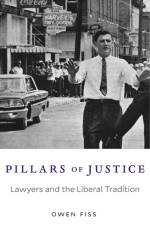
The constitutional theorist Owen Fiss explores the purpose and possibilities of life in the law through a moving account of thirteen lawyers who shaped the legal world during the past half century. He tries to identify the unique qualities of mind and character that made these individuals so important to the institutions and principles they served.
As the United States aggressively expands its exports of liquefied natural gas, it stands poised to become an energy superpower. This unanticipated reality is rewriting the conventional rules of intercontinental gas trade and realigning strategic relations among the United States, the European Union, Russia, China and beyond, as Agnia Grigas shows.
The collision of the Indian and Eurasian plates 50 million years ago created the Himalaya, along with massive glaciers, intensified monsoon, turbulent rivers, and an efflorescence of ecosystems. Today, the Himalaya is at risk of catastrophic loss of life. Maharaj Pandit outlines the mountain's past in order to map a way toward a sustainable future.
"Greek debt" means one thing to the country's creditors. But for millions who prize culture over capital, it means the symbolic debt we owe Greece for democracy, philosophy, mathematics, and fine art. Johanna Hanink shows that our idealized image of ancient Greece dangerously shapes our view of the country's economic hardship and refugee crisis.
Jean-Yves Camus and Nicolas Lebourg's critical look at the far right throughout Europe reveals a prehistory and politics more complex than the stereotypes suggest and warns of the challenges it poses to the EU's liberal-democratic order. These movements are determined to gain power through legitimate electoral means, and they are succeeding.
Arabic script is one of the world's most widely used writing systems, for Arabic and non-Arabic languages alike. J. R. Osborn traces its evolution from the earliest inscriptions to digital fonts, from calligraphy to print and beyond. Students of communication, contemporary practitioners, and historians will find this narrative enlightening.
Some historians have traced a line from Germany's atrocities in its colonial wars to those committed by the Nazis during WWII. Susanne Kuss dismantles these claims, rejecting the notion that a distinctive military ethos or policy of genocide guided Germany's conduct of operations in Africa and China, despite acts of unquestionable brutality.
Since the global turn to neoliberalism in the 1970s, movements in literary studies have been diagnostic rather than interventionist: scholars have developed techniques for analyzing culture but have retreated from attempts to transform it. For Joseph North, a genuinely interventionist criticism is a central task facing scholars on the Left today.
Hilary Putnam argues that all facts are dependent on cognitive values. Ruth Anna Putnam turns the problem around, illuminating the factual basis of moral principles. Together, they offer a pragmatic vision that in Hilary's words serves "as a manifesto for what the two of us would like philosophy to look like in the twenty-first century and beyond."
New medical technologies, women's willingness to talk online and off, and tighter judicial reins on state legislatures are shaking up the practice of abortion. As talk becomes more transparent, Carol Sanger writes, women's decisions about whether to become mothers will be treated more like those of other adults making significant personal choices.
From the author of Stylish Academic Writing comes an essential new guide for writers aspiring to become more productive and take greater pleasure in their craft. Helen Sword interviewed 100 academics worldwide about their writing background and practices and shows how they find or create the conditions to get their writing done.
Through stories of a dozen white adopters, adopted Indian children, and their Native parents in early America, Dawn Peterson shows the role adoption and assimilation played in efforts to subdue Native peoples. As adults, adoptees used their education to thwart U.S. claims to their homelands, setting the stage for the Indian Removal Act of 1830.
Some of the most divisive contests shaping the quest for marriage equality occurred not on the culture-war front lines but within the ranks of LGBTQ advocates. Nathaniel Frank tells the dramatic story of how an idea that once seemed unfathomable-and for many gays and lesbians undesirable-became a legal and moral right in just half a century.
By unlocking the evolutionary information contained in cells, biologists have been able to construct the Tree of Life and show that its three main stems are dominated by microbes. Plants and animals constitute a small upper branch in one stem. Soon we may know how life began over 3.5 billion years ago. John Ingraham tells this story of discovery.
Throughout his career, Donald Pfaff has demonstrated that by choosing problems and methods with care, biologists can study the molecular mechanisms of brains more complex than those of fruit flies, snails, and roundworms. He offers a close-up, conversational perspective on a 50-year quest to understand how behavior is regulated in vertebrates.
Histories of Rome emphasize the ways the empire assimilated conquered societies, bringing civilization to "barbarians." Yet these interpretations leave us with an incomplete understanding of the diverse cultures that flourished in the provinces. Andrew C. Johnston recaptures the identities, memories, and discourses of these variegated societies.
Abonner på vårt nyhetsbrev og få rabatter og inspirasjon til din neste leseopplevelse.
Ved å abonnere godtar du vår personvernerklæring.