






Gjør som tusenvis av andre bokelskere
Abonner på vårt nyhetsbrev og få rabatter og inspirasjon til din neste leseopplevelse.
Ved å abonnere godtar du vår personvernerklæring.Du kan når som helst melde deg av våre nyhetsbrev.

This stunning photographic essay opens a new frontier for readers to explore through words and images. Microbial studies have clarified life's origins on Earth, explained the functioning of ecosystems, and improved both crop yields and human health. Scott Chimileski and Roberto Kolter are expert guides to an invisible world waiting in plain sight.
All humans share three origins: the beginning of our individual lives, the appearance of life on Earth, and the formation of our planetary home. Wallace Arthur combines embryological, evolutionary, and cosmological perspectives to tell the story of life on Earth and its potential to exist elsewhere in the universe.
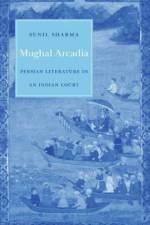
Mughal rulers were legendary connoisseurs of the arts, whose patronage attracted poets, artists, and scholars from all parts of the world. Sunil Sharma explores the rise and decline of Persian court poetry in India and the invention of an enduring idea of a literary paradise, perfectly exemplified by the valley of Kashmir.
No sitting federal judge has ever written so trenchant a critique of the federal judiciary as Richard A. Posner does in this, his most confrontational book. He exposes the failures of the institution designed by the founders to check congressional and presidential power and resist its abuse, and offers practical prescriptions for reform.
Based on quantitative comparisons of colleges since the 1970s, Charles Clotfelter reveals that despite the civil rights revolution, billions spent on financial aid, and the commitment of colleges to greater equality, stratification in higher education has grown starker. He explains why undergraduate education-unequal in 1970-is even more so today.
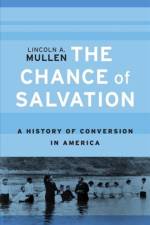
The United States has a long history of religious pluralism, and yet Americans have often thought that people's faith determines their eternal destinies. The result is that Americans switch religions more often than any other nation. Lincoln Mullen traces the history of the distinctively American idea that religion is a matter of individual choice.
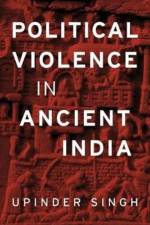
Gandhi and Nehru helped create a myth of nonviolence in ancient India that obscures a troubled, complex heritage: a long struggle to reconcile the ethics of nonviolence with the need to use violence to rule. Upinder Singh documents the tension between violence and nonviolence in ancient Indian political thought and practice, 600 BCE to 600 CE.
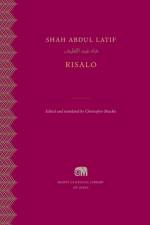
Shah Abdul Latif's Risalo is acknowledged as the greatest classic of Sindhi literature. In this collection of Sufi verses, composed for musical performance, the poet creates a vast imaginative world of interlocking references to Islamic themes of mystical and divine love and the scenery, society, and legends of the Sindh region.
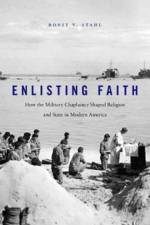
Ronit Stahl traces the ways the U.S. military struggled with, encouraged, and regulated religious pluralism and scrambled to handle the nation's deep religious, racial, and political complexity. Just as the state relied on religion to sanction combat missions and sanctify war deaths, so too did religious groups seek validation as American faiths.
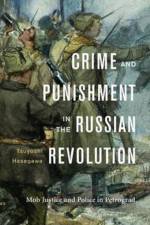
Russians from all walks of life joyously celebrated the end of Nicholas II's monarchy, but one year later, amid widespread civil strife and lawlessness, a fearful citizenry stayed out of sight. Tsuyoshi Hasegawa offers a new perspective on Russia's revolutionary year through the lens of violent crime and its devastating effect on ordinary people.
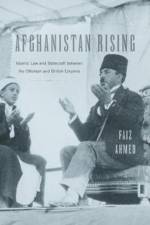
Debunking conventional narratives, Faiz Ahmed presents a vibrant account of the first Muslim-majority country to gain independence, codify its own laws, and ratify a constitution after the fall of the Ottoman Empire. Afghanistan, he shows, attracted thinkers eager to craft a modern state within the interpretive traditions of Islamic law and ethics.
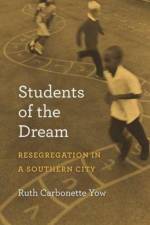
Marietta High, once a flagship public school northwest of Atlanta, has become a symbol of the resegregation that is sweeping across the American South. Ruth Carbonette Yow argues for a revitalized commitment to integration, but one that challenges many orthodoxies of the civil rights struggle, including colorblindness.
Unn Falkeid considers the work of six fourteenth-century writers who waged literary war against the Avignon papacy's increasing claims of supremacy over secular rulers-a conflict that engaged contemporary critics from every corner of Europe. She illuminates arguments put forth by Dante, Petrarch, William of Ockham, Catherine of Siena, and others.
Living with Robots recounts a foundational shift in robotics, from artificial intelligence to artificial empathy, and foreshadows an inflection point in human evolution. As robots engage with people in socially meaningful ways, social robotics probes the nature of the human emotions that social robots are designed to emulate.
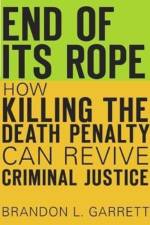
Today, death sentences in the U.S. are as rare as lightning strikes. Brandon Garrett shows us the reasons why, and explains what the failed death penalty experiment teaches about the effect of inept lawyering, overzealous prosecution, race discrimination, wrongful convictions, and excessive punishments throughout the criminal justice system.
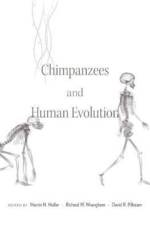
Knowledge of wild chimpanzees has expanded dramatically. This volume, edited by Martin Muller, Richard Wrangham, and David Pilbeam, brings together scientists who are leading a revolution to discover and explain human uniqueness, by studying our closest living relatives. Their conclusions may transform our understanding of human evolution.
Eugene Goldfield lays out principles of engineering found in the natural world, with a focus on how components of coordinated structures organize themselves into autonomous functional systems. This self-organizing capacity is one of many qualities which can be harnessed to design technologies that can interact seamlessly with human bodies.
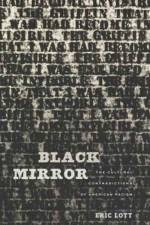
Blackness is a prized commodity in American pop culture. Marketed to white consumers, it invites whites to view themselves in a mirror of racial difference, while remaining "wholly" white. From sports to literature, film, and music to investigative journalism, Eric Lott reveals the hidden dynamics of this self-and-other racial mirroring.
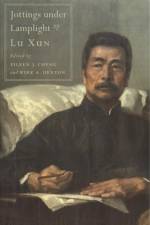
Lu Xun (1881-1936) is widely considered the greatest writer of twentieth-century China. Although primarily known for his two slim volumes of short fiction, he was a prolific, inventive essayist. These 62 essays-20 translated for the first time-showcase his versatility as a master of prose forms and his brilliance as a cultural critic.
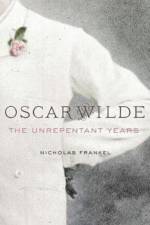
Nicholas Frankel presents a revisionary account of Oscar Wilde's final years, spent in poverty and exile in Europe following his release from an English prison for the crime of gross indecency between men. Despite repeated setbacks and open hostility, Wilde-unapologetic and even defiant-attempted to rebuild himself as a man, and a man of letters.
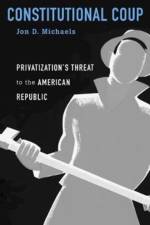
Americans hate bureaucracy-though they love the services it provides-and demand that government run like a business. Hence today's privatization revolution. Jon Michaels shows how the fusion of politics and profits commercializes government and consolidates state power in ways the Constitution's framers endeavored to disaggregate.
For men in the Union and Confederate armies and their families at home, letter writing was the sole means to communicate. Taking pen to paper was a new and daunting task, but Christopher Hager shows how ordinary people made writing their own, and how they in turn transformed the culture of letters into a popular, democratic mode of communication.
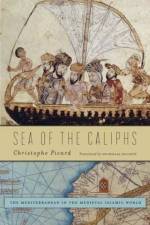
Christophe Picard recounts the adventures of Muslim sailors who competed with Greek and Latin seamen for control of the 7th-century Mediterranean. By the time Christian powers took over trade routes in the 13th century, a Muslim identity that operated within, and in opposition to, Europe had been shaped by encounters across the sea of the caliphs.
Bernardo Zacka probes the complex moral lives of street-level bureaucrats-the frontline social and welfare workers, police officers, and educators who represent government's human face to ordinary citizens. Too often dismissed as soulless operators, these workers wield significant discretion and make decisions that profoundly affect people's lives.
Giacomo Corneo presents a refreshingly antidogmatic review of economic systems, in the form of a fictional argument between a daughter indignant about economic injustice and her father, an economics professor. They tour tried and proposed systems in which production and consumption obey noncapitalistic rules and test their economic feasibility.
Understanding wealth-who has it, how they acquired it, how they preserve it-is crucial to addressing challenges facing the United States. Edward Wolff's account of patterns in the accumulation and distribution of U.S. wealth since 1900 provides a sober bedrock of facts and analysis. It will become an indispensable resource for future public debate.
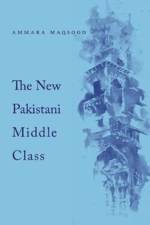
Images of religious extremism and violence in Pakistan-and the narratives that interpret them-inform global events but also twist back to shape local class politics. Ammara Maqsood focuses on life in Lahore, where she untangles these narratives to show how central they are for understanding competition between middle-class groups.
Although some statesmen and historians have pinned Austria's-and the world's-interwar economic implosion on financial colonialism, in this corrective history Nathan Marcus deemphasizes the negative role of external players and points to the greater impact of domestic malfeasance and predatory speculation on Austrian political and financial decline.
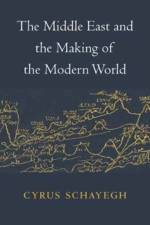
How do historians make sense of the spatial layeredness of the past? Cyrus Schayegh argues that the modern world's ultimate socio-spatial feature is not the oft-studied processes of globalization or state formation or urbanization, but rather the fast-paced, mutually transformative intertwinements of cities, regions, states, and global circuits.
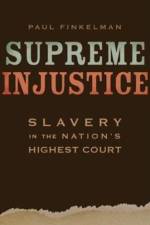
In ruling after ruling, the three most important pre-Civil War justices-Marshall, Taney, and Story-upheld slavery. Paul Finkelman establishes an authoritative account of each justice's proslavery position, the reasoning behind his opposition to black freedom, and the personal incentives that embedded racism ever deeper in American civic life.
Abonner på vårt nyhetsbrev og få rabatter og inspirasjon til din neste leseopplevelse.
Ved å abonnere godtar du vår personvernerklæring.