




























Gjør som tusenvis av andre bokelskere
Abonner på vårt nyhetsbrev og få rabatter og inspirasjon til din neste leseopplevelse.
Ved å abonnere godtar du vår personvernerklæring.Du kan når som helst melde deg av våre nyhetsbrev.

Despite three decades of scrutiny and repeated attempts at reform, our laws against rape and sexual harassment still fail to protect women from sexual abuse. What went wrong? In this bold work, Schulhofer, a distinguished scholar in criminal law, shows the need to create a new system of legal safeguards against interference with sexual autonomy.
Family Matters cuts through the sealed records, changing policies, and conflicting agendas that have obscured the history of adoption in America and reveals how the practice and attitudes about it have evolved from colonial days to the present.
Professionals trusted with our well-being are at least as likely as anyone else to abuse alcohol and other drugs-a well-kept secret finally aired and fully examined in this powerful book. Coombs draws on more than 120 personal interviews with addicted physicians, dentists, nurses, pharmacists, attorneys, and airline pilots and those who treat them.
Practical reasoning is not just a matter of determining how to get what you want, but of working out what to want in the first place. Millgram argues that experience plays a central role in this process. He defends "practical induction," a method of reasoning from experience similar to theoretical induction.
Waldinger examines why African-Americans have fared so poorly in securing unskilled jobs in the postwar era and why new immigrants have done so well. Using New York to look at the relationships among race, immigration, and social mobility, Waldinger offers a new understanding of a serious social problem and fresh approaches to attacking it.
This book is a systematic interpretation of the most important national and state tendencies in southern politics since 1920. The authors contend that, notable improvements in race relations aside, the central tendencies in southern politics are primarily established by the values, beliefs, and objectives of the expanding white urban middle class.
This text on the history of Galilee between the 1st and 7th centuries contains 20 essays examining such issues as the first Christians, social and economic conditions, Roman rule and military presence, rabbis and Jewish law, languages and the archaeological remains of ancient synagogues.
Gerald Brock develops a new theory of decentralized public decisionmaking and uses it to clarify the dramatic changes that have transformed the telecommunication industry from a heavily regulated monopoly to a set of market-oriented firms.
Dr. Linda Emanuel--one of America's most influential medical ethicists--has assembled leading experts to provide not only a clear account of the arguments for and against physician-assisted suicide and euthanasia but also historical, empirical, and legal perspectives on this complicated issue.
Richard III, Troilus and Cressida, and Antony and Cleopatra were figures of intense signification long before Shakespeare gave them new life. When he did, Charnes argues, he used them to explore notorious identity-a new kind of infamy based not on the moral and ethical "use value" of legend but on a commodification of identity itself.
The cultural and literary flowering known as the May Fourth Movement, is the subject of this comprehensive and insightful book. This is the first study of modern Chinese literature that shows how China's Confucian traditions were combined with Western influences to create a literature of new values and consciousness for the Chinese people.
Runaway medical costs, long-term care, market competition are but a few of the issues in American health care. Here, Ginzberg examines questions such as how much of the system should be kept and how much should be changed.
By viewing the American poetic tradition through the prism of pragmatism, Elisa New contests the claim that American vision is implicitly possessive. She argues that American poems see more fully, and less invasively, than accounts of American literature as an inscription of imperial national ideology would allow.
This book is a bold, modern recasting of the age-old nature-nurture debate, informed by revolutionary insights from brain science, artificial intelligence, psychiatry, linguistics, evolutionary biology, child development, ethics, and even cosmology.
"Bad faith" as the author calls the dissonance between what we profess to believe, how we act and how we interpret our own behaviour, is more than a theme in Mark Twain. Robinson shows that Twain's view of man's social nature can be traced to an awareness of the deceits at the core of his culture.
Here is Lukacs among friends, lovers, and peers in those important years before 1918, when he converted to Communism and Marxism at the age of 39. Lukacs emerges as dramatic and psychologically complex but also as a figure whose dilemmas were echoed in the lives of other radical intellectuals who came of age during the fin de siecle period.
This book is the first to trace the fortunes of the earliest large free black community in the U.S. Nash shows how black Philadelphians struggled to shape a family life, gain occupational competence, organize churches, establish social networks, advance cultural institutions, educate their children, and train leaders who would help abolish slavery.
This Faustian tale of the spiritual disintegration of a young minister, written in the 1890s, deals subtly and powerfully with the impact of science on innocence and the collective despair that marked the transition into the modern age.
In a remarkably innovative reconstruction of constitutional history, Robert Burt traces the controversy over judicial supremacy back to the founding fathers.
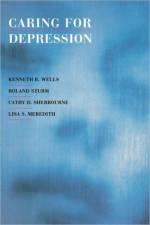
The ongoing shift of mental-health care away from specialists and toward primary medical-care providers is causing fewer depressed patients to be appropriately diagnosed and treated. The authors urge the integration of both medical and economic considerations in designing policies for the treatment of depression.
Do students who work longer and harder learn more in college? Does joining a fraternity with a more academic flavor enhance a student's academic performance? These are just some more than fifty examples that Richard Light, Judith Singer, and John Willett explore in this lively, nontechnical sourcebook for learning about colleges and universities.
A practical guide for everyone who must deliver a lecture, lead a discussion, assign a grade, or carry out the hundreds of tasks involved in being a successful teacher from the first day of school to the last.
This concise literary history of the American Enlightenment captures the varied and conflicting voices of religious and political conviction in the decades when the new nation was formed. Ferguson's trenchant interpretation yields new understanding of this pivotal period for American culture.
In Western thought, the modern period signals a break with stagnant social formations, the advent of a new rationalism, and the emergence of a secular order, all in the context of an overarching globalization. Cochran links these developments with the rise of the book as the dominant medium for recording, preserving, and disseminating thought.
Guterl details how white and black people thought about race and how both groups understood and attempted to control the demographic transformation. An account of the roiling environment that witnessed a shift from the multiplicity of white races to biracialism's arrival, this book focuses on four representative spokesmen for the transforming age.
The ideal of evenly balanced sporting contests is continually challenged by economic, social, and technological forces. Consequently, Weiler argues, the law is essential to level the playing field for players, owners, fans, and taxpayers. Weiler analyzes a wide array of moral and economic issues that arise in all American competitive sports.
This book examines the effects of stress on children and parents and explores strategies for coping. The authors view the family as a dynamic system whose health is vitally related to internal relationships and interactions with other social networks. Stress in this context can be a positive or a negative influence on family health.
Abonner på vårt nyhetsbrev og få rabatter og inspirasjon til din neste leseopplevelse.
Ved å abonnere godtar du vår personvernerklæring.