







Gjør som tusenvis av andre bokelskere
Abonner på vårt nyhetsbrev og få rabatter og inspirasjon til din neste leseopplevelse.
Ved å abonnere godtar du vår personvernerklæring.Du kan når som helst melde deg av våre nyhetsbrev.

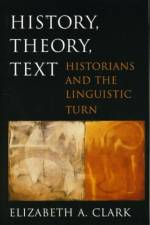
A historian of early Christianity considers various theoretical critiques to examine the problems and opportunities posed by the ways in which history is written. Clark argues for a renewal of the study of premodern Western history through engagement with the critical methods that have transformed other humanities disciplines in recent decades.
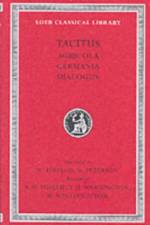
Tacitus (c. 55-c. 120 CE), renowned for concision and psychology, is paramount as a historian of the early Roman empire. Agricola includes Agricola's career in Britain. Germania is a description of German tribes as known to the Romans. Dialogus concerns the decline of oratory and education.
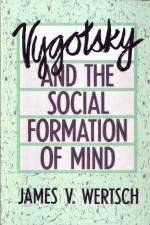
In a book of intellectual breadth, James Wertsch not only offers a synthesis and critique of all Vygotsky's major ideas, but also presents a program for using Vygotskian theory as a guide to contemporary research in the social sciences and humanities.
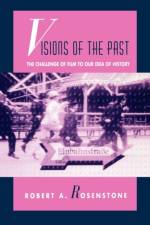
Rosenstone investigates how a visual medium, subject to conventions of drama and fiction, might be used as a serious vehicle for thinking about our relationship with the past. Employing such films as Reds, JFK, and Sans Soleil, he considers issues like the rapport between fact and film and the documentary as visionary truth.
Proposing that Arnold Schoenberg has been more discussed than heard, more tolerated than loved, Allen Shawn puts aside ultimate judgments about Schoenberg's place in music history to explore the composer's fascinating world in a series of linked essays-"soundings"-that are both searching and wonderfully suggestive.
Using firsthand accounts gleaned from notebooks, interviews, and correspondence of such twentieth-century scientists as Einstein, Fermi, and Millikan, Holton shows how the idea of the scientific imagination has practical implications for the history and philosophy of science and the larger understanding of the place of science in our culture.
The 25 years after World War II were a fertile period for the American novel and an era of transformation in American society. Offering a social as well as literary history, Morris Dickstein provides a wide-ranging and frank assessment of more than 20 key figures.
Wylie's warm account of life in the rural French village he calls Peyrane depicts the villagers within the framework of their culture. The third edition includes a fascinating new chapter based on Wylie's observations since 1970 and discussion of the Peyranais' gradual assimilation into the outside world they once resisted.
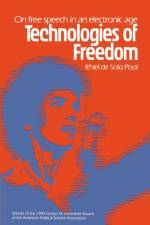
A communications revolution is displacing print with cables, computers, videodisks, and satellites. In a masterly synthesis of history, law, and technology, the author lays bare the elements of this problem and suggests measures to ensure the preservation of freedom.
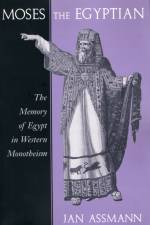
Assmann uses Moses as a figure of memory to study the ways in which factual and fictional events and characters are stored in religious beliefs and transformed in their philosophical justification, literary reinterpretation, philological restitution (or falsification), and psychoanalytic demystification.
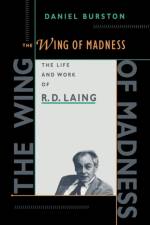
In his final years, R. D. Laing (1927-1989) was arriving at lectures addled with hashish and brandy, yet he was one of the most influential and controversial psychiatrists of the 20th century, whose books sold millions of copies in more than 20 languages. Burston explores this man of many contradictions.
Drawing on more than a hundred interviews with Vatican officials, this book affords a firsthand look at the people, the politics, and the organization behind the institution. Throughout, revealing and colorful anecdotes from church history and the present day bring the unique culture of the Vatican to life.
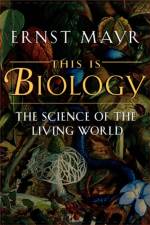
An eyewitness to this century's relentless biological advance and the originator of some of its most important concepts, Ernst Mayr is uniquely qualified to offer a vision of science that places biology firmly at the center, and a vision of biology that restores the primacy of holistic, evolutionary thinking.
Emphasizing that science can only be understood through its practice, the author examines science and technology in action: the role of scientific literature, the activities of laboratories, the institutional context of science in the modern world, and the means by which inventions and discoveries become accepted.
Nationalism is a movement and a state of mind that brings together national identity, consciousness, and collectivities. A five-country study that spans five hundred years, this historically oriented work in sociology bids well to replace all previous works on the subject.
Camus, Sartre, and Beauvoir in France; Eich, Richter, and Boell in Germany; Pavese, Levi, and Silone in Italy: These are among the defenders of human dignity whose lives and work are explored in this widely encompassing work. James D. Wilkinson examines for the first time the cultural impact of the anti-Fascist literary movements in Europe.
Daniel Kevles traces the study and practice of eugenics--the science of "improving" the human species by exploiting theories of heredity--from its inception in the late nineteenth century to its most recent manifestation within the field of genetic engineering.
A History of the Jewish People presents a total vision of Jewish experiences and achievements-religious, political, social, and economic-in both the land of Israel and the diaspora throughout the ages. It has been acclaimed as the most comprehensive and penetrating work yet to have appeared in its field.
Based on the re-analysis of Sheldon and Eleanor Gluecks' mid-century study of 500 delinquents and 500 non-delinquents from childhood to adulthood, this informal social control theory accepts the importance of childhood behaviour but rejects the idea that adult social factors have little relevance.
Tomasello presents a comprehensive usage-based theory of language acquisition. Drawing together a vast body of empirical research in cognitive science, linguistics, and developmental psychology, Tomasello demonstrates children's linguistic ability is interwoven with other cognitive abilities.
In Calvin's Geneva, the changes associated with the Reformation were particularly abrupt and far-reaching, in large part owing to John Calvin himself. This book makes two major contributions to our understanding of this time: the first is to the history of divorce itself; the second is in illustrating the operations of the Consistory of Geneva.
Euripides (c. 485-406 BCE) has been prized in every age for his emotional and intellectual drama. Eighteen of his ninety or so plays survive complete, including Medea, Hippolytus, and Bacchae, one of the great masterpieces of the tragic genre. Fragments of his lost plays also survive.
From the Liberation purges to the Barbie trial, France has struggled with the memory of the Vichy experience: a memory of defeat, occupation, and repression. In this provocative study, Henry Rousso examines how this proud nation has dealt with les annees noires. Specifically, he studies what the French have chosen to remember-and to conceal.
Leonard Bernstein's Norton Lectures on the future course of music drew cheers from his Harvard audiences and television viewers. In the re-creation of his talks, the author considers music ranging from Hindu ragas through Mozart and Ravel to Copland, Shoenberg, and Stravinsky.
Danto argues that recent developments in art-in particular the production of works that cannot be told from ordinary things-make urgent the need for a new theory of art. He demonstrates the relationship between philosophy and art and the connections that hold between art, social institutions, and art history.
The clever peasant Arnaud du Tilh had almost won his case when a man with a wooden leg swaggered into the French courtroom, denounced du Tilh, and reestablished his claim to the identity, property, and wife of Martin Guerre. This book, by the noted historian who served as a consultant for the film, adds new dimensions to this famous legend.
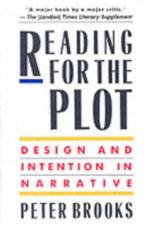
A book which should appeal to both literary theorists and to readers of the novel, this study invites the reader to consider how the plot reflects the patterns of human destiny and seeks to impose a new meaning on life.
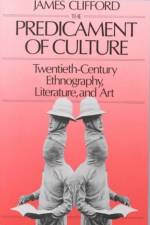
Clifford offers a critical ethnography of the West in its changing relations with other societies. Analyzing cultural practices such as anthropology, travel writing, collecting, and museum displays of tribal art, Clifford shows authoritative accounts of other ways of life to be contingent fictions, now actively contested in postcolonial contexts.
Abonner på vårt nyhetsbrev og få rabatter og inspirasjon til din neste leseopplevelse.
Ved å abonnere godtar du vår personvernerklæring.