























Gjør som tusenvis av andre bokelskere
Abonner på vårt nyhetsbrev og få rabatter og inspirasjon til din neste leseopplevelse.
Ved å abonnere godtar du vår personvernerklæring.Du kan når som helst melde deg av våre nyhetsbrev.

Fads and fashions, sexual mores, and political ideologies-all were subject to satire and parody on the cabaret stage. This book follows the changing treatment of these themes, and the fate of cabaret itself, through the most turbulent decades of German history.
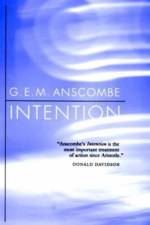
Intention is one of the masterworks of 20th-century philosophy. First published in 1957, it has acquired the status of a modern philosophical classic. The book attempts to show in detail that the natural and widely accepted picture of what we mean by an intention gives rise to insoluble problems and must be abandoned.
The writings of the Apostolic Fathers (first and second centuries CE) give a rich and diverse picture of Christian life and thought in the period immediately after New Testament times. Some were accorded almost Scriptural authority in the early Church.
With this manifesto, John Dupre systematically attacks the ideal of scientific unity by showing how its underlying assumptions are at odds with the central conclusions of science itself.
Looking beyond the view of the plague as unmitigated catastrophe, Herlihy finds evidence for its role in the advent of new population controls, the establishment of universities, the spread of Christianity, the dissemination of vernacular cultures, and even the rise of nationalism.
The most exciting development in legal thinking since World War II has been the growth of interdisciplinary legal studies. Judge Richard Posner has been a leader in this movement, and his new book explores its rapidly expanding frontier.
Modern Japan offers us a view of a highly developed society with its own internal logic. Eiko Ikegami makes this logic accessible to us through a sweeping investigation into the roots of Japanese organizational structures.
O'Donnell takes a reading on the promise and the threat of electronic technology for our literate future. He reinterprets today's communication revolution through a series of refracted comparisons with earlier revolutionary periods: the transition from oral to written culture, from the papyrus scroll to the codex, from copied manuscript to print.
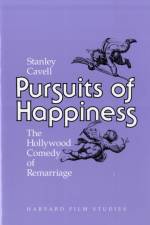
During the '30s and '40s, Hollywood produced a genre of madcap comedies that emphasized reuniting the central couple after divorce or separation. Here, Cavell examines seven of those classic movies for their cinematic techniques, and for such varied themes as feminism, liberty and interdependence.
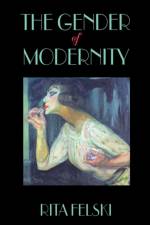
In an innovative exploration of the complex relations between women and the modern, Felski challenges conventional male-centered theories of modernity and calls into question feminist perspectives that have demonized the modern as inherently patriarchal, or else assumed a simple opposition between men's and women's experiences of the modern world.
Stanley Cavell looks closely at America's most popular art and our perceptions of it. His explorations of Hollywood's stars, directors, and most famous films-as well as his fresh look at Godard, Bergman, and other great European directors-will be of lasting interest to movie-viewers and intelligent people everywhere.
Confidence in American government has been declining for three decades. Leading Harvard scholars here explore the roots of this mistrust by examining the government's current scope, its actual performance, citizens' perceptions of its performance, and explanations that have been offered for the decline of trust.
Using the basic economic assumptions of maximizing behavior, stable preferences, and arid equilibria in explicit or implicit markets, Becker applies economic theory to the most sensitive and fateful personal decisions, such as choosing a spouse or having children.
Employs the tools of economic analysis to reassess the orthodox approach to AIDS by the public health community. It examines measures and proposals such as testing, criminal punishments and immigration controls, as well as AIDS education, medical research and the social and fiscal costs of AIDS.
When this Pulitzer Prize-winning biography first appeared in 1976, it rescued T. E. Lawrence from mythologizing. In it, Mack explores the relationship between Lawrence's inner life and his historically significant actions. Interviews, correspondence, War Office dispatches and unpublished letters provide the basis for this sensitive investigation.
Volosinov's important work, first published in Russian in 1929, had to wait a generation for recognition. This first paperback edition of the English translation will be capital for literary theorists, philosophers, linguists, psychologists, and many others.
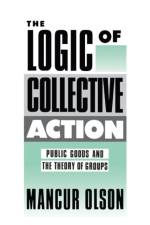
Olson develops a theory of group and organizational behavior that cuts across disciplinary lines and illustrates the theory with empirical and historical studies of particular organizations, examining the extent to which individuals who share a common interest find it in their individual interest to bear the costs of the organizational effort.
Distinguished psychologist Michael Cole, known for pioneering work in literacy, cognition, and human development, offers a multifaceted account of what cultural psychology is, what it has been, and what it can be. A rare synthesis of the theory and empirical work shaping the field, this book will be a major foundation for the emerging discipline.
As they make sense of the features of autism at every level of intellectual functioning across the life span, the authors weave together clinical vignettes, research, methodological considerations, and historical accounts. The result is a compelling, comprehensive view of the disorder, true to human experience and scientific observation alike.
In this richly illustrated book, MacDonald analyzes the original design and construction of one of the grand architectural statements of all ages, discusses the technology that made it possible, and explores its metaphorical meaning.
Guaranteeing that all are insured does not create a system with the quality of care patients want, the flexibility clinicians need, and the internal dynamics for continual improvement of health care value. Luft presents a comprehensive new proposal, SecureChoice, which does all that while providing affordable health insurance for every American.
With intellectual insight and deadpan humor, Kleinberg deftly guides the reader through Jewish, Christian, and Greco-Roman thoughts on sin. Each chapter weaves the past into the present and examines unchanging human passions and the deep cultural shifts in the way we make sense of them.
Kepel urges us to escape the ideological quagmire of terrorism and martyrdom and explore the terms of a new and constructive dialogue between Islam and the West. This book sounds the alarm to the West and to Islam that both of these exhausted narratives are bankrupt-neither productive of democratic change in the Middle East nor of unity in Islam.
Jones tells a powerful and dramatic story that is important for its insights into civil rights history: the debate over nonviolence and armed self-defense, the meaning of Black Power, the relationship between local and national movements, and the dynamic between southern and northern activism.
This volume, the first integrated analysis of gender inequality's modern decline, tells the story of that progressive movement toward equality over the past two centuries in America, showing that women's status has risen consistently and continuously.
In a book sure to inspire controversy, Gene Heyman argues that conventional wisdom about addiction-that it is a disease, a compulsion beyond conscious control-is wrong. At the heart of Heyman's analysis is a startling view of choice and motivation that applies to all choices, not just the choice to use drugs.
Humanist Tragedies offers a sampling of Latin drama from the Tre- and Quattrocento. These five tragedies-Ecerinis, Achilleis, Progne, Hyempsal, and Fernandus servatus-were nourished by a potent amalgam of classical, medieval, and pre-humanist sources. Humanist tragedy testifies to momentous changes in literary conventions during the Renaissance.
Abonner på vårt nyhetsbrev og få rabatter og inspirasjon til din neste leseopplevelse.
Ved å abonnere godtar du vår personvernerklæring.