

























Gjør som tusenvis av andre bokelskere
Abonner på vårt nyhetsbrev og få rabatter og inspirasjon til din neste leseopplevelse.
Ved å abonnere godtar du vår personvernerklæring.Du kan når som helst melde deg av våre nyhetsbrev.

Paley presents a moving personal account of her experiences teaching kindergarten in an integrated school within a predominantly white, middle-class neighborhood. In a new preface, she reflects on the way that even simple terminology can convey unintended meanings and show a speaker's blind spots.
When this classic was first published in 1975, it created a new discipline and started a tumultuous round in the nature versus nurture debate. In the introduction to this edition, Wilson shows how research in human genetics and neuroscience over the past quarter of a century has strengthened the case for a biological understanding of human nature.
Punctuated with remarkable case studies, this book explores extraordinary encounters between hermaphrodites and the medical and scientific professionals who grappled with them in late 19th-century France and England. It takes us inside the doctors' chambers to see how and why medical and scientific men constructed sex, gender, and sexuality.
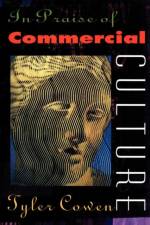
Cowen argues that the capitalist market economy is a vital but underappreciated institutional framework for supporting a variety of artistic visions. His philosophy stands in opposition to the cultural pessimism of conservatives, neo-conservatives, the Frankfurt School, and some versions of the political correctness and multiculturalist movements.
Collins traces the movement of philosophical thought in ancient Greece, China, Japan, India, the medieval Islamic and Jewish world, medieval Christendom, and modern Europe. He focuses on the social locations where sophisticated ideas are formed: the patterns of intellectual networks and their inner divisions and conflicts.
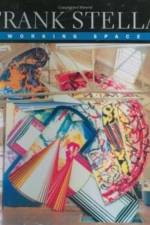
Here is a rare opportunity to view painting through the discerning eyes of one of the world's foremost abstract painters. Stella uses the crisis of representational art in sixteenth-century Italy to illuminate the crisis of abstraction in our time.
Deconstruction is no game of mirrors, revealing the text as a play of surface against surface. Its more radical philosophical effort is to get behind the mirror and question the very nature of reflection. The Tain of the Mirror explores that gritty surface without which no reflection would be possible.
This volume brings together feminist social and biomedical scholars from the Southern and Northern hemispheres to examine the aggregate forces that affect reproductive choice.
The great evolutionist Mayr elucidates the subtleties of Darwin's thought and that of his contemporaries and intellectual heirs-A. R. Wallace, T. H. Huxley, August Weisman, Asa Gray. Mayr has achieved a remarkable distillation of Darwin's scientific thought and his legacy to twentieth-century biology.
In The New England Mind: The Seventeenth Century, as well as successor The New England Mind: From Colony to Province, Perry Miller asserts a single intellectual history for America that could be traced to the Puritan belief system.
The story of Heidegger's life and philosophy, a quintessentially German story in which good and evil, brilliance and blindness are inextricably entwined and the passions and disasters of a whole century come into play, is told in this brilliant biography.
Festivals and the French Revolution--the subject conjures up visions of goddesses of Liberty, strange celebrations of Reason, and the oddly pretentious cult of the Supreme Being. Every history of the period includes some mention of festivals; Ozouf shows us that they were much more than bizarre marginalia to the revolutionary process.
A preeminent American psychiatrist draws on his famous Study of Adult Development to give an exhilarating look at how the mind's defenses work. What we see as the mind's trickery, Vaillant tells us, is actually healthy. What's more, it can reveal the mind at its most creative and mature, soothing and protecting us from unbearable reality.
In a style that is writerly and audacious, Adam Phillips takes up a variety of seemingly ordinary subjects underinvestigated by psychoanalysis--kissing, worrying, risk, solitude, composure, even farting as it relates to worrying.
Where accounts of the relation between language and mind often rest on the concept of representation, Brandom sets out an approach based on inference, and on a conception of certain kinds of implicit assessment that become explicit in language. It is the first attempt to work out a detailed theory rendering linguistic meaning in terms of use.
Recounts the courtroom confrontation between millions of ex-soldiers, the chemical industry and the federal government, from the first stirrings of the lawyers in 1978 to the court plan to distribute a record two-hundred-million-dollar settlement in 1985.
Grice's account of speaker-meaning is the standard others use to define their own minor divergences or future elaborations. His metaphysical defense of absolute values is considered the beginning of a new phase in philosophy. He has carefully framed these essays to emphasize not a certain set of ideas but a habit of mind, a style of philosophizing.
Almost every town in France has a street named for Louis Pasteur-but did he alone stop people from spitting, persuade them to dig drains, influence them to get vaccinated? Latour makes the case that Pasteur's success depended upon a network of forces including the public hygiene movement, the medical profession, and colonial interests.
Fifty years after reaching France by way of school in England, Weber presents a series of illuminations on the country he loves, and whose civilization he has made the centre of his work. "My France" focuses on politics, myths, personalities, public problems, actions and conflicts in French life.
By shedding light on the many factors that can intervene and create inaccurate testimony, Elizabeth Loftus illustrates how memory can be radically altered by the way an eyewitness is questioned, and how new memories can be implanted and old ones changed in subtle ways.
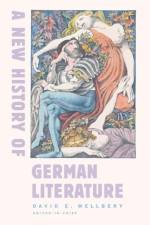
From the earliest magical charms and mythical sagas to the brilliance and desolation of 20th-century fiction, poetry, and film, this illuminating reference book invites readers to experience the full range of German literary culture and to investigate for themselves its disparate and unifying themes.
Chaisson addresses some of the most basic issues we can contemplate: the origin of matter and the origin of life, and the ways matter, life, and radiation interact and change with time. He designs for us an expansive yet intricate model depicting the origin and evolution of all material structures.
Paley introduces a new rule-"You can't say you can't play"-to her kindergarten students and solicits the opinions of older children regarding the fairness of such a rule. The struggle that ensues presents a great teacher with her greatest challenge and speaks to some of our most deeply held beliefs.
Waiting lists in psychiatric clinics and increasing numbers of patients in long-term psychotherapy have highlighted the need for shorter methods of treatment. Existing forms of short-term psychotherapy tend to be vague and uncertain, lacking as they do a clearly formulated rationale and methodology.
Poggioli explores the relationship between the avant-garde and civilization. Historical parallels and modern examples from all the arts are used to show how the avant-garde is both symptom and cause of many major extra-aesthetic trends of our time, and that the contemporary avant-garde is the sole and authentic one.
Drawing on a dozen years of research among managers, officers, and politicians in the public realm and the private sector, among the nonprofits, and in teaching, Heifetz presents clear, concrete prescriptions for anyone who needs to take the lead in almost any situation, under almost any organizational conditions, no matter who is in charge.
Covering the volatile period from 1945 to 1962, Zubok and Pleshakov explore the personalities and motivations of the key people who directed Soviet political life and shaped Soviet foreign policy.
To understand the way children develop, Bronfenbrenner believes that it is necessary to observe their behavior in natural settings, while they are interacting with familiar adults over prolonged periods of time. His book offers an important blueprint for constructing a new and ecologically valid psychology of development.
Abonner på vårt nyhetsbrev og få rabatter og inspirasjon til din neste leseopplevelse.
Ved å abonnere godtar du vår personvernerklæring.