






Gjør som tusenvis av andre bokelskere
Abonner på vårt nyhetsbrev og få rabatter og inspirasjon til din neste leseopplevelse.
Ved å abonnere godtar du vår personvernerklæring.Du kan når som helst melde deg av våre nyhetsbrev.

Hacking here offers his reflections on the philosophical uses of history. The focus of this volume, which collects both recent and now-classic essays, is the historical emergence of concepts and objects, through new uses of words and sentences in specific settings, and new patterns or styles of reasoning within those sentences.
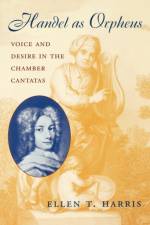
Handel wrote over 100 cantatas, compositions for voice and instruments decsribing the joy and pain of love. In the first comprehensive study of the cantatas, Harris investigates their place in Handel's life as well as their extraordinary beauty.
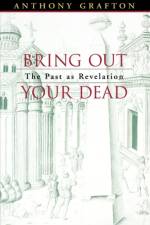
The work of the Renaissance humanists comes to life in this exploration of European letters from the 15th to the 19th century. Grafton defines the current state of the art of scholarship on early modern European cultural and intellectual history while simultaneously demonstrating how entertaining, enlightening, and relevant that history can be.
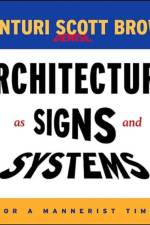
Venturi and Scott Brown have influenced architects worldwide for nearly half a century. Pluralism and multiculturalism; symbolism and iconography; popular culture and the everyday landscape are among the ideas they have championed. Here, they present a retrospective of their work and a definitive statement of its theoretical underpinnings.
Drawing on Debord and Deleuze, this book offers a systematic restatement of Marxist thought for the age of cyberspace and globalization. In the widespread revolt against commodified information, Wark sees a utopian promise, beyond property, and a new progressive class, the hacker class, who voice shared interest in a new information commons.
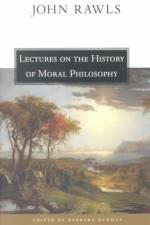
John Rawls, in three decades of teaching at Harvard, has had a profound influence on the development of philosophical ethics. This book brings together the lectures that inspired a generation of students, providing readers with the inspired guidance of one of contemporary philosophy's most noteworthy practitioners and teachers.
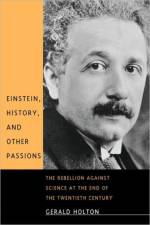
Through his rich exploration of Einstein's thought, Gerald Holton shows how the best science depends on great intuitive leaps of imagination, and how science is indeed the creative expression of the tradition of Western civilization.
How do we judge whether an action is morally right or wrong? If an action is wrong, what reason does that give us not do it? Why should we give such reasons priority over our other concerns and values? T. M. Scanlon offers new answers to these questions, as they apply to the central part of morality that concerns what we owe to each other.
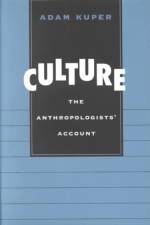
Culture clarifies a crucial chapter in recent intellectual history. Adam Kuper makes the case against cultural determinism and argues that political and economic forces, social institutions, and biological processes must take their place in any complete explanation of why people think and behave as they do.
Samuel Beckett claimed he couldn't talk about his work, but he proves remarkably forthcoming in these pages, which document the thirty-year working relationship between the playwright and his principal producer in the United States, Alan Schneider. The 500 letters capture the world of theater as well as the personalities of their authors.
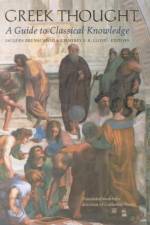
Ancient Greek thought is the essential wellspring from which the intellectual, ethical, and political civilization of the West draws and to which, even today, we repeatedly return. In more than sixty essays by an international team of scholars, this volume explores the full breadth and reach of Greek thought.
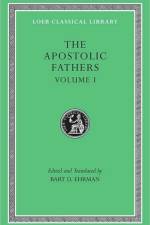
The writings of the Apostolic Fathers (first and second centuries CE) give a rich and diverse picture of Christian life and thought in the period immediately after New Testament times. Some were accorded almost Scriptural authority in the early Church.
Sophocles (497/6-406 BCE), considered one of the world's greatest poets, forged tragedy from the heroic excess of myth and legend. Seven complete plays are extant, including Oedipus Tyrannus, Ajax, Antigone, and Philoctetes. Among many fragments that also survive is a substantial portion of the satyr drama The Searchers.
Sophocles (497/6-406 BCE), considered one of the world's greatest poets, forged tragedy from the heroic excess of myth and legend. Seven complete plays are extant, including Oedipus Tyrannus, Ajax, Antigone, and Philoctetes. Among many fragments that also survive is a substantial portion of the satyr drama The Searchers.
This splendid introduction to French literature from 842 A.D. to the present decade is the most imaginative single-volume guide to the French literary tradition available in English.
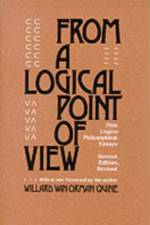
Quine's efforts to get beyond the confusion begin by rejecting the very idea of binding together word and thing, rejecting the focus on the isolated word. For him, observation sentences and theoretical sentences are the alpha and omega of the scientific enterprise.
This book takes up just the problems that perplex people and does what good philosophy always does: it dispels the illusion caused by the specious collision of truths. How to reconcile common sense and science? Searle argues that the truths of common sense and the truths of science are both right; the only question is how to fit them together.
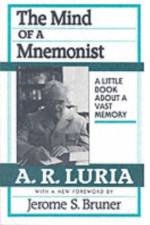
The Mind of a Mnemonist is a rare phenomenon-a scientific study that transcends its data and, in the manner of the best fictional literature, fashions a portrait of an unforgettable human being.
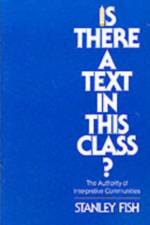
Stanley Fish is one of America's most stimulating literary theorists. In this book, he undertakes a reexamination of some of criticism's most basic assumptions. He penetrates to the core of the modern debate about interpretation, explodes numerous misleading formulations, and offers a proposal for a new way of thinking about the way we read.
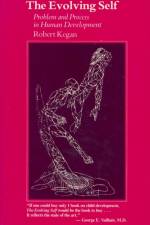
The Evolving Self focuses upon the most basic and universal of psychological problems-the individual's effort to make sense of experience, to make meaning of life. Meaning-making is a lifelong activity that begins in earliest infancy and continues to evolve through a series of stages encompassing childhood, adolescence, and adulthood.
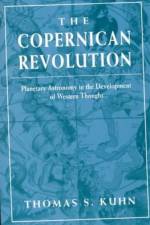
For scientist and layman alike this book provides vivid evidence that the Copernican Revolution has by no means lost its significance today. Few episodes in the development of scientific theory show so clearly how the solution to a highly technical problem can alter our basic thought processes and attitudes.
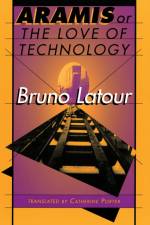
The story of Aramis-the guided-transportation system intended for Paris-is told in this fictional account by several parties: an engineer and his professor; company executives and elected officials; a sociologist; and Aramis itself, who delivers a passionate plea on behalf of technological innovations that risk being abandoned by their makers.
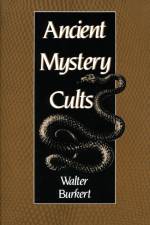
The foremost historian of Greek religion providers the first comprehensive, comparative study of a little-known aspect of ancient religious beliefs and practices.
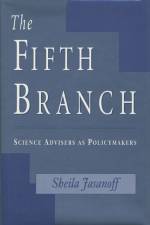
How can decisionmakers tasked with protecting the environment and public health avoid false or misleading scientific research? Is it possible to give scientists more influence in regulatory processes without ceding too much control over policy? These are some of the questions Jasanoff asks in this study of how science advisers shape federal policy.
Garvey explores some of the more promising new directions in the study of children's play and summarizes the findings of recent research.
Durling's edition of Petrarch's poems has become the standard. Readers have praised the translation of the authoritative text as graceful and accurate, conveying a real understanding of what this difficult poet is saying. The literalness of the prose translation makes this book especially useful to students who lack a full command of Italian.
In uneasy partnership at the helm of the modern state stand elected party politicians and professional bureaucrats. This book is the first comprehensive comparison of these two powerful elites.
One of the nation's leading civil rights lawyers joins forces with one of the world's foremost cultural psychologists to show how storytelling tactics and deeply rooted mythic structures shape the Supreme Court's decisions about race, family law, and the death penalty.
The well-known Italian semiotician and novelist Umberto Eco discloses for the first time to English-speaking readers the unsuspected richness, breadth, complexity, and originality of the aesthetic theories advanced by the influential medieval thinker Thomas Aquinas, heretofore known principally as a scholastic theologian.
Abonner på vårt nyhetsbrev og få rabatter og inspirasjon til din neste leseopplevelse.
Ved å abonnere godtar du vår personvernerklæring.