
















Gjør som tusenvis av andre bokelskere
Abonner på vårt nyhetsbrev og få rabatter og inspirasjon til din neste leseopplevelse.
Ved å abonnere godtar du vår personvernerklæring.Du kan når som helst melde deg av våre nyhetsbrev.

This book offers an account of the surprising interaction between trauma and justice. Moving from texts by Arendt, Benjamin, Freud, Zola, and Tolstoy to the Dreyfus and Nuremberg trials, and the trials of O. J. Simpson and Adolf Eichmann, Felman argues that the adjudication of collective traumas in the 20th century transformed both culture and law.
A work in the history of systematic philosophy that is itself animated by a systematic philosophic aspiration, this book by one of the most prominent American philosophers working today provides an entirely new way of looking at the development of Western philosophy from Descartes to the present.
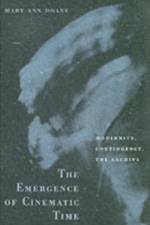
In a work that captures and reconfigures the passing moments of art, history, and philosophy, Mary Ann Doane shows how the cinema, representing the singular instant of chance and ephemerality in the face of the increasing rationalization and standardization of the day, participated in the structuring of time and contingency in capitalist modernity.
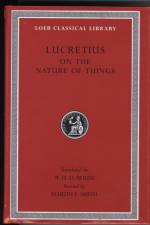
Lucretius lived ca. 99-ca. 55 BCE, but the details of his career are unknown. In his didactic poem De Rerum Natura (On the Nature of Things) he expounds Epicurean philosophy so as to dispel fear of the gods and death, and promote spiritual tranquility.
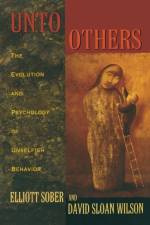
The authors demonstrate that unselfish behavior is in fact an important feature of both biological and human nature. Their book provides a panoramic view of altruism throughout the animal kingdom-from self-sacrificing parasites to the human capacity for selflessness-even as it explains the evolutionary sense of such behavior.
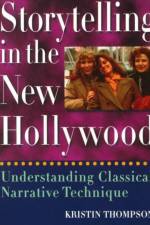
Drawing on a wide range of films from the 1920s to the 1990s-from Keaton's Our Hospitality to Casablanca to Terminator 2, Kristin Thompson offers the first in-depth analysis of Hollywood's storytelling techniques and how they are used to make complex, easily comprehensible, entertaining films.
Nozick continues the Socratic tradition of investigation in this volume, which illustrates the originality, force, and scope of his work. In evidence is Nozick's trademark blending of extraordinary analytical rigor with intellectual playfulness. As such, this collection testifies to the great pleasure that both doing and reading philosophy can be.
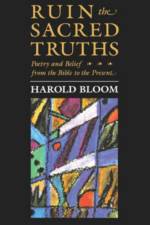
Bloom surveys with majestic view the literature of the West from the Old Testament to Samuel Beckett. In so doing, he uncovers the truth that all our attempts to call any strong work more sacred than another are merely political and social formulations.
Paul Zanker, a noted authority on Roman art and architecture shows us the images that marked Pompeii's development from country town to Roman imperial city. At home or in public, at work or at ease, Pompeians and their world come alive in Zanker's masterly rendering.
Ancient Greeks and Romans often turned to magic to achieve personal goals. Magical rites were seen as a route for direct access to the gods, for material gain and for spiritual satisfaction. In this fascinating survey of magical beliefs and practices from the sixth century BCE through late antiquity, Fritz Graf sheds new light on ancient religion.
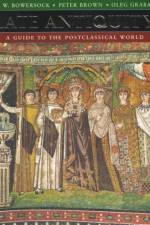
In 11 comprehensive essays and over 500 encyclopedic entries, an international cast of experts provides the latest scholarship and fresh perspectives on the history and culture of late antiquity, an era marked by the rise of two world religions, unprecedented political upheavals, and the creation of art of enduring glory.
This book offers an insider's look at the political and cultural dimensions of design, development, and production, and reaffirms Petroski as the master explicator of the principles and processes that turn thoughts into the many things that define our material world.
Thanks to Beiser, we can newly appreciate the influence of Kant's critics on the development of his philosophy. Beiser brings the controversies, and the personalities who engaged in them, to life and tells a story that has uncanny parallels with the debates of the present.
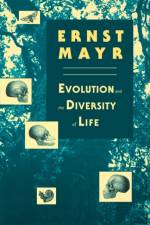
The diversity of living forms and the unity of evolutionary processes are themes that have permeated the research and writing of Ernst Mayr, a Grand Master of evolutionary biology. The essays collected here are among his most valuable and durable: contributions that form the basis for much of the contemporary understanding of evolutionary biology.
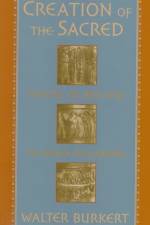
Sacrifice is essential to all religions. Could there be a natural, even biological, reason? Why are sacrifice and numerous other religious rituals and concepts shared by so many different cultures? In this extraordinary book, one of the world's leading authorities on ancient religions explores the possibility of natural religion.
This is an invaluable guide to Lacanian psychoanalysis, how it's done, and how it differs from other forms of therapy. While elucidating Lacan's theory, the book does so from the perspective of the practitioner faced with pressing questions of diagnosis, which therapeutic stance to adopt, how to involve the patient, and how to bring about change.
The first complete account of the phenomenon of antidepressants, this authoritative, highly readable book relates how depression, a disease only recently deemed too rare to merit study, has become one of the most common disorders of our day-and a booming business.
Our notion of the self depends on it; cultural identities have frequent recourse to its boundary-policing powers; and love depends on overcoming it. Miller traverses literature, philosophy, history, political theory, and psychology to show how disgust animates our world.
As Englund charts Napoleon's dramatic rise and fall-from his Corsican boyhood, French education, astonishing military victories and no less astonishing acts of reform as First Consul (1799-1804) to his controversial record as Emperor and to his exile and death-he explores the unprecedented power Napoleon maintains over the popular imagination.
This book, by a clinician who is also a laboratory researcher, is the first comprehensive, balanced analysis of the clinical and scientific evidence bearing on memory and trauma-and the first to provide definitive answers to the urgent questions at the heart of the controversy.
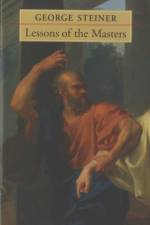
When we talk about education, we tend to avoid the rhetoric of "mastery," with its erotic and inegalitarian overtones. But the charged personal encounter between master and disciple is precisely what interests Steiner in this book, a sustained reflection on the infinitely complex and subtle interplay of power, trust, and passions in pedagogy.
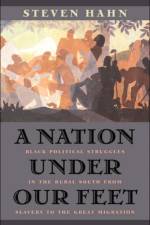
This is the epic story of how African-Americans, in the six decades following slavery, transformed themselves into a political people-an embryonic black nation. As Hahn demonstrates, rural African-Americans were central political actors in the great events of disunion, emancipation, and nation-building.
Suri puts the tumultuous 1960s into international perspective in the first study to examine connections between great power diplomacy and global social protest. He examines the decade through leaders and protesters on three continents, including Mao Zedong, Charles de Gaulle, Martin Luther King Jr., Daniel Cohn-Bendit, and Aleksandr Solzhenitsyn.
Weaving elements of early modern European, African, and American history, Atlantic history embraces essentials of Western civilization, from the first contacts of Europe with the Western Hemisphere to independence movements and the industrial revolution. Bailyn explores the subject's origins, rapid development, and impact on historical study.
In many countries, public sector institutions impose heavy burdens on economic life. As a consequence of predatory policies, entrepreneurship lingers and economies stagnate. The authors of this collection describe many of these pathologies of a "grabbing hand" government, and examine their consequences for growth.
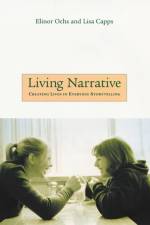
This pathbreaking book looks at everyday storytelling as a twofold phenomenon--a response to our desire for coherence, but also to our need to probe and acknowledge the enigmatic aspects of experience. Elinor Ochs and Lisa Capps develop a way of understanding the seemingly contradictory nature of everyday narrative.
The process of globalization seems irreversible. However, James provides a sobering historical perspective, exploring the circumstances in which the globally integrated world of an earlier era broke down under the pressure of unexpected events.
Nine of the world's top primate experts compose the most extensive picture to date of what the behavior of monkeys and apes can tell us about our own evolution as a species.
Of all the horrors of the last century, ethnic cleansing ranks among the worst. The term burst forth in public discourse in the spring of 1992 as a way to describe Serbian attacks on the Muslims of Bosnia-Herzegovina, but as this landmark book attests, ethnic cleansing is neither new nor likely to cease in our time.
Must the sins of America's past poison its hope for the future? Lately the American Left, withdrawing into the halls of academe to rue the nation's shame, has answered yes in word and deed. Rorty challenges this lost generation to understand its potential role in the tradition of democratic intellectual labor that began with Whitman and Dewey.
Abonner på vårt nyhetsbrev og få rabatter og inspirasjon til din neste leseopplevelse.
Ved å abonnere godtar du vår personvernerklæring.