





















Gjør som tusenvis av andre bokelskere
Abonner på vårt nyhetsbrev og få rabatter og inspirasjon til din neste leseopplevelse.
Ved å abonnere godtar du vår personvernerklæring.Du kan når som helst melde deg av våre nyhetsbrev.

September 11, 2001 was not the first time a surprise attack shattered American assumptions about national security and reshaped U.S. grand strategy. How successful our current strategies will be in the face of 21st-century challenges is the question now confronting us. Here, a major scholar of international relations attempts to provide an answer.
Davis retrieves three women's lives from historical obscurity to give us a window onto the early modern world. Glikl bas Judah Leib, Marie de l'Incarnation, and Maria Sibylla Merian were living "on the margins" in 17th-century Europe, North America, and South America. They left behind writings that make for a spellbinding and informative tale.
Stephen Jay Gould's subject is nothing less than geology's signal contribution to human thought-the discovery of "deep time," the vastness of earth's history, a history so ancient that we can comprehend it only as metaphor.
In a society where trust is in short supply and democracy weak, the Mafia sells protection, a guarantee of safe conduct for parties to commercial transactions. Drawing on the confessions of eight Mafiosi, Diego Gambetta develops an elegant analysis of the economic and political role of the Sicilian Mafia.
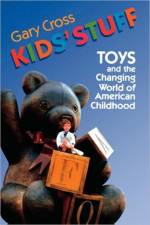
Gary Cross explores the meaning of American toys throughout this century. What does the endless array of action figures and fashion dolls mean? How have toys reflected who we are, and who we want our children to be? Tapping a rich vein of cultural history, Kids' Stuff exposes the serious business behind a century of playthings.
In this book, one of the world's preeminent philosophers takes issue with an idea that has found an all-too-prominent place in popular culture and philosophical thought: the idea that while factual claims can be rationally established or refuted, claims about value are wholly subjective, not capable of being rationally argued for or against.
This book proposes a new science of self-control based on principles of behavioral psychology and economics. Claiming that insight and self-knowledge are insufficient for controlling one's behavior, Howard Rachlin argues that the only way to achieve such control-and ultimately happiness-is through the development of harmonious patterns of behavior.
A global history of the acquisition of progressively more potent means of altering ordinary waking consciousness, this book is the first to provide the big picture of the discovery, interchange, and exploitation of the planet's psychoactive resources, from tea and kola to opiates and amphetamines.
Empire, as Hardt and Negri demonstrate, is the new political order of globalization. Their book shows how this emerging structure is fundamentally different from the imperialism of European dominance and capitalist expansion in previous eras. Rather, today's Empire draws on the hybrid identities and expanding frontiers of U.S. constitutionalism.
The discovery of Victor, the wild boy of Aveyron, and the accomplishments of his teacher, Jean Marc Itard, launched a debate among philosophers anthropologists, psychologists, and educators that has lasted almost two centuries, has given birth to educational treatment of the mentally retarded with methods that are still widely employed, and has led in this country to a revolution in childhood education.This beautifully written book by Harlan Lane tells the complete story of Dr. Itard's successes and failures with ¿l'enfant sauvage,¿ a story immortalized by director François Truffaut in The Wild Child (L'Enfant sauvage). Lane takes the reader into the central philosophical and scientific debates of the nineteenth century and sheds new light on questions that persist for our own time. Which human activities require social instruction and which do not? Is there a critical period for language acquisition? To what extent can education compensate for delayed development and limited endowment? What are the critical features of effective training methods?
This volume offers the reader the heart of Emerson's journals, that extraordinary series of diaries and notebooks in which he poured out his thoughts for over 50 years. Drawing from Harvard's 16-volume scholarly edition of the journals-but omitting the textual apparatus-Porte presents a sympathetic selection that brings us close to Emerson the man.
Taylor shows that the modern turn inward is not disastrous but is in fact the result of our long efforts to define and reach the good. At the heart of this definition he finds the affirmation of ordinary life, a value that has decisively if not completely replaced an older conception of reason as connected to a hierarchy based on birth and wealth.
Kermode examines enigmatic passages and episodes in the gospels. From his reading come ideas about what makes interpretation possible-and often impossible. He considers ways in which narratives acquire opacity, and he asks whether there are methods of distinguishing all possible meaning from a central meaning which gives the story its structure.
In a way that will delight and instruct even the nonmathematical among us, Livingston shows us how scientists today are creating magnets and superconductors that can levitate high-speed trains, produce images of our internal organs, steer high-energy particles in giant accelerators, and--last but not least--heat our morning coffee.
Cross traces the continuities between early Israelite religion and the Canaanite culture from which it emerged; explores the tension between the mythic and the historical in Israel's religious expression; and examines the reemergence of Canaanite mythic material in the apocalypticism of early Christianity and the Dead Sea Scrolls.
This text argues that despite the upset children experience after parental separation, most adapt successfully provided the mother is secure both financially and psychologically, and conflict between parents is low. The usual casualty of divorce is a declining relationship between father and child.
Examines the theories of Freud, Sullivan, Fromm, Jacobson, and other psychologists regarding interpersonal relationships.
In the wake of deconstruction and criticism focusing on difference, Newton makes a case for understanding narrative as ethics. Assuming an intrinsic and necessary connection between the two, he explores the ethical consequences of telling stories and fictionalizing character, and the reciprocal claims binding teller, listener, witness, and reader.
Addresses homosexuality in modern culture. This text discusses queer theory, Foucault and psychoanalysis, the politics of sadomasochism, and the image of "the gay outlaw" in works by Gide, Proust and Genet.
Arguably the most important contribution to social theory in fifty years, James Coleman's Foundations erects a unified conceptual structure, capable of describing and quantifying both stability and change in social systems. Elegantly reasoned, this rich theory also provides a foundation for linking individual, organizational, and societal behavior.
The authors argue that corporate law's rules and practices mimic contractual provisions that parties would reach if they bargained about every contingency at zero cost and flawlessly enforced their agreements. But bargaining and enforcement are costly, and corporate law provides necessary rules and an invaluable enforcement mechanism.
W. V. Harris provides the first thorough exploration of the levels, types, and functions of literacy in the classical world, from the invention of the Greek alphabet about 800 B.C. down to the fifth century A.D.
Using Roosevelt's own writings, his advisors' letters and diaries, and internal government documents, Robinson reveals the president's central role in making and implementing the internment of Japanese Americans and examines not only what the president did but why.
Lamont takes us into the world inhabited by working-class men-the world as they understand it. Interviewing French and American working-class men who, because they are not college graduates, have limited access to high-paying jobs and other social benefits, she constructs a revealing portrait of how they see themselves and the rest of society.
In a book that promises to change the way we think and talk about genes and genetic determinism, Evelyn Fox Keller, one of our most gifted historians and philosophers of science, provides a powerful, profound analysis of the achievements of genetics and molecular biology in the twentieth century, the century of the gene.
Dworkin argues that equality, freedom, and individual responsibility are not in conflict, but flow from and into one another as facets of the same humanist conception of life and politics. He applies his principles to contemporary controversies such as the distribution of health care, affirmative action, assisted suicide, and genetic engineering.
Drawing on industrial economics and contract theory, Caves explores the organization of creative industries, including visual and performing arts, movies, theater, sound recordings, and book publishing. In each, artistic inputs are combined with "humdrum" inputs. But Caves finds the deals bringing these inputs together are inherently problematic.
A prominent neuroscientist argues that human language-though more sophisticated than all other forms of animal communication-is not a qualitatively different ability from all forms of animal communication, it does not require a quantum evolutionary leap to be explained, and it is not unified in a single "language instinct."
Pragmatism is the most famous single work of American philosophy. Its sequel, The Meaning of Truth, is its imperative and inevitable companion. The definitive texts of both works are here available for the first time in one volume, with an introduction by the distinguished contemporary philosopher A. J. Ayer.
In the spirit of Voltaire-and occasionally in the spirit of P. G. Wodehouse-P. B. and J. S. Medawar have crafted for the life sciences a source of reference that is meant for browsing-a book both authoritative and filled with delights.
Abonner på vårt nyhetsbrev og få rabatter og inspirasjon til din neste leseopplevelse.
Ved å abonnere godtar du vår personvernerklæring.