
















Gjør som tusenvis av andre bokelskere
Abonner på vårt nyhetsbrev og få rabatter og inspirasjon til din neste leseopplevelse.
Ved å abonnere godtar du vår personvernerklæring.Du kan når som helst melde deg av våre nyhetsbrev.

In tracing this story of discovery, astronomer and physicist Harrison explores the concept of infinite space, the structure and age of the universe, the nature of light, and other subjects that once were so perplexing.
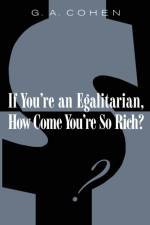
Focusing on Marxism and Rawlsian liberalism, G. A. Cohen argues that egalitarian justice is not only a matter of rules that define the structure of society, but also a matter of personal attitude and choice. Personal attitude and choice are, moreover, the stuff of which social structure itself is made.
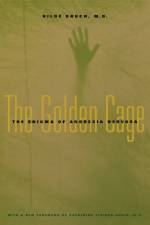
First published more than 20 years ago, with almost 150,000 copies sold, this remains the classic book on anorexia nervosa for patients, parents, mental health professionals. Writing in a jargon-free style, Bruch details the relentless pursuit of thinness and the search for superiority in self-denial that characterize the disorder.
Synthesizing theoretical contributions by Vygotsky, Bakhtin and Bourdieu, Holland and her co-authors examine the processes by which people are constituted as agents as well as subjects of culturally constructed, socially imposed worlds. They develop a theory of self-formation in which identities become the pivot between discipline and agency.
Detroit in the 1960s was a city with a pulse: people were marching in step with Martin Luther King, Jr.; dancing in the street with Martha and the Vandellas; facing off with city police. Through it all, Motown provided the beat. Here is the story of Motown-as musical style and entrepreneurial phenomenon-and of its relationship to Motor Town, USA.
This book is a history of women in science and an assessment of the role of gender in shaping scientific knowledge. Schiebinger considers the lives of women scientists, past and present, and debunks the myth that women scientists-because they are women-are somehow more holistic and integrative and create more cooperative scientific communities.
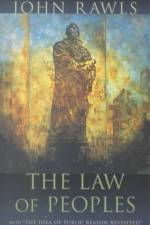
The Law of Peoples extends the idea of a social contract to the Society of Peoples and lays out the principles that should be accepted as the standard for regulating a society's behavior toward another. In particular, it draws a distinction between basic human rights and the rights of each citizen of a liberal constitutional democracy.
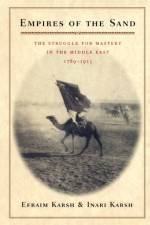
Rejecting the view of modern Middle Eastern history as an offshoot of global power politics, the authors argue that the main impetus for the developments of the momentous long 19th century (1789-1923) came from local actors. They see a pattern of pragmatic cooperation and conflict between the Middle East and the West during the past two centuries.
This book originated as lectures for a course on political philosophy that Rawls taught regularly at Harvard University in the 1980s. In time the lectures became a restatement of his theory of justice as fairness, revised in light of his more recent papers and his treatise Political Liberalism (1993).
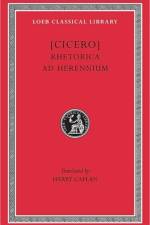
The Rhetorica ad Herrenium was traditionally attributed to Cicero (106-43 BCE), and reflects, as does Cicero's De Inventione, Hellenistic rhetorical teaching. But most recent editors attribute it to an unknown author.
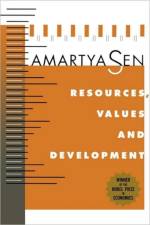
Containing many of the author's contributions to development economics, this book includes papers on resource allocation in non-wage systems, investment planning, shadow pricing, employment policy, and welfare economics, this text examines development economics in detail.
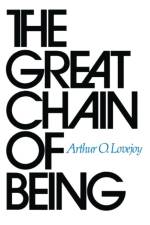
From later antiquity to the close of the 18th century, most educated men accepted without question a traditional view of the plan and structure of the world. In this volume, Lovejoy copiously illustrates the influence of this conception, and of the ideas out of which it was compounded, upon the imagination and feelings as expressed in literature.
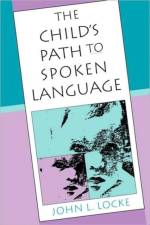
Progressing gradually from babbling to meaningful sentences is something most babies do naturally. But why do they? John L. Locke's answer constitutes a fascinating journey along the path of language development, a tour that takes in all the stops-neurological and perceptual, social and linguistic-that mark the way to intelligible speech.
Lovibond suggests how the "practical reason view of ethics" can survive challenges from within philosophy and from the antirationalist postmodern critique of reason. At the heart of her argument is the Aristotelian idea of the formation of character through upbringing; this idea can be made contemporary if one understands it in a naturalized way.
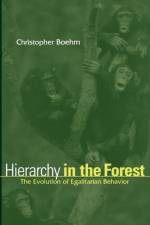
The political flexibility of our species is formidable: we can be quite egalitarian, we can be quite despotic. This book traces the roots of these contradictory traits in chimpanzee, bonobo, gorilla, and early human societies. Boehm postulates that egalitarianism is in effect a hierarchy in which the weak combine forces to dominate the strong.
This volume, published on the fiftieth anniversary of Wittgenstein's death, brings together 13 of Crispin Wright's most influential essays on Wittgenstein's later philosophies of language and mind, including the first publication of his Whitehead Lectures given at Harvard in 1996.
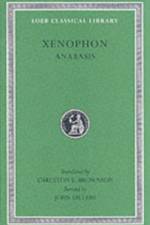
The Anabasis by Xenophon (c. 430-c. 354 BCE) is an eyewitness account of Greek mercenaries' challenging 'March Up-Country' from Babylon back to the coast of Asia Minor under Xenophon's guidance in 401 BCE, after their leader Cyrus the Younger fell in a failed campaign against his brother.
The poets nearest to us in time often seem the most remote and difficult. Helen Vendler closes the distance. She keeps the poet in view not only as thinker and artist, but as a man or woman whose humanity never disappears in her analysis. With her penetrating critical gift, Vendler assesses American poets from T. S. Eliot to Charles Wright.
The woolly spider monkey, or muriqui, is one of the most threatened primate species in the world. Because of deforestation in their natural habitat, the muriquis are confined to less than 3 percent of their original range. This book is a natural history of the muriqui from its scientific discovery in 1806 to its current, highly endangered status.
This important new study explores the impact of Neo-Confucianism on Korean society and politics between the fourteenth and seventeenth centuries.
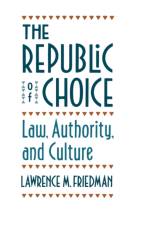
In this exploration of modern legal culture, Friedman addresses how the contemporary idea of individual rights has altered the legal systems and authority structures of Western societies. Every aspect of law, he argues-from civil rights to personal-injury litigation to divorce law-has been profoundly reshaped, reflecting the power of this concept.
This collection of essays addresses three main developments in recent work on Frege's philosophy of mathematics: the emerging interest in the intellectual background to his logicism; the rediscovery of Frege's theorem; and the reevaluation of the mathematical content of The Basic Laws of Arithmetic.
Media critics invariably disparage the quality of programming produced by the U.S. television industry. But why the industry produces what it does is a question largely unasked. It is this question, at the crux of American popular culture, that Switching Channels explores.
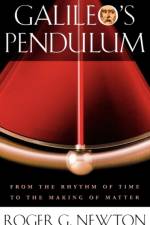
Newton sets the stage for Galileo's discovery with a look at biorhythms in living organisms and at early calendars and clocks-contrivances of nature and culture that, however adequate in their time, did not meet the precise requirements of seventeenth-century science and navigation.
The Roman emperor Nero is remembered by history as the vain and immoral monster who fiddled while Rome burned. Champlin reinterprets Nero's enormities on their own terms, as the self-conscious performances of an imperial actor with a formidable grasp of Roman history and mythology and a canny sense of his audience.
John Roemer has written a unique book that critiques economists' conceptions of justice from a philosophical perspective and philosophical theories of distributive justice from an economic one.
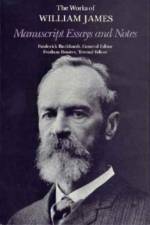
When James died in 1910 he left a large body of manuscript material that has never appeared in print. The most important of these manuscripts are those of the years 1903 and 1904 called "The Many and the One." The manuscripts in the rest of the volume contain James's reflections over 40 years in the form of drafts, memoranda, and notebook entries.
Is play an adaptation that teaches us skills and inducts us into communities? Is it power, pursued in games of prowess, or fate, deployed in games of chance, or daydreaming, enacted in art? Sutton-Smith considers each possibility as framed in disciplines ranging from biology, psychology, and education to metaphysics, mathematics, and sociology.
Abonner på vårt nyhetsbrev og få rabatter og inspirasjon til din neste leseopplevelse.
Ved å abonnere godtar du vår personvernerklæring.