
























Gjør som tusenvis av andre bokelskere
Abonner på vårt nyhetsbrev og få rabatter og inspirasjon til din neste leseopplevelse.
Ved å abonnere godtar du vår personvernerklæring.Du kan når som helst melde deg av våre nyhetsbrev.

This book provides a language and tools for finding bounds on predictions social and behavioral scientists can logically make from nonexperimental and experimental data. Manski draws on criminology, demography, epidemiology, social psychology, sociology, and economics to illustrate this language and to demonstrate the usefulness of the tools.
In this engrossing account, footnotes to history give way to footnotes as history, recounting in their subtle way the curious story of the progress of knowledge in written form.
In Contraception and Abortion from the Ancient World to the Renaissance, Riddle showed that women from ancient Egyptian times to the fifteenth century had relied on an extensive pharmacopoeia of herbal abortifacients and contraceptives to regulate fertility. Here, he explores why knowledge of these methods was lost in modern times.
This book traces the relationship between humanism and science from the mid-fifteenth century to the beginning of the modern period and demonstrates that humanism was neither a simple nor an impractical enterprise, but worked hand-in-hand with science in developing modern learning.
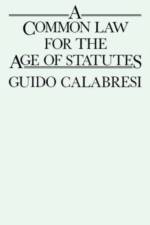
The dominance of legislatures and statutory law has put an impossible burden on the courts. Guido Calabresi thinks it is time for this country to seriously consider returning to a traditional American judicial-legislative balance in which courts enlarge the common law and decide when a rule of law has seen its day and should be revised.
For anyone who has blanched at the uphill prospect of finishing a long piece of writing, this book holds out something more practical than hope: it offers a plan. The Clockwork Muse is designed to help prospective authors develop a workable timetable for completing long and often formidable projects.
In this major new interpretation of the music of J.S. Bach, we gain a striking picture of the composer as a unique critic of his age. By reading Bach's music "against the grain" of contemporaries, Laurence Dreyfus explains how Bach's approach to musical invention posed a fundamental challenge to Baroque aesthetics.
In this timely book, Haas-Wilson argues that enforcement of antitrust laws is the tool of choice in most cases to limit the growth of health care sector monopoly power. Focusing on the economic concepts necessary to the enforcement of antitrust laws in health care markets, she provides a useful roadmap for guiding the future of these markets.
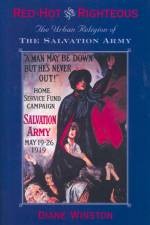
In this study of American religion, urban life, and commercial culture, Winston shows how the Salvation Army, a (self-styled "red-hot") militant Protestant mission, established a beachhead in the modern city. In a little more than a century, this ragtag missionary movement evolved into the nation's largest charitable fund-raiser.
Religious beliefs and practices, which permeated all aspects of life in antiquity, traveled well-worn routes throughout the Mediterranean. New gods encountered by travelers abroad were sometimes taken home to be adapted and adopted. This first basic reference work on the topic offers an expansive, comparative perspective.
In this compelling account of the decisive World War II battle of El Alamein, Jon Latimer brings to life the harsh desert conflict in North Africa. This is the story of two of the most intriguing commanders of the war and the story of the infantry soldiers who fought in a scorched wilderness.
The Roman province of Arabia occupied a crucial corner of the Mediterranean World, encompassing most of what is now Jordan, southern Syria, northwest Saudi Arabia and the Negev. This text provides a history of the region, covering the period from the 4th century BC to the age of Constantine.
The authors have structured five centuries of utopian invention by identifying successive constellations, groups of thinkers joined by common social and moral concerns. Within this framework they analyze individual writings, in the context of the author's life and of the socio-economic, religious, and political exigencies of his time.
Rosabeth Kanter offers a unique analysis of the nature and process of enduring commitment, basing her theory of commitment mechanisms on exhaustive research of nineteenth-century utopias, sharpened by first-hand knowledge of a variety of contemporary groups.
This text examines the writing of 17th-century English women who took up the pen to challenge and subvert the repressive patriarchal ideology of Jacobean England, when women were expected to be chaste, obedient, subordinate and silent.
Created worlds may resemble the actual world, but they can just as easily be deemed incomplete, precarious, or irrelevant. Why, then, does fiction continue to pull us in and, more interesting perhaps, how? In this beautiful book Pavel provides a poetics of the imaginary worlds of fiction, their properties, and their reason for being.
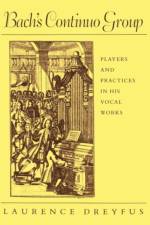
When Bach's cantatas, masses, passions, and chorales were originally performed under the composer's direction, which instruments played the basso continuo, the line that establishes the harmonic framework? Bach's Continuo Group answers this and other fundamental questions and probes the rationale behind Baroque performance conventions.
The culmination of decades of research by premier military historians, this is the first comprehensive, single-volume account of how and why World War II evolved as it did. Moving between the war room and the battlefield, we see how strategies were crafted and revised, and how the multitudes of combat troops struggled to discharge their orders.
One of our most brilliant evolutionary biologists, Richard Lewontin here provides a concise, accessible account of what his work has taught him about biology and about its relevance to human affairs. In the process, he exposes some of the common and troubling misconceptions that misdirect and stall our understanding of biology and evolution.
The laws governing the very small and the very swift defy common sense and stretch our minds to the limit. Drawing on a deep familiarity with the discoveries of the twentieth century, Ford gives an appealing account of quantum physics that will help the serious reader make sense of a science that, for all its successes, remains mysterious.
The age of Roach's Freedom Now Suite, Coltrane's A Love Supreme, and Mingus's The Black Saint and the Sinner Lady was a time when jazz became newly militant and newly seductive, its example shaping the social dramas of the Civil Rights movement, the Black Power movement, and the counterculture. Saul tells the broader story of this period.
Koonz's latest work reveals how racial popularizers developed the infrastructure and rationale for genocide during the so-called normal years before World War II. Challenging conventional assumptions about Hitler, Koonz locates the source of his charisma not in his summons to hate, but in his appeal to the collective virtue of his people, the Volk.
Jackall tells how New York detectives pieced together a case of drug trafficking, money laundering, and murder, centered on a vicious Dominican gang known as the Wild Cowboys. Jackall's New York is a society with irreconcilable differences, fraught with self-doubt and moral ambivalence, where institutional logics often lead to perverse outcomes.
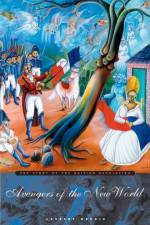
The first and only successful slave revolution in the Americas began in 1791 when brutally exploited slaves rose up against their masters on Saint-Domingue. Dubois weaves the stories of slaves, free people of African descent, wealthy whites, and French administrators into an unforgettable tale of insurrection, war, heroism, and victory.
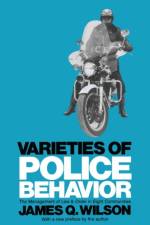
In his new preface, Wilson reviews changes in police styles during the past decade, and explains the reasons for these changes. Varieties of Police Behavior remains unsurpassed in delineating the role of the patrolman and the problems he faces due to constraints imposed by law, politics, public opinion, and the expectations of superiors.
What Rosen's The Classical Style did for music of the Classical period, this highly praised volume does for the Romantic era. An exhilarating exploration of musical language, forms, and styles of the period, it captures the spirit that enlivened a generation of composers and musicians, and so conveys the very sense of Romantic music.
This book is a companion volume to Dynamic Macroeconomic Theory by Thomas J. Sargent. It provides scrimmages in dynamic macroeconomic theory--precisely the kind of drills that people will need in order to learn the techniques of dynamic programming and its applications to economics.
Abonner på vårt nyhetsbrev og få rabatter og inspirasjon til din neste leseopplevelse.
Ved å abonnere godtar du vår personvernerklæring.