






















Gjør som tusenvis av andre bokelskere
Abonner på vårt nyhetsbrev og få rabatter og inspirasjon til din neste leseopplevelse.
Ved å abonnere godtar du vår personvernerklæring.Du kan når som helst melde deg av våre nyhetsbrev.

Two of America's most distinguished military historians bring clarity and depth to the first major war of the new millennium. Reaching beyond the blaring headlines, embedded videophone reports, and daily Centcom briefings, the authors analyze events in light of past military experiences, present battleground realities, and future expectations.
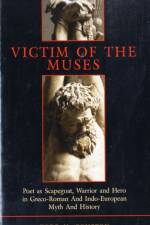
This book probes the narratives of poets who are exiled, tried or executed for their satire. It views the scapegoat as a group's dominant warrior, sent out to confront predators or besieging forces. Both poets and warriors specialize in madness and aggression and are necessary, yet dangerous, to society.
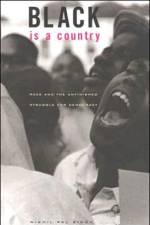
Despite black gains in modern America, racism's end is not yet in sight. Singh asks what happened to the worldly and radical visions of equality that animated black intellectual activists from W. E. B. Du Bois in the 1930s to Martin Luther King Jr. in the 1960s. In so doing, he constructs an alternative history of civil rights in the 20th century.
This book explores the recent spread of political efforts to rectify past injustices. Although it recognizes that reparations campaigns may lead to improved well-being of victims and to reconciliation among former antagonists, it examines the extent to which concern with the past may depart from the future orientation of progressive politics.
In this groundbreaking study, Portnoy links antebellum Indian removal debates with crucial, simultaneous debates about African Americans-abolition of slavery and African colonization-revealing ways European American women negotiated prohibitions to make their voices heard.
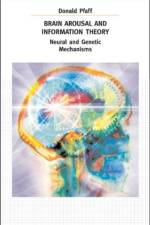
Pfaff presents a daring perspective on the long-standing puzzle of what arousal is. He argues that, beneath our mental functions and emotional dispositions, a primitive neuronal system governs arousal. Employing the simple but powerful framework of information theory, Pfaff revolutionizes our understanding of arousal systems in the brain.
Glassheim examines the transformation of Bohemian noble identity from the rise of mass politics in the late 19th century to the descent of the Iron Curtain after World War II. He offers valuable insights on the nationalization of a conservative political elite, and on the revolutions that recast Central Europe in the first half of the 20th century.
Moving from the scientific revolution to the 19th-century rise of legal codes, Berkowitz tells the story of how lawyers and philosophers invented legal science to preserve law's claim to moral authority. He finds that the subordination of law to science actually transformed law from an ethical order into a tool for social and economic ends.
In the mid-nineteenth century writers such as Hawthorne and Melville produced works of fiction that even today help define American literature. In this work of innovative literary history, Jonathan Arac explains what made this remarkable creativity possible and what it accomplished.
Why do so few women choose a career in science? In one of the most comprehensive studies of gender differences in science careers ever conducted, this book provides a systematic account of how U.S. youth are selected into and out of science education in early life, and how social forces affect career outcomes later in the science labor market.
What teenage girls make of their awakening sexuality-distant from and yet susceptible to cultural stereotypes-emerges for the first time in Dilemmas of Desire. Thoughtful, vivid, and richly informed, this book begins the critical work of understanding the sexuality of young women in all its personal, social, and emotional significance.
As the chief human rights official of the Clinton Administration, John Shattuck faced far-flung challenges. This is the story of what was learned as he and other human rights hawks worked to change the Clinton Administration's human rights policy from disengagement to saving lives and bringing war criminals to justice.
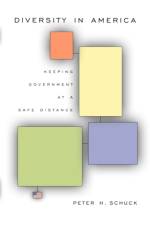
Schuck explains how Americans have understood diversity, how they have come to embrace it, how the government regulates it now, and how we can do better. He argues that diversity is best managed not by the government but by families, ethnic groups, religious communities, employers, voluntary organizations, and other civil society institutions.
Posner argues for a conception of the liberal state based on pragmatic theories of government. He emphasizes the institutional and material, rather than moral and deliberative, factors in democratic decision making. Posner argues that democracy is best viewed as a competition for power by means of regular elections.
This book, one of the few comprehensive attempts at integrating behavioral research into human and nonhuman primates, does precisely that-and in doing so, offers a clear, in-depth look at the mutually enlightening work being done in psychology and primatology.
Widely regarded as the most creative scholar in the field of river morphology, Luna B. Leopold presents a coherent description of the river, its shape, size, organization, and action, along with a consistent theory that explains much of the observed character of channels.
This new edition affords readers the pleasure of John Keats' "trifles" as well as the surprise of his most famous ideas emerging unpredictably. This selection lends great perspective to an epistolary portrait of the poet and recreates the spontaneity with which these letters were originally written.
The authors explain why and how time pressures have emerged and what we can do to alleviate them. In contrast to conventional wisdom that all Americans are overworked, they show that time has become a form of social inequality that is dividing Americans in new ways-between overworked and underemployed, women and men, parents and non-parents.
Frumkin clarifies the debate over the nonprofit sector's privileged position in America by examining how nonprofits deliver services, promote civic engagement, express values and faith, and channel entrepreneurial impulses. He argues that long-term challenges facing nonprofits necessitate a greater balance among these four central functions.
Friedman chronicles the remarkable metamorphosis of the American salesman from itinerant amateur to trained expert. From the mid-19th century to the eve of World War II, the development of sales management transformed an economy populated by peddlers and canvassers to one driven by professional salesmen and executives.
Imagine beetles ejecting defensive sprays as hot as boiling water; female moths holding their mates for ransom; caterpillars disguising themselves as flowers by fastening petals to their bodies-and you will have entered an insect world once beyond imagining, a world observed and described down to its tiniest astonishing detail by Thomas Eisner.
One of Us views conjoined twinning and other "abnormalities" from the point of view of people living with such anatomies, and considers these issues within the larger historical context of anatomical politics. This deeply thought-provoking and compassionate work exposes the extent of the social frame upon which we construct the "normal."
Weird English explores experimental and unorthodox uses of English by multilingual writers traveling from the canonical works of Nabokov and Hong Kingston to the linguistic terrain of Junot Diaz and Arundhati Roy. Ch'ien shows how the collision of other languages with English invigorated and propelled the evolution of language.
In 2002, nuclear-armed adversaries India and Pakistan mobilized for war over the long-disputed territory of Kashmir, sparking panic around the world. Drawing on extensive firsthand experience in the contested region, Sumantra Bose reveals how the conflict became a grave threat to South Asia and the world and suggests feasible steps toward peace.
Competing Devotions focuses on the broad social and cultural forces that create women's identities and shape their understanding of what makes life worth living. Mary Blair-Loy examines the career paths of women financial executives who have tried various approaches to balancing career and family.
This powerful account of how decades of mostly well-intended litigation have eroded the moral authority of teachers and principals and degraded the quality of American education offers a rigorous analysis enriched by vivid descriptions of individual cases. The book explores 1,200 cases in which a school's right to control students was contested.
As the authors show in the first systematic treatment of the subject since the mid-1960s, assimilation continues to shape the immigrant experience. Surveying a variety of domains-language, socioeconomic attachments, residential patterns, and intermarriage-they demonstrate the continuing importance of assimilation in American life.
Schudson holds that news is a form of culture, complete with its own literary and social conventions. A penetrating look into this culture, this book offers a compelling view of the news media's emergence as a central institution of modern society, a key repository of common knowledge and cultural authority.
Through case studies of scientists in the Amazon analyzing soil and in Pasteur's lab studying the fermentation of lactic acid, Latour shows us the myriad steps by which events in the material world are transformed into items of scientific knowledge.
Was punk just another moment in music history? Marcus delves into the after-life of punk as a richer phenomenon-a form of artistic and social rebellion that continually erupts into popular culture. In more than 70 short pieces, he traces the uncompromising strands of punk from Johnny Rotten to Elvis Costello, Sonic Youth, even Bruce Springsteen.
Abonner på vårt nyhetsbrev og få rabatter og inspirasjon til din neste leseopplevelse.
Ved å abonnere godtar du vår personvernerklæring.