








Gjør som tusenvis av andre bokelskere
Abonner på vårt nyhetsbrev og få rabatter og inspirasjon til din neste leseopplevelse.
Ved å abonnere godtar du vår personvernerklæring.Du kan når som helst melde deg av våre nyhetsbrev.

Aristophanes (c. 450-c. 386 BCE) has been admired since antiquity for his wit, fantasy, language, and satire. Over forty of his plays were read in antiquity, from which nearly a thousand fragments survive. These provide a fuller picture of the poet's comic vitality and a wealth of information and insights about his world.
From Augustus to Constantine, the Roman Empire in the Near East expanded step by step, southward to the Red Sea and eastward across the Euphrates to the Tigris. In a remarkable work of interpretive history, Fergus Millar shows us this world as it was forged into the Roman provinces of Judea, Arabia, Mesopotamia, and Syria.
Philip Nord shows how France effected a successful transition from Louis-Napoleon's authoritarian Second Empire to a functioning republic based on universal suffrage and governed by middle-class parliamentarians. His multidimensional narrative encompasses not only history and politics but also religion, philosophy, art, literature, and gender.
Since the inception of Dead Sea Scrolls research, a central theory has emerged, which asserts that the scrolls belonged to the Essenes, a sect whose center was at the nearby site of Qumran. Philosopher Edna Ullmann-Margalit focuses on this theory, exploring the different arenas, and ways, in which contesting theories of the scrolls do battle.
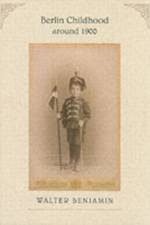
Not an autobiography in the customary sense, Walter Benjamin's Berlin Childhood around 1900 is a recollection of his childhood in an upper-middle-class Jewish home in Berlin's West End at the turn of the century. In this diagram of his life, Benjamin focuses not on persons or events but on places and things, seen from the perspective of a child.
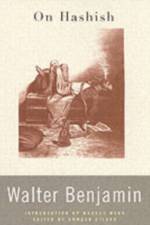
Walter Benjamin's posthumously published collection of writings on hashish is a detailed blueprint for a book that was never written. A series of "protocols of drug experiments," written between 1927 and 1934, together with short prose pieces, On Hashish provides a peculiarly intimate portrait of Benjamin and of his unique form of thought.
In this book, Adrian Vermeule shows that any approach to legal interpretation rests on institutional and empirical premises about the capacities of judges and the systemic effects of their rulings. He argues that legal interpretation is above all an exercise in decisionmaking under severe empirical uncertainty.
Pontano was the most innovative, versatile Latin poet of Quattrocento Italy. His Two Books of Hendecasyllables, subtitled Baiae, are the elegant offspring of Pontano's leisure, written to celebrate love, good wine, friendship, nature, and all the pleasures of life to be found at the seaside resort of Baiae on the Bay of Naples.
Poliziano was one of the great scholar-poets of the Italian Renaissance. This volume illuminates his close friendship with Pico della Mirandola and includes much of the correspondence about the composition and reception of his Miscellanies, a revolutionary work of philology. It also includes his famous letter on the death of Lorenzo de' Medici.
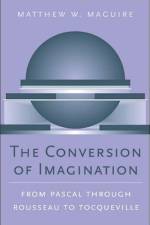
Maguire uncovers a history of French thought that casts the imagination as a dominant faculty in our experience of the world. Original and thought-provoking, this book will interest a range of readers across intellectual history, political theory, literary and cultural studies, and the history of religious thought.
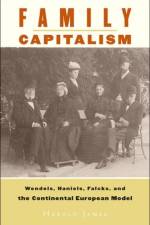
James tells how "iron masters" of a classical industrial cast were succeeded by generations who wanted to shift to information-age systems technologies, and how families and firms wrestled with social and economic changes that occasionally tore them apart. The author shows how these firms illuminate a European model of "relationship capitalism."
In this sumptuously illustrated companion volume to Bird Coloration: Volume 1, Mechanisms and Measurements, the authors explain the function of the colorful displays of birds and examine the factors that shape the evolution of color signals.
Jiwei Ci explores the dual nature of justice to make unitary sense of key features of justice reflected in its close relation to resentment, punishment, and forgiveness. He probes the human psychology of justice to understand what motivates moral agents who seek to behave justly, and why their desire to be just is as precarious as it is uplifting.
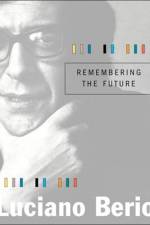
Berio shares with us some musical experiences that "invite us to revise or suspend our relation with the past and to rediscover it as part of a future trajectory." His scintillating meditation on music and the ways of experiencing it reflects the composer's profound understanding of the history and contemporary practice of his art.
This study of poetry composed between the end of the first century B.C.E. and the third century C.E. examines extant material synchronically, as if it were not historically arranged. It also considers how scholars of the late fifth and early sixth centuries selected this material and reshaped it to produce the standard account of classical poetry.
Distinctive female dress styles, gender divisions of labor, and powerful same-sex networks have long distinguished villages in this coastal region of southeastern China from other rural Han communities. Intimate Politics explores these practices that have constituted eastern Hui'an residents, women in particular, as an anomaly among rural Han.
Linda Nochlin explores the contradictions and dissonances that mark experience as well as art. Her book confronts the issues posed in representations of the body in the art of impressionists, modern masters, and contemporary realists and post-modernists.
A participant in the Tiananmen Square movement, Wang Hui is also editor of the most important intellectual journal in contemporary China. He argues that the features of contemporary China are elements of the new global order as a whole in which considerations of economic growth and development have trumped democracy and social justice.
This pioneering American cultural history connects everyday attitudes and anxieties about failure to lofty ideals of individualism and salesmanship of self. Sandage's storytelling brings to life forgotten individuals who wrestled with The Loser-the label and the experience-in the days when American capitalism was building a nation of winners.
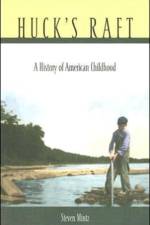
With a nod to the past, Mintz revisits an alternative to the goal-driven realities of contemporary childhood. An odyssey of psychological self-discovery and growth, this book suggests a vision of childhood that embraces risk and freedom-like the daring adventure on Huck's raft.
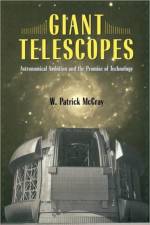
By focusing on the history of the Gemini Observatory-twin 8-meter telescopes located on mountain peaks in Hawaii and Chile-Giant Telescopes tells the story behind the planning and construction of modern scientific tools, offering a detailed view of the technological and political transformation of astronomy in the postwar era.
This book illuminates the cultural legacy of sovereign thinking that emerged from the violent meetings between the British Empire and the Qing Dynasty (1644-1911). Liu demonstrates how the collision of imperial will and competing interests led to the invention of "China," "the East," "the West," and the notion of "the world" in recent history.
This book-arguably the longest longitudinal study of age, crime, and the life course to date-analyzes data on crime and social development up to age 70 for 500 men who were remanded to reform school in the 1940s. The authors find that men who desisted from crime were rooted in structural routines and had strong social ties to family and community.
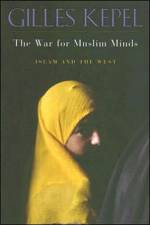
September 11, 2001, forever changed the world as we knew it. In its wake, the quest for international order has prompted a reshuffling of global aims and priorities. This fresh approach focuses on the Middle East as a nexus of international disorder and decodes the language of war, propaganda, and terrorism that holds the region in its thrall.
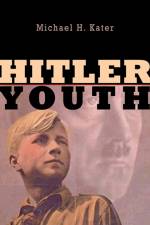
In modern times, the recruitment of children into a political organization and ideology reached its boldest embodiment in the Hitler Youth, founded in 1933. Drawing on reports, letters, diaries, and memoirs, Kater maps the history of the Hitler Youth, examining the means, degree, and impact of conversion, and the subsequent fate of young recruits.
Drawing on national surveys and interviews with high school teachers and administrators, Ingersoll reveals shortcomings in the two opposing viewpoints that dominate thought on this subject: that schools are too decentralized and lack adequate control and accountability; and that schools are too centralized, giving teachers too little autonomy.
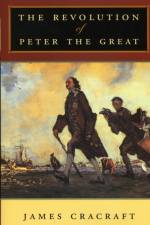
Many books chronicle the remarkable life of Peter the Great, but none analyze how his famous reforms took root and spread in Russia. By century's end, Russia was poised to play a critical role in the Napoleonic wars and boasted an elite culture on the cusp of its golden age. Here, Cracraft offers a brilliant new interpretation of this pivotal era.
Pursuing the flag's conflicting meanings, Coski suggests how this provocative artifact, which has been viewed with pride, fear, anger, nostalgia, and disgust, might ultimately provide Americans with the common ground of a shared and complex history.
Auyang demonstrates that engineering is not only a collaborator with science but its equal. In concise accounts of the emergence of industrial laboratories and chemical and electrical engineering, and in histories of machine tools and automobile industries and the rise of nuclear energy and IT, she presents a broad picture of modern engineering.
Abonner på vårt nyhetsbrev og få rabatter og inspirasjon til din neste leseopplevelse.
Ved å abonnere godtar du vår personvernerklæring.