

















Gjør som tusenvis av andre bokelskere
Abonner på vårt nyhetsbrev og få rabatter og inspirasjon til din neste leseopplevelse.
Ved å abonnere godtar du vår personvernerklæring.Du kan når som helst melde deg av våre nyhetsbrev.

In the past 25 years, no one has been more instrumental than MacKinnon in making equal rights real for women. This collection brings together previously uncollected and unpublished work in the national arena from 1980 to the present, defining her clear, coherent, consistent approach to reframing the law of men on the basis of the lives of women.
No account is more critical to our understanding of Joan of Arc than the contemporary record of her 1431 trial. The record, which sometimes preserves Joan's very words, unveils her life, character, visions, and motives in fascinating detail. This new translation, the first in 50 years, is based on the full record of the trial proceedings in Latin.
Part handbook, part field guide, part photo album, Secret Weapons, the follow-up to the award-winning For Love of Insects, chronicles the diverse and often astonishing defensive strategies that have allowed insects, spiders, scorpions, and other many-legged creatures not just to survive, but to thrive.
In 1898 the American Regular Army was a small frontier constabulary engaged in skirmishes with Indians and protesting workers; 43 years later, it was a large modern army ready to wage war against the Germans and the Japanese. In this social history of America's standing army, a military historian tells how that transformation was accomplished.
Studies of collaboration have changed how the history of World War II in Europe is written, but for China and Japan this aspect of wartime conduct has remained largely unacknowledged. In a bold new work, Timothy Brook breaks the silence surrounding the sensitive topic of wartime collaboration between the Chinese and their Japanese occupiers.
Between the early 17th century and the early 20th, nearly all U.S. land was transferred from American Indians to whites. Banner argues that neither simple coercion nor simple consent reflects the complicated legal history of land transfers-time, place, and the balance of power between Indians and settlers decided the outcome of land struggles.
This book revisits the electoral college crisis of 1800, offering a new understanding of the early plebiscitarian presidency and a Supreme Court struggling to put the presidency's claims of a popular mandate into constitutional perspective. Ackerman shows how the early court integrated Federalist and Republican themes into the Constitution.
Analytic philosophers once pantomimed physics, trying to understand the world by breaking it down. Thinkers from the Darwinian sciences now pose alternatives to such reductionism. Wimsatt argues that today's scientists seek to atomize phenomena only to understand how entities, events, and processes articulate at different levels.
In this updated version of his landmark study on alcoholism, George Vaillant returns to the same subjects, but with the perspective gained from fifteen years of further follow-up.
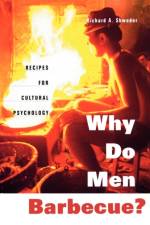
Drawing on ethnographic studies of the distinctive modes of psychological functioning in communities around the world, Shweder explores ethnic and cultural differences in ideals of gender, in the life of the emotions, in conceptions of mature adulthood and the stages of life, and in moral judgments about right and wrong.
In multidisciplinary efforts to understand and manage our planet, contemporary ocean science plays an essential role. Volumes 13 and 14 of The Sea focus on two of the most important components in the field of ocean science today-the coastal ocean and its interactions with the deep sea, and coupled physical-biogeochemical and ecosystem dynamics.
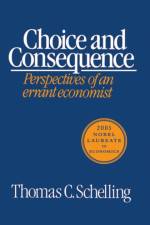
In Choice and Consequence, Thomas Schelling ventures where rationality is ambiguous, exploring topics as awesome as nuclear terrorism, as sordid as blackmail, as ineffable as daydreaming, as intimidating as euthanasia. He examines ethical issues wrapped up in economics, and discloses ethical issues that are misplaced or misidentified.
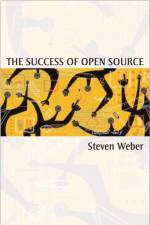
Weber argues that ensuring free distribution of code among computer programmers can create a more effective process for developing intellectual products. He suggests that the success of open source is not a freakish exception to economic principles and explains the political and economic dynamics of this critical market development.
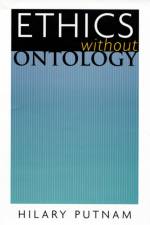
Can ethical judgments properly be considered objective? Reviewing what he deems the disastrous consequences of ontology's influence on analytic philosophy-in particular, the contortions it imposes upon debates about the objective of ethical judgments-Putnam proposes abandoning the very idea of ontology.
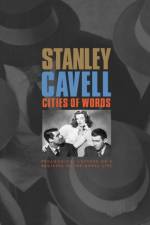
This book--which presents a course of lectures Cavell presented several times toward the end of his teaching career at Harvard--links masterpieces of moral philosophy and classic Hollywood comedies to fashion a new way of looking at our lives and learning to live with ourselves.
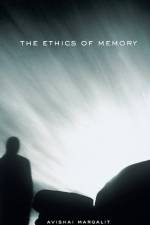
Margalit's work offers a philosophy for our time, when, in the wake of overwhelming atrocities, memory can seem more crippling than liberating, a force more for revenge than for reconciliation. The book draws on millennia of Western philosophy and religion to provide healing ideas for all who care about the nature of our relations to others.
In this history of China for the 900-year span of the late imperial period, Mote highlights the personal characteristics of the rulers and dynasties and probes the cultural theme of Chinese adaptations to recurrent alien rule. Generational events, personalities, and the spirit of the age combine to yield a comprehensive history of the civilization.
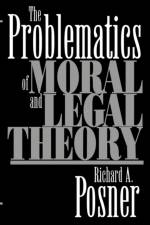
Posner characterizes the current preoccupation with moral and constitutional theory as an evasion of the real need of American law, which is for a greater understanding of the social, economic, and political facts out of which great legal controversies arise, and advocates a rebuilding of the law on the basis of systematic empirical inquiry.
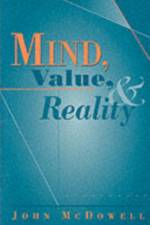
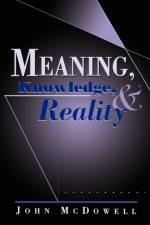
This book collects some of McDowell's most influential papers of the last two decades. The essays deal with themes such as the interpretation of Aristotle's and Plato's ethical writings, questions in moral philosophy that arise out of the Greek tradition, Wittengensteinian ideas about reason in action, and issues central to philosophy of mind.
This is the second volume of John McDowell's selected papers. These nineteen essays collectively report on McDowell's involvement, over more than twenty years, with questions about the interface between the philosophies of language and mind and with issues in general epistemology. Throughout McDowell focuses on questions to do with content.
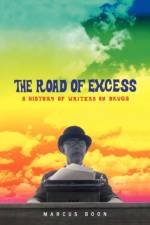
From the antiquity of Homer to yesterday's Naked Lunch, writers have found inspiration, and readers have lost themselves, in a world of the imagination tinged and oftentimes transformed by drugs. The age-old association of literature and drugs receives its first comprehensive treatment in this far-reaching work.
Representation-in visual arts and fiction-play an important part in our lives and culture. Walton presents a theory of representation which illuminates its many varieties and goes a long way toward explaining its importance. Walton's theory also provides solutions to thorny philosophical problems concerning the existence of fictitious beings.
The title of this book by Perry Miller, a world-famous interpreter of the American past, nearly poses the question it has been his lifelong purpose to answer: What was the underlying aim of the first colonists in coming to America? Miller emphasizes the need for understanding the human sources from which the American mainstream has risen.
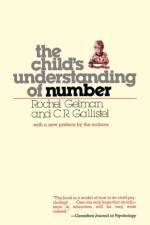
The authors report the results of some half dozen years of research into when and how children acquire numerical skills. They provide a new set of answers to these questions, and overturn much of the traditional wisdom on the subject.
Rationality and freedom are among the most profound and contentious concepts in philosophy and the social sciences. In two volumes on rationality, freedom, and justice, distinguished economist and philosopher Sen brings clarity and insight to these issues. This volume-the first of the two-is principally concerned with rationality and freedom.
This work presents in English translation the largest collection ever assembled of the sayings and stories of Jesus in Arabic Islamic literature. The 300 sayings and stories, arranged in chronological order, show us how the image of this Jesus evolved throughout a millennium of Islamic history.
Each body recovered at a crime scene is an ecosystem, a unique microenvironment colonized in succession by a diverse array of flies, beetles, mites, spiders, and other arthropods. Using actual cases, Goff shows how knowledge of these insects and their habits allows forensic entomologists to furnish investigators with crucial evidence about crimes.
In a profound new analysis of Dickinson's life and work, Judith Farr explores the desire, suffering, exultation, spiritual rapture, and intense dedication to art that characterize Dickinson's poems, deciphering their many complex and witty references to texts and paintings of the day.
Between 1650 and 1750, four Catholic churches were the best solar observatories in the world. This book tells how these observatories came to be, how they worked, and what they accomplished, providing a magnificent corrective to long-standing oversimplified accounts of the hostility between science and religion.
Abonner på vårt nyhetsbrev og få rabatter og inspirasjon til din neste leseopplevelse.
Ved å abonnere godtar du vår personvernerklæring.