
























Gjør som tusenvis av andre bokelskere
Abonner på vårt nyhetsbrev og få rabatter og inspirasjon til din neste leseopplevelse.
Ved å abonnere godtar du vår personvernerklæring.Du kan når som helst melde deg av våre nyhetsbrev.

This book assesses the changing nature of state intervention in the economies of the affluent democracies. Against a common understanding that developments like globalization are pressing for a rollback of state regulation in the economy, the book shows that these same forces are also creating new demands and opportunities for state intervention.
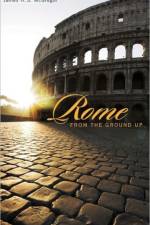
Rome is not one city but many, each with its own history unfolding from a different center. Beginning with the shaping of the ground on which Rome first rose, this book conjures all these cities, conducting the reader through time and space to the complex and shifting realities-architectural, historical, political, and social-that constitute Rome.
Witt argues that experiments in accident law at the turn of the 20th century arose out of competing views of the loose network of ideas and institutions that historians call the ideology of free labor. These experiments a century ago shaped 20th- and 21st-century American accident law and laid the foundations of the American administrative state.
At the height of the Cold War, the U.S. State Department unleashed an unexpected tool in its battle against Communism: jazz. From 1956 through the late 1970s, America dispatched its finest jazz musicians to win the hearts and minds of the Third World and to counter perceptions of American racism. Von Eschen tells this fascinating story.
In this down-to-earth book, filled with the voices of young people speaking for themselves, Savin-Williams argues that the standard image of gay youth presented by mental health researchers-as depressed, isolated, drug-dependent, even suicidal-may have been exaggerated even twenty years ago, and is far from accurate today.
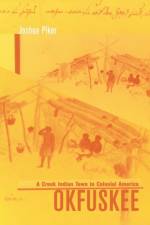
This perspective on life in a Native society offers understanding of the pervasiveness of colonialism's influence and the inventiveness of Native responses. By comparing the experiences of the Okfuskee and their British American contemporaries, the book relates how Native and Euro-American histories intersected with, and diverged from, each other.
Despair at Gallipoli. Victory at Vimy Ridge. A European generation lost, an American spirit found. The First World War, the deadly herald of a new era, continues to captivate readers. In this lively book, Neiberg offers a concise history based on the latest research and insights into the soldiers, commanders, battles, and legacies of the Great War.
The metaphor of the Scientific Revolution, Moran argues, can be expanded to make sense of alchemy and other so-called pseudo-sciences-by including a new framework in which "process can count as an object, in which making leads to learning, and in which the messiness of conflict leads to discernment."
Sibling rivalry and intergenerational conflict are not limited to humans. Among seals and piglets, storks and burying beetles, in bird nests and beehives, family conflicts can be deadly serious, determining who will survive and who will perish. Mock tells us what scientists have learned about this disturbing side of family dynamics in the nature.
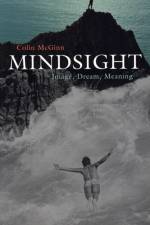
The guiding thread of this book is the distinction McGinn draws a distinction between perception and imagination, showing what the differences are, arguing that imagination is a sui generis mental faculty. His overall claim is that imagination pervades our mental life, obeys its own distinctive principles, and merits much more attention.
Kennedy takes us into the controlled commotion of the classroom, revealing how painstakingly teachers plan their lessons, and how many different ways things go awry. She argues that pedagogical reform proposals that do not acknowledge all of the things teachers need to do are bound to fail.
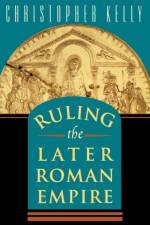
Kelly portrays a complex system of government openly regulated by networks of personal influence and the payment of money. Focusing on the Roman Empire after Constantine's conversion to Christianity, Kelly illuminates a period of increasingly centralized rule through an ever more extensive and intrusive bureaucracy.
Every society needs clean air and water; every state must manage its natural resources. In this comparative study, Josephson asks to what extent the form of a government and its economy determines how politicians, bureaucrats, scientists, engineers, and industrialists address environmental and social problems presented by a humanized landscape.
From 1687, the year when Newton published his Principia, to the Crystal Palace Exhibition of 1851, science gradually became central to Western thought and economic development. The book examines how, despite powerful opposition on the Continent, a Newtonian understanding gained acceptance and practical application.
In this fascinating introduction to primate minds, Gomez identifies evolutionary resemblances-and differences-between human children and other primates. He argues that primate minds are best understood not as fixed collections of specialized cognitive capacities, but instead as a range of abilities that can surpass their original adaptations.
A generation has passed since a physician first noticed that women who drank heavily while pregnant gave birth to underweight infants with disturbing tell-tale characteristics. in Message in a Bottle, Golden charts the course of Fetal Alcohol Syndrome (FAS) through the courts, media, medical establishment, and public imagination.
The most significant conquest of the 20th century may have been the triumph of American consumer society over Europe's bourgeois civilization. It is this campaign that unfolds in de Grazia's account of how the American standard of living defeated the European way of life and achieved the global cultural hegemony.
How have major civilizations of the last two millennia treated people who were attracted to their own sex? Crompton chronicles the lives and achievements of homosexual people alongside a darker history of persecution, as he compares the Christian West with the cultures of ancient Greece and Rome, Arab Spain, imperial China, and pre-Meiji Japan.
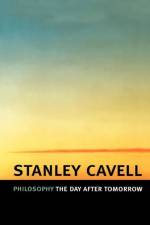
Seeking for philosophy the same spirit and assurance conveyed by artists like Fred Astaire, Cavell presents essays exploring the meaning of grace and gesture in film and on stage, in language and in life. Critical to the renaissance in American thought Cavell hopes to provoke is the recognition of the centrality of the "ordinary" to American life.
Ethnic groups continue to be conceived as entities and cast as actors. Journalists and others frame accounts of ethnic, racial, and national conflict as the struggles of internally homogeneous, externally bounded ethnic groups, races, and nations. In doing so, they adopt the participants language and contribute to the reification of ethnic groups.
As this book clearly demonstrates, structural flaws in corporate governance have produced widespread distortions in executive pay. Pay without Performance presents a disconcerting portrait of managers' influence over their own pay--and of a governance system that must fundamentally change if firms are to be managed in the interest of shareholders.
In a compelling analysis of the interplay among assassinations, Western bombardment of Japanese cities and fertile cultural and intellectual exchange, Auslin offers a persuasive reading of the birth of modern Japan at the signing of the "unequal" commercial treaty with the U.S., and its struggle to determine its future relations with the world.
In The Private Self, Arnold Modell contributes an interdisciplinary perspective in formulating a theory of the private self. A leading thinker in American psycho-analysis, Modell here studies selfhood by examining variations on the theme of the self in Freud and in the work of object relations theorists, self psychologists, and neuroscientists.
Turning Freud's famous dictum around, Thomas Laqueur posits that destiny is anatomy. Sex, in other words, is an artifice; and Making Sex tells the astonishing story of sex in the West from the ancients to the moderns.
Ranging from the latest achievements of modern fertility clinics to the lives of subsistence farmers in the rain forests of Africa, this book offers both a remarkably broad and a minutely detailed exploration of human reproduction. Ellison combines the perspectives of anthropology, ecology, and evolutionary biology.
John W. O'Malley works out a remarkable guide to the intellectual and historical developments behind the concepts of Catholic reform, the Counter Reformation, and, in his felicitous term, Early Modern Catholicism. The result is the single best overview of scholarship on Catholicism in early modern Europe, delivered in a pithy, entertaining style.
Dickinson's poems, more than those of any other poet, resist translation into the medium of print. This elegant edition presents all of her manuscript books and unsewn fascicle sheets--1,148 poems on 1,250 pages--restored insofar as possible to their original order. The manuscripts are reproduced with startling fidelity in 300-line screen.
This volume of the world-acclaimed series covers the period between the French Revolution and World War I. It gives us a vibrant picture of a bourgeois century, dynamic and expansive, in which the role of woman in the home was stressed, even as the economic pressures and opportunities of the industrial revolution drew her out of the house.
According to Yeats, rhetoric is the expression of one's quarrels with others, while poetry is the expression (and sometimes the resolution) of one's quarrel with oneself. This is where Vendler begins in Our Secret Discipline. Through exquisite attention to outer and inner forms, Vendler explores the most inventive reaches of the poet's mind.
Abonner på vårt nyhetsbrev og få rabatter og inspirasjon til din neste leseopplevelse.
Ved å abonnere godtar du vår personvernerklæring.