


















Gjør som tusenvis av andre bokelskere
Abonner på vårt nyhetsbrev og få rabatter og inspirasjon til din neste leseopplevelse.
Ved å abonnere godtar du vår personvernerklæring.Du kan når som helst melde deg av våre nyhetsbrev.

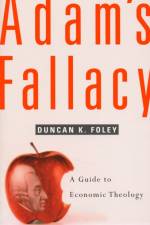
This book could be called "The Intelligent Person's Guide to Economics." The title expresses Duncan Foley's belief that economics at its most abstract and interesting level is a speculative philosophical discourse, not a deductive or inductive science.
How should a judge's moral convictions bear on his judgments about what the law is? In Justice in Robes, Ronald Dworkin argues that this question is much more complex than it has often been taken to be and charts a variety of dimensions in which law and morals are undoubtedly interwoven.
The Scandal of Empire reveals that the conquests and exploitations of the East India Company were critical to England's development in the eighteenth century and beyond. In this powerfully written critique, Nicholas Dirks shows how the empire projected its own scandalous behavior onto India itself.
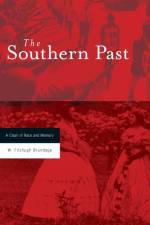
Since the Civil War whites and blacks have struggled over the meanings and uses of the Southern past. The Southern Past argues that these battles are ultimately about who has the power to determine what we remember of the past, and whether that remembrance will honor all Southerners or only select groups.
Departing from traditional approaches to colonial legal history, Mary Sarah Bilder argues that American law and legal culture developed within the framework of an evolving, unwritten transatlantic constitution that lawyers, legislators, and litigants on both sides of the Atlantic understood.
Berkhoff describes how a blend of German nationalism, anti-Semitism, and racist notions about the Slavs produced a reign of terror and genocide in the Third Reich's largest colony. He also shows how a pervasive Soviet mentality worked against solidarity, explaining why the vast majority of the population did not resist the Germans.
Tracing the structure and evolution of Idealism as a doctrine, this title exposes an objective, or realist, strain running from Kant to Hegel and identifies the role of the early romantics as the founders of absolute Idealism.
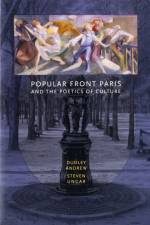
Employing a "poetics of culture" to capture the complex atmospherics of 1930s Paris, the authors have produced something closer to the format of an illustrated newspaper than a straight story of the Popular Front. The book's multiple columns represent the breadth of urban life during this critical decade at the end of the Third French Republic.
Combining clinical experience with patients' own stories, the authors cover the causes of and prognosis for SCI through case studies, review common courses of rehabilitation, and answer the "what now?" questions-from daily routines to larger issues concerning sex, education and employment, childbearing, and parenting with SCI.
In the fourth century a new narrative genre captured the imagination of the faithful-the accounts of the lives of Christian saints. Kleinberg argues that these stories were more than edifying entertainment. By retelling the story of virtue and salvation, by expanding the religious imagination of the West, they were reshaping Christianity itself.
This reader consists of 90 selections illustrating the history of Rome from the myth of Aeneas to the founding of the Augustan Principate. The selections have been chosen with three aims: gradual increase in length and difficulty, continuity of subject matter, and stylistic variety. Historical background is provided in prefaces to the selections.
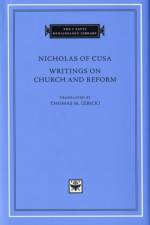
Nicholas of Cusa (1401-1464), a student of canon law who became a Catholic cardinal, was widely considered the most important original philosopher of the Renaissance. He wrote principally on theology, philosophy, and church politics. This volume makes most of Nicholas's other writings on Church and reform available in English for the first time.
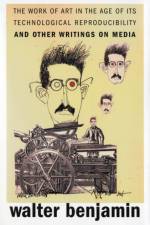
Benjamin's famous "Work of Art" essay sets out his boldest thoughts-on media and on culture in general. This book contains the second, and most daring, of the four versions of the "Work of Art" essay-the one that addresses the utopian developments of the modern media.
This fifth volume in the world-acclaimed series brings the history of women up to the present, placing it in the context of momentous events and profound social changes that have marked our time.
Neither minimizing the difficulty of the choices that modern genetics has created for us nor fearing them, Cowan argues that we can improve the quality of our own lives and the lives of our children by using the modern science and technology of genetic screening responsibly.
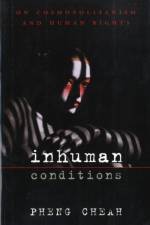
Through an examination of debates about cosmopolitanism and human rights, Cheah questions key ideas about what it means to be human, and reveals the flaws in claims about the imminent decline of the nation-state and the obsolescence of popular nationalism.
How did the conflict between Vietnamese nationalists and French colonial rulers erupt into a major Cold War struggle between communism and Western liberalism? In this work, leading scholars examine various dimensions of the struggle between France and Vietnamese revolutionaries that began in 1945 and reached its climax at Dien Bien Phu.
Gingerich argues that an individual can be both a creative scientist and a believer in divine design-that indeed the motivation for scientific research can derive from a desire to trace God's handiwork. He carves out "a theistic space" from which to contemplate a universe where God plays an interactive role, unnoticed yet not excluded by science.
Liberals often worry that inviting moral and religious argument into the public sphere runs the risk of intolerance and coercion. These essays respond to that concern by showing that substantive moral discourse in a pluralist society is not at odds with progressive public purposes.
This classic psychological case study focuses on a talkative child's emerging ability to use language, her capacity for understanding, for imagining, and for making inferences and solving problems. Scholars offer multifaceted linguistic and psychological analyses of two-year-old Emily's bedtime conversations and pre-sleep monologues over 15 months.
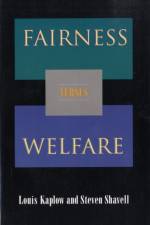
Fairness versus Welfare poses a bold challenge to contemporary moral philosophy by showing that most moral principles conflict more sharply with welfare than is generally recognized. It has profound implications for the theory and practice of policy analysis and has already generated considerable debate in academia.
This classic work in the anthropology of law offers ambitiously conceived analyses of the fundamental rights and duties treated as law among nonliterate peoples. The heart of the book is an analysis of the law of five societies: the Eskimo; the Ifugao; the Comanche, Kiowa, and Cheyenne tribes; the Trobriand Islanders; and the Ashanti.
Simei Qing offers a new perspective on relations between the U.S. and China after World War II. Based on American, Russian, and newly declassified Chinese sources, this book reveals rarely examined assumptions entrenched in mainstream policy debates on both sides, and sheds light on the origins and development of U.S.-China confrontations.
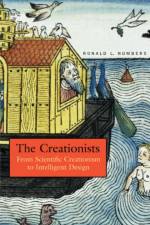
As "intelligent design" makes headway against Darwinism in the schools and courts, this account of the roots of creationism assumes new relevance. Expanded and updated to account for the appeal of intelligent design and the global spread of creationism, this book offers a balanced overview of the arguments and figures at the heart of the debate.
In the decades leading up to World War I, nationalist activists in imperial Austria labored to transform linguistically mixed rural regions into politically charged language frontiers. Using examples from several regions, including Bohemia and Styria, Judson traces the struggle to consolidate the loyalty of local populations for nationalist causes.
This book tells the story of the site, from its creation to its modern acquisition of different and potent meanings for Muslim, Christian, and Jewish cultures. Primarily it is as a work of art that the Dome of the Rock emerges from these pages, understood for the quality that allows it to transcend time-and perhaps even faith and culture.
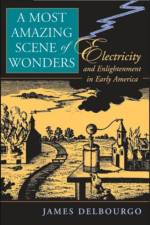
Delbourgo traces electricity through early American culture, exploring the relationships amongst human, natural, and divine powers in the 18th century. By examining natural philosophers, showmen, preachers, and medical therapists, he shows how electrical experiences were connected to cultural concerns that defined the American Enlightenment.
This book presents general equilibrium theory for advanced undergraduate and graduate-level economics students. It discusses economic efficiency, competitive equilibrium, the welfare theorems, the Kuhn-Tucker approach to general equilibrium, the Arrow-Debreu model, and rational expectations equilibrium and the permanent income hypothesis.
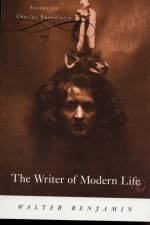
In these essays, Benjamin challenges the image of Baudelaire as late-Romantic dreamer, and evokes instead the modern poet caught in a life-or-death struggle with the forces of the urban commodity capitalism that had emerged in Paris around 1850.
In this book, the authors reconceptualize cost-benefit analysis, arguing that its objective should be overall well-being rather than economic efficiency. This book not only places cost-benefit analysis on a firmer theoretical foundation, but also has many practical implications for how government agencies should undertake cost-benefit studies.
Abonner på vårt nyhetsbrev og få rabatter og inspirasjon til din neste leseopplevelse.
Ved å abonnere godtar du vår personvernerklæring.