






















Gjør som tusenvis av andre bokelskere
Abonner på vårt nyhetsbrev og få rabatter og inspirasjon til din neste leseopplevelse.
Ved å abonnere godtar du vår personvernerklæring.Du kan når som helst melde deg av våre nyhetsbrev.

Imprisoned for conspiring against Pope Paul II, Platina (1421-1481) returned to favor under Pope Sixtus IV, and composed this biographical compendium of the Roman popes, which became the standard reference on papal history for early modern Europe. This first complete translation into English is accompanied by an improved Latin text.
This book explores the similar ways in which information is encoded in nonverbal man-made signals (e.g., traffic lights, tornado sirens) and animal-evolved signals (e.g., color patterns, vocalizations). Drawing on semiotics, animal behavior, psychology, and allied fields, it surveys animal signaling and an important class of human communication.
The first book to provide a basic introduction to Real Business Cycle (RBC) and New-Keynesian models is designed to teach the economic practitioner or student how to build simple RBC models. Matlab code for solving many of the models is provided, and careful readers should be able to construct, solve, and use their own models.
In creatures as different as crickets and scorpions, mole rats and elephants, there exists an overlooked channel of communication: signals transmitted as vibrations through a solid substrate. In this book, Hill summarizes a generation of groundbreaking work by scientists around the world on this long understudied form of animal communication.
It's a long-standing pattern: elite workers spurn public jobs, while less skilled workers cling to government work as a refuge from a harsh private economy. Donahue documents government's isolation from the rest of the U.S. economy and arrays the stark choices we confront for narrowing, or accommodating, the divide between public and private work.
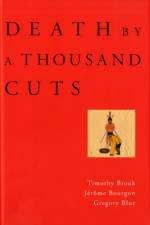
In Beijing in 1904, multiple murderer Wang Weiqin became one of the last to suffer the extreme punishment known as lingchi, called by Western observers "death by a thousand cuts." This is the first book to explore the history, iconography, and legal contexts of Chinese tortures and executions from the 10th century until lingchi's abolition in 1905.
The Struggle against Dogmatism elucidates Wittgenstein's view that there are no theses, doctrines, or theories in philosophy. This book makes Wittgenstein's philosophical approach comprehensible by presenting it as a response to specific problems relating to the practice of philosophy, in particular the problem of dogmatism.
Abraham explores the development and interdependency of the tort liability regime and the insurance system in the United States during the twentieth century and beyond, including the events of September 11, 2001.
This book depicts religion in place and in movement, dwelling and crossing. Drawing on insights from the natural and social sciences, Tweed's work is grounded in the particulars of distinctive religious practices, even as it moves toward ideas about cross-cultural patterns. It offers a responsible way to think broadly about religion.
American Protest Literature presents sources from eleven protest movements-political, social, and cultural-from the Revolution to abolition to gay rights to antiwar protest. In this impressive work, Zoe Trodd provides an enlightening and inspiring survey of this most American form of literature.
Studying the Jew investigates those German scholars who forged an interdisciplinary field to create a comprehensive portrait of the Jew, fabricating an empirical basis for Nazi antisemitic policies.
Drawing on black newspapers and commentary of the period, Sotiropoulos shows how black performers and composers participated in politically charged debate about the role of the expressive arts in the struggle for equality. They used America's new businesses of entertainment as vehicles for their creativity and as spheres for political engagement.
As Louisiana and Cuba emerged from slavery in the late nineteenth century, each faced the question of what rights former slaves could claim. Degrees of Freedom compares and contrasts these two societies in which slavery was destroyed by war, and citizenship was redefined through social and political upheaval.
Often considered a lost decade, a pause between the liberal Sixties and Reagan's Eighties, the 1970s were indeed a watershed era when the forces of a conservative counter-revolution cohered. A critical decade in American history, Rightward Bound illuminates the seeds of both the successes and the failures of the conservative revolution.
Quintessence collects Quine's classic essays in one volume, offering a much-needed introduction to his general philosophy. The selections take up analyticity and reductionism; the indeterminacy of translation of theoretical sentences and the inscrutability of reference; ontology; naturalized epistemology; philosophy of mind; and extensionalism.
In a book sure to provoke debate, Minxin Pei examines the sustainability of the Chinese Communist Party's reform strategy--pursuing pro-market economic policies under one-party rule. Combining powerful insights with empirical research, China's Trapped Transition offers a provocative assessment of China's future as a great power.
Venice emerged on mudflats at the edge of the habitable world. Protected in a tidal estuary from invaders and Byzantine overlords, the fishermen and traders who settled there crafted a way of life unique in the Roman Empire. McGregor recreates this world, with its waterways rather than roads and its livelihood harvested from the sea.
An unforgettable voyage filled with delightful characters, dramatic encounters, and rich cultural details, this book heralds a moment of intellectual preparation for the modern global era. Harry Liebersohn examines the transformation of global knowledge during the great age of scientific exploration.
Plenty Coups, last great Chief of the Crow Nation, said, "When the buffalo went away the hearts of my people fell to the ground and they could not lift them up again. After this nothing happened." In Lear's view, this story raises an ethical question that challenges us all: how should one face the possibility that one's culture might collapse?
Bringing insights from research in developmental psychology to pedagogy, Kuhn argues that inquiry and argument should be at the center of a "thinking curriculum"--a curriculum that makes sense to students as well as to teachers and develops the skills and values needed for lifelong learning.
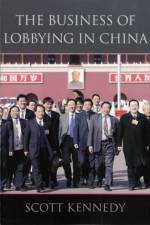
Based on over 300 in-depth interviews with company executives, business association representatives, and government officials, this study identifies a wide range of national economic policies influenced by lobbying, including taxes, technical standards, and intellectual property rights.
In the 1970s, whites mobilized around a new version of the epic tale of plucky immigrants in the New World. Although this turn to ethnicity was for many an individual search for familial and psychological identity, Jacobson establishes a broader white social and political consensus responding to the political language of the Civil Rights movement.
Americans today "know" that a majority of the population supports the death penalty and that half of all marriages end in divorce. But such data became common currency only in the last century. Igo demonstrates the power of scientific surveys to shape Americans' sense of themselves as individuals, members of communities, and citizens of a nation.
By examining the history of menopause over the course of the twentieth century, Houck shows how the experience and representation of menopause has been profoundly influenced by biomedical developments and by changing roles for women and the changing definition of womanhood.
Since 1945, the average length of civil wars has increased three-fold. What explains this startling fact? Hironaka points to the crucial role of the international community in propping up new and weak states that resulted from the postwar decolonization movement. These states are prone to conflicts and lack the resources to resolve them decisively.
This is the first extensive study of how anti-Semitism pervaded and shaped Nazi propaganda during World War II and the Holocaust, and how it pulled together diverse elements of a delusionary Nazi worldview. In an era when both anti-Semitism and conspiracy theories continue to influence world politics, Herf offers a timely reminder of their dangers.
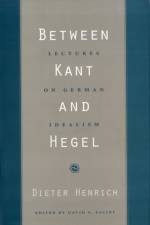
Dieter Henrich's lectures on German idealism were the first contact a major German philosopher had made with an American audience since the onset of World War II. They remain one of the most eloquent interpretations of the central philosophical tradition of Germany and the way in which it relates to the concerns of contemporary philosophy.
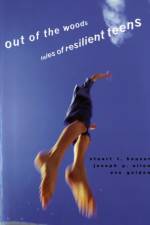
Deeply troubled teenagers spend time in a locked psychiatric ward. They are out of control-violent or suicidal, in trouble with the law, unpredictable, and dangerous. Twenty years later, a handful of them are thriving. In a series of interviews that began during their hospitalizations and ended years later, these teens tell their stories.
The meeting captured headlines; the waiting list contained nearly 2000 names. If you were unable to attend, this book will take you there. Including both the conference papers and the animated discussion and debate they generated, it reveals scientists and monks reaching across a cultural divide to share insights, studies, and enduring questions.
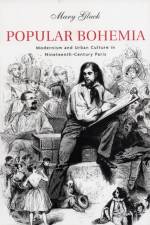
This revisionist examination of the period between 1830 and 1914 reconnects the intellectual history of avant-garde art with the cultural history of bohemia and the social history of the urban experience to reveal the circumstances in which a truly modernist culture emerged.
Abonner på vårt nyhetsbrev og få rabatter og inspirasjon til din neste leseopplevelse.
Ved å abonnere godtar du vår personvernerklæring.