









Gjør som tusenvis av andre bokelskere
Abonner på vårt nyhetsbrev og få rabatter og inspirasjon til din neste leseopplevelse.
Ved å abonnere godtar du vår personvernerklæring.Du kan når som helst melde deg av våre nyhetsbrev.

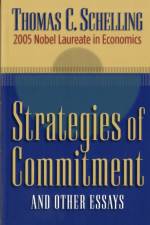
All of the essays in this new collection by Thomas Schelling convey his unique perspective on individuals and society. Schelling, a 2005 Nobel Prize winner, has been one of the four or five most important social scientists of the past fifty years, and this collection shows why.
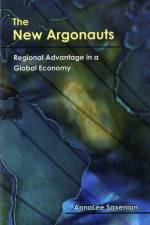
This book tells the story of the foreign-born, technically skilled investors and entrepreneurs who return home to start new companies while remaining tied to powerful economic and professional communities in the U.S. This research brings a fresh perspective to the way technology entrepreneurs build regional advantage to compete in global markets.
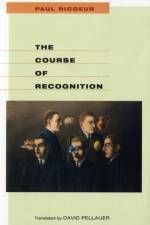
Recognition, though it figures profoundly in our understanding of objects and persons, identity and ideas, has never before been the subject of a single, sustained philosophical inquiry. This work seeks to develop nothing less than a proper hermeneutics of mutual recognition.
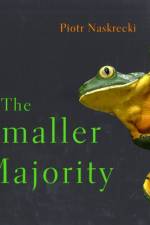
This large-format volume of color photographs takes readers on a magnificent visual journey into the remote world of small tropical organisms critical to biodiversity. A unique introduction to the overlooked life under our feet, this book offers a fully informed, deeply felt understanding of the importance of the world's smaller, teeming life.
From the New Testament, Most traces Thomas's many permutations: Gnostic saint, missionary to India, paragon of Christian orthodoxy, hero of skepticism, and example of doubt, blasphemy, and violence. Most shows how Thomas's story, in its many guises, touches upon central questions of religion, philosophy, hermeneutics, and, not least, life.
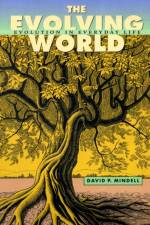
Today, evolutionary biology is more than an explanatory concept. It is indispensable to our world. This book provides the first truly accessible and balanced account of how evolution has become a tool with applications that are thoroughly integrated, and deeply useful, in our everyday lives and our societies, often in ways that we do not realize.
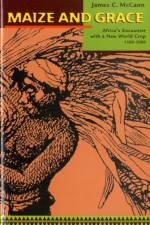
Around 1500 A.D., an African farmer planted a maize seed imported from the New World. That act set in motion the remarkable saga of one of the world's most influential crops. This compelling history offers insight into the profound influence of maize on African culture, health, technological innovation, and the future of the world's food supply.
Maier examines the structure and impact of empires and asks whether the U.S. shares their traits and behavior. He outlines the essentials of empire throughout history, then explores the exercise of U.S. power in the 19th and 20th centuries. With dispassion and clarity, this book offers bold comparisons and an original account of American power.
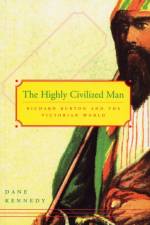
Though best known as an adventurer who entered Mecca in disguise and sought the source of the White Nile, Richard Burton contributed so forcefully to his generation that he provides us with a singularly panoramic perspective of the Victorian world. This book is an important contribution to our understanding of a remarkable man and a crucial era.
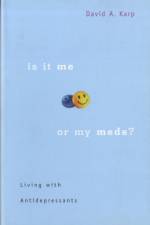
Karp explores the relationship between pills and personhood. Through the honest and vivid stories of patients, he provides unflinching portraits of people attempting to make sense of a process far more complex and mysterious than doctors or pharmaceutical companies generally admit.
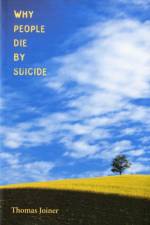
Drawing on extensive clinical and epidemiological evidence, as well as personal experience, Thomas Joiner provides the most coherent and persuasive explanation ever given of why and how people overcome life's strongest instinct, self-preservation.
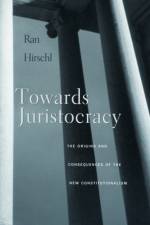
Drawing on a comparative inquiry into the political origins and legal consequences of recent constitutional revolutions in Canada, Israel, New Zealand, and South Africa, Hirschl shows that the trend toward constitutionalization is best understood as the product of strategic interplay among hegemonic yet threatened economic and political elites.
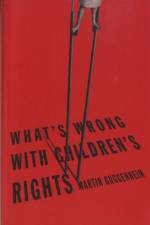
From foster care to adoption to visitation rights and beyond, Guggenheim offers an analysis of the most significant debates in the children's rights movement. He argues that "children's rights" can serve as a screen for the interests of adults, who may have more to gain than the children for whom they claim to speak.
In this hard-hitting history of "the gospel of education," W. Norton Grubb and Marvin Lazerson reveal the allure, and the fallacy, of the longstanding American faith that more schooling for more people is the remedy for all our social and economic problems--and that the central purpose of education is workplace preparation.
With passion and compassion, Gillick chronicles the stories of elders who have struggled with housing options, with medical care decisions, and with finding meaning in life. Skillfully incorporating insights from medicine, health policy, and economics, she lays out action plans for individuals and for communities.
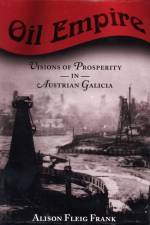
How and why did the promise of oil fail Galicia and the Austrian Empire, which at the beginning of the 20th century ranked third among the world's oil-producing states? Alison Frank traces the interaction of technology, nationalist rhetoric, social tensions, provincial politics, and entrepreneurial vision in shaping the Galician oil industry.
Beaumont chronicles the history of the Irish and offers up a national portrait on the eve of the Great Famine. This rediscovered masterpiece includes an introduction on Beaumont and his world. This volume also presents Beaumont's impassioned preface in which he portrays the appalling effects of the Great Famine.
In this provocative new book, Cuban takes aim at the alluring cliche that schools should be more businesslike, and shows that in its long history in business-minded America, no one has shown that a business model can be successfully applied to education.
When ochre-stained bones were unearthed by William Buckland in a Welsh cave in 1823, they raised many unsettling questions regarding their origin, and inspired the casting and recasting of the character who became known as the Red Lady. Her biography reflects the personal, professional, and national ambitions of those who studied her.
As neuroscientific research shows, even the immediate sensation of pain is shaped by psychological state and interpretation. Many individuals and cultures find meaning, particularly religious meaning, even in chronic and inexplicable pain. This interdisciplinary book includes not only essays but also discussions among a wide range of specialists.
During World War II, Japan was vilified by America as our hated enemy. As the Cold War heated up, however, the U.S. government decided to make Japan its bulwark against communism in Asia. In this revelatory work, Naoko Shibusawa charts the remarkable reversal from hated enemy to valuable ally that occurred in the two decades after the war.
What should we do with teens who commit crimes? Two leading scholars in law and adolescent development argue that juvenile justice should be grounded in the best available psychological science, which shows that adolescence is a distinctive state of cognitive and emotional development.
Scanlon reframes current philosophical debates as he explores the moral permissibility of an action. Blame, he argues, is a response to the meaning of an action rather than its permissibility. This analysis leads to a novel account of the conditions of moral responsibility and to important conclusions about the ethics of blame.
Perdue illuminates how China came to rule Central Eurasia and how it justifies that control, what holds the Chinese nation together, and how its relations with the Islamic world and Mongolia developed. He offers valuable comparisons to other colonial empires and discusses the legacy left by China's frontier expansion.
This extraordinary biography of Wal-Mart's world shows how a Christian pro-business movement grew from the bottom up as well as the top down, bolstering an economic vision that sanctifies corporate globalization.
There is a Paris for the medievalist, and another for the modernist-a Paris for expatriates, philosophers, artists, romantics, and revolutionaries. McGregor brings these perspectives into focus throughout this concise, unique history. Color maps and identifying illustrations make the city accessible to visitors by foot, Metro, or riverboat.
Leonard Friesen presents a study of the transformation of New Russia--the region north of the Black and Azov seas--from its conquest by the Russian Empire in the late eighteenth century to the revolutionary tumult of 1905. Friesen focuses on the multifaceted relations between the region's peasants, European colonists, and Russian estate owners.
When a master novelist, essayist, and critic searches for the wellsprings of his own work, where does he turn? Mario Vargas Llosa-Peruvian writer, presidential contender, and public intellectual-answers this most personal question with elegant concision in this collection of essays.
In 1918, Wilson's image as leader of the free world and the image of America as dispenser of democracy spread through Italy, filling an ideological void. Rossini sets the Italian-American political confrontation in the context of the countries' cultural perceptions of each other, different war experiences, and ideas about participatory democracy.
Richard Tuck makes careful distinctions between the prisoner's dilemma problem, threshold phenomena such as voting, and free riding. He analyzes the notion of negligibility, and shows some of the logical difficulties in the idea-and how the ancient paradox of the sorites illustrates the difficulties.
Abonner på vårt nyhetsbrev og få rabatter og inspirasjon til din neste leseopplevelse.
Ved å abonnere godtar du vår personvernerklæring.