
















Gjør som tusenvis av andre bokelskere
Abonner på vårt nyhetsbrev og få rabatter og inspirasjon til din neste leseopplevelse.
Ved å abonnere godtar du vår personvernerklæring.Du kan når som helst melde deg av våre nyhetsbrev.

This collection provides a rich, multilayered analysis of a long-neglected branch of early Christian apocryphal literature that examines the relationship between tradition and redaction, uses of language, and the fluid border between literary criticism and motif analysis.
The spell that the West has always exercised on the American people had its most intense impact on American literature and thought during the nineteenth century. Smith shows, with vast comprehension, the influence of the nineteenth-century West in all its variety and strength, in special relation to social, economic, cultural, and political forces.
In this unusually wide-ranging study, spanning more than a century and covering many diverse forms of expressive culture, a leading cultural historian demonstrates how variable and dynamic cultural boundaries have been and how fragile and recent the cultural categories we have learned to accept as natural and eternal are.
This new edition of Patterson's widely used book carries the story of battles over poverty and social welfare through what the author calls the "amazing 1990s," years of extraordinary performance of the economy. He explores issues arising from the economic phenomenon-increasing inequality and demands for use of an improved poverty definition.
Stephen Breyer's book is not merely a utilitarian analysis or a legal discussion of procedures; it employs the widest possible perspective to survey the full implications of government regulation-economic, legal, administrative, political-while addressing the complex problems of administering regulatory agencies.
In this volume, prominent Buddhist scholar Donald Swearer posits that the future requires a radical shift toward living in recognition of the interdependence of all life forms and the consequent ethic of communality and a life style of moderation or "enoughness" that flows from that recognition, which he calls "an ecology of human flourishing."
Nozick rethinks and transforms the concepts of truth, objectivity, necessity, contingency, consciousness, and ethics. Using an original method, he presents new philosophical theories that take account of advances in physics, evolutionary biology, economics, and cognitive neuroscience, and casts current cultural controversies in a wholly new light.
Habib Ladjevardi has been the director of the Iranian Oral History Project at Harvard University since 1981. Born in Tehran, he grew up in Scarsdale, N.Y., and was educated at the Yale Engineering School and the Harvard Business School. Dr. Ladjevardi returned to Iran in 1963 and began work as personnel manager in his family's business. Subsequently he was responsible for founding the Iran Center for Management Studies in Tehran, where he taught until 1976. He also served on a number of boards and councils in the private and public sectors. Dr. Ladjevardi received his Ph.D. from the University of Oxford in 1981.
This classic study, first published in 1942, helped to revolutionize evolutionary biology by offering a new approach to taxonomic principles and correlating the ideas and findings of modern systematics with those of other life science disciplines. This book is one of the foundational documents of the "Evolutionary Synthesis."
Plato's frontal attack on poetry has always been a problem for sympathetic students, who have often minimized or avoided it. Beginning with the premise that the attack must be taken seriously, Eric Havelock shows that Plato's hostility is explained by the continued domination of the poetic tradition in contemporary Greek thought.
This book studies contemporary Arab political poetry, providing insights into how modern Arab media forms are shaped by language and culture. By examining lives and works of individual poets, singers, and audiences, it shows how tribalism is a resource for critical reform when expressed in tropes of community, place, person, and history.
The comedies of Plautus, who brilliantly adapted Greek plays for Roman audiences c. 205-184 BCE, are the earliest Latin works to survive complete and cornerstones of the European theatrical tradition from Shakespeare and Moliere to modern times. Twenty-one of his plays are extant.
Free-market capitalism, hegemony, Western culture, peace, and democracy-ideas that shaped world politics in the 20th century and underpinned American foreign policy-have lost their strength. Hegemony (benign or otherwise) is no longer a choice. The authors argue that in the 21st century the U.S. must rely on strategy, make trade-offs, and compete.
Physiologist Scott Turner argues eloquently that the apparent design we see in the living world only makes sense when we add to Darwin's towering achievement the dimension that much modern molecular biology has left on the gene-splicing floor: the dynamic interaction between living organisms and their environment.
With the likely disappearance of celluloid film stock as a medium, and the emergence of new media, what will happen to cinema-and to cinema studies? Rodowick considers the fate of film and its role in the aesthetics and culture of the twenty-first century.
Since the 1970s a gulf has opened between the pay of low-paid workers and that of the middle class, resulting in the departure or frustration of much of the labor force. For Phelps, this is a failure of political economy whose widespread effects are undermining the free-enterprise system. He proposes a novel solution.
In a remarkable synthesis of research, a leading developmental neuroscientist provides psychologists with a sophisticated introduction to the brain. In clear terms, with ample illustrations, Stiles explains the complexities of genetic variation and transcription, and the variable paths of neural development, from embryology through early childhood.
This book considers the lapse between the Dutch telescope's 1608 creation in The Hague and Galileo's acquaintance with such news ten months later. Along the way, Reeves offers a revised chronology of Galileo's life in this critical period.
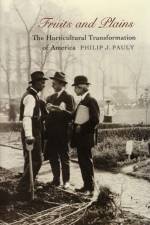
In telling the histories of Concord grapes and Japanese cherry trees, the problem of the prairie and the war on the Medfly, Pauly hopes to provide a new understanding of not only how horticulture shaped the vegetation around us, but how it influenced our experiences of the native, the naturalized, and the alien.
Juxtaposing methodology with empirical and numerical illustrations, this book is a full-scale exposition of a new approach for analyzing empirical questions in the social sciences. Manski recommends that researchers first ask what can be learned from data alone, and then what can be learned when data are combined with credible weak assumptions.
Hope offers the first sustained and systematic inquiry into the application of open source principles to life sciences. Traversing disciplinary boundaries, she presents an analysis of intellectual property-related challenges confronting the biotechnology industry and paints a detailed picture of "open source biotechnology" as a possible solution.
Banner tells the story of colonial settlement in Australia, New Zealand, Fiji, Tonga, Hawaii, California, Oregon, Washington, British Columbia, and Alaska. Possessing the Pacific is an original and broadly conceived study of how colonial struggles over land still shape the relations between whites and indigenous people throughout much of the world.
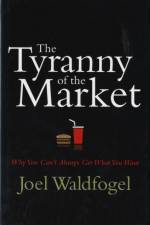
Markets are widely believed to make products available to suit any individual, regardless of what others want. But the argument is not generally correct. In markets, you can't always get what you want. This book explores why this is so and its consequences for consumers with atypical preferences.
Are scientific expert witnesses partisans or spokesmen for objective science? Golan tells stories of courtroom drama and confusion and media jeering on both sides of the Atlantic, until the start of the 21st century, as the courts still search for ways that will allow them to distinguish between good and bad science.
This book is a profound reexamination of the role of the German army, the Wehrmacht, in World War II. Until recently, the standard story avowed that the ordinary German soldier in World War II was a good soldier and not an accomplice to massacres of civilians. Wette explodes this myth of a "clean" Wehrmacht with devastating clarity.
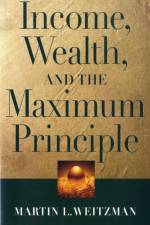
This compact and original exposition of optimal control theory and applications is designed for graduate and advanced undergraduate students in economics. It presents a new elementary yet rigorous proof of the maximum principle and a new way of applying the principle that will enable students to solve any one-dimensional problem routinely.
Smith argues that our legal vocabulary and methods of reasoning presuppose classical ontological commitments that were articulated by thinkers from Aquinas to Coke to Blackstone to Story. But these commitments are out of sync with the world view that now prevails in academic and professional thinking. So our law-talk degenerates into "just words."
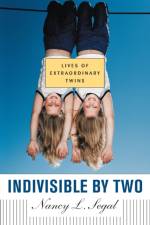
A leading expert on twins delves into the stories behind her research to reveal the profound joys and real-life traumas of twelve remarkable sets of twins, triplets, and quadruplets. Segal unravels these stories with an eye for the challenges that life as a twin can pose to parents, friends, spouses, and the twins themselves.
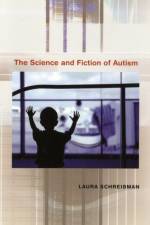
In The Science and Fiction of Autism, one of the country's leading experts in behavioral treatments approaches autism through the context of its controversies, showing where extraordinary and unfounded claims have falsely raised hopes, stirred fears, and ruined lives.
Abonner på vårt nyhetsbrev og få rabatter og inspirasjon til din neste leseopplevelse.
Ved å abonnere godtar du vår personvernerklæring.