
















Gjør som tusenvis av andre bokelskere
Abonner på vårt nyhetsbrev og få rabatter og inspirasjon til din neste leseopplevelse.
Ved å abonnere godtar du vår personvernerklæring.Du kan når som helst melde deg av våre nyhetsbrev.

Olender investigates the unsuspected links between erudition and race, showing the affinities between the social sciences and the concept of "race." The book provides an accessible and lucid pathway through the labyrinth of race and erudition and examines how to deal with diversity without the problematic heritage of racial stereotypes.
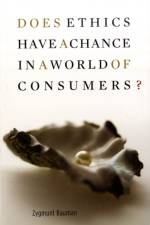
Bauman urges us to think in new ways about a newly flexible, newly challenging modern world. In an era of routine travel, where most people circulate widely, the inherited beliefs that aid our thinking about the world have become an obstacle. He challenges members of the "knowledge class" to overcome their estrangement from the rest of society.
In Starved for Science Paarlberg explains why poor African farmers are denied access to productive technologies, particularly genetically engineered seeds with improved resistance to insects and drought. He traces this obstacle to the current opposition to farm science in prosperous countries.
Paradise has shaped our poetic and religious imagination and informed literary and theological accounts of man's relation with his creator, with language and history. Doueihi contemplates the philosophical reception and uses of Paradise, marked by the rise of critical and historical methods in the Early Modern period.
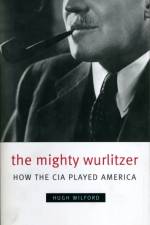
Wilford provides the first comprehensive account of the clandestine relationship between the CIA and its front organizations. Using an unprecedented wealth of sources, he traces the rise and fall of America's Cold War front network from its origins in the 1940s to its Third World expansion during the 1950s and ultimate collapse in the 1960s.
Prior to the Civil War, the U.S. did not have a single, national currency. Counterfeiters flourished amid this anarchy, putting vast quantities of bogus bills into circulation. Their success, Mihm reveals, is the story of the rise of a country defined by freewheeling capitalism and little government control.
Grounding their analysis in a deep understanding of the country's past, leading scholars of Afghan history, politics, society, and culture show how the Taliban was less an attempt to revive a medieval theocracy than a dynamic, complex, and adaptive force rooted in the history of Afghanistan and shaped by modern international politics.
In contrast to the "clash of civilizations" theory that sees Islam inevitably in conflict with the West, Crews reveals the remarkable ways in which Russia constructed an empire with broad Muslim support. As America and Western Europe debate how to secure the allegiances of their Muslim populations, Crews offers a critical historical perspective.
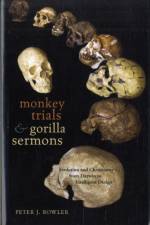
Bowler doesn't minimize the hostility of many of the faithful toward evolution, but he reveals the less well-known existence of a long tradition within the churches that sought to reconcile Christian beliefs with evolution by finding reflections of the divine in scientific explanations for the origin of life.
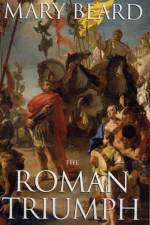
A reexamination of the most extraordinary of ancient ceremonies, this book explores the magnificence of the Roman Triumph-but also its darker side, as it prompted the Romans to question as well as celebrate military glory. This work is a testament to the profound importance of the triumph in Roman culture-and for monarchs and generals ever since.
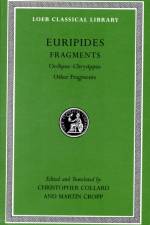
Euripides (c. 485-406 BCE) has been prized in every age for his emotional and intellectual drama. Eighteen of his ninety or so plays survive complete, including Medea, Hippolytus, and Bacchae, one of the great masterpieces of the tragic genre. Fragments of his lost plays also survive.
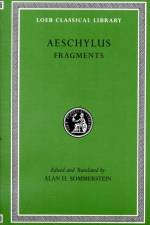
Aeschylus (c. 525-456 BCE) is the dramatist who made Athenian tragedy one of the world's great art forms. Seven of his eighty or so plays survive complete, including the Oresteia trilogy and the Persians, the only extant Greek historical drama. Fragments of his lost plays also survive.
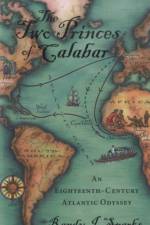
In 1767, two "princes" of a ruling family in Old Calabar, on the slave coast of Africa, were captured by English slavers. The princes were themselves slavers, betrayed by African competitors-and so began their own odyssey of enslavement. Their story, written in their own hand, survives as a rare firsthand account of the Atlantic slave experience.
While competitive natural selection is widely assumed to be evolution's prime mover, Weiss shows how life generally works on the basis of cooperation. He reveals that focus on competition and cooperation is largely an artifact of compression of time-a distortion that dissolves when life is viewed from developmental and evolutionary time scales.
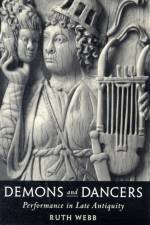
Compared to the wealth of information available to us about classical tragedy and comedy, not much is known about the culture of pantomime, mime, and dance in late antiquity. Webb fills this gap in our knowledge and provides us with a detailed look at social life in the late antique period through an investigation of its performance culture.
In 2001 an international panel of climate scientists declared that the world was warming at a rate without precedent during at least the last two millennia. How scientists reached that conclusion is the story Weart tells in The Discovery of Global Warming. The award-winning book is now revised and expanded to reflect the latest science.
This book compares the recent history of Allentown, Pennsylvania, with that of Youngstown, Ohio. Sean Safford offers a probing historical explanation for the decline, fall, and unlikely rejuvenation of the Rust Belt.
Alongside Rosamond Purcell's stunning photographs, Linnea Hall and Rene Corado offer an engaging history of egg collecting, the provenance of the specimens in the photographs, and the biology, conservation, and ecology of the birds that produced them.
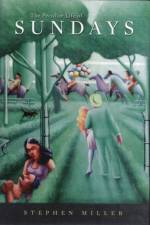
From Augustine to Caesarius, through the Reformation and the Puritan flight from England, down through the ages to contemporary debates about Sunday worship, Miller explores the fascinating history of the Sabbath.
Integrating analyses of clinical, political, historical, educational, social, economic, and legal aspects of ADHD and stimulant pharmacotherapy, Mayes and colleagues argue that a unique alignment of social and economic factors converged in the early 1990s with greater scientific knowledge to make ADHD the most prevalent pediatric mental disorder.
In our ever more secular times-is providence lost? Perhaps, but as Lloyd makes clear, providence still exerts a powerful influence on our thought and in our lives. This book traces a succession of transformations in the concept of providence through the history of Western philosophy.
Cristoforo Landino (1424-1498) was one of the great scholar-poets of the Renaissance. His most substantial work of poetry was his Three Books on Xandra. Also included in this volume is the Carmina Varia, a collection whose centerpiece is a group of elegies directed to the Venetian humanist Bernardo Bembo.
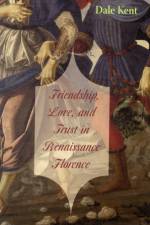
Kent explores the meaning of love and friendship as they were represented in the fifteenth century, particularly the relationship between heavenly and human friendship.
Hamburger traces the early history of what is today called "judicial review." The book sheds new light on a host of misunderstood problems, including intent, the status of foreign and international law, the cases and controversies requirement, and the authority of judicial precedent.
American universities are under increasing pressure to maximize their economic contributions. This book offers a rigorous and far-sighted explanation of this controversial and little-understood movement.
In this volume, an international group of scientists has synthesized their collective expertise and insight into a newly unified vision of insect societies and what they can reveal about how sociality has arisen as an evolutionary strategy.
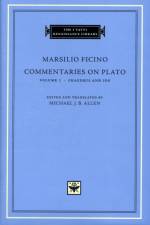
Marsilio Ficino (1433-1499), the Florentine scholar-philosopher-magus, was largely responsible for the Renaissance revival of Plato. This volume contains Ficino's extended analysis and commentary on the Phaedrus.
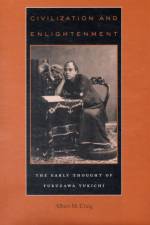
The idea that society progresses through stages of development, from savagery to civilization, arose in eighteenth-century Europe. Craig traces how Fukuzawa Yukichi, deeply influenced by the Scottish Enlightenment, "translated" the idea for Japanese society, both enriching and challenging the concept.
Auerbach integrates economic and legal perspectives on taxation and fiscal policy, offering a provocative assessment of the most important issues in public finance today.
Abonner på vårt nyhetsbrev og få rabatter og inspirasjon til din neste leseopplevelse.
Ved å abonnere godtar du vår personvernerklæring.