





















Gjør som tusenvis av andre bokelskere
Abonner på vårt nyhetsbrev og få rabatter og inspirasjon til din neste leseopplevelse.
Ved å abonnere godtar du vår personvernerklæring.Du kan når som helst melde deg av våre nyhetsbrev.

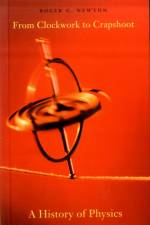
Roger Newton, whose previous works have been widely praised for erudition and accessibility, presents a history of physics from the early beginning to our day-with the associated mathematics, astronomy, and chemistry. His work identifies what may well be the defining characteristic of physics in the 21st century.
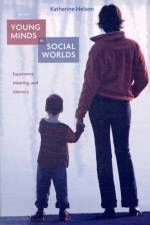
Katherine Nelson re-centers developmental psychology with a revived emphasis on development and change, rather than foundations and continuity. Nelson argues that a child's entrance into the community of minds is a gradual process with enormous consequences for child development, and the adults that they become.
Schumpeter made his mark as the prophet of incessant change. Drawing on all of Schumpeter's writings, including many intimate diaries and letters never before used, this biography paints the full portrait of a magnetic figure who aspired to become the world's greatest economist, lover, and horseman-and admitted to failure only with the horses.
In the first complete history of the War of 1812 written from a British perspective, Latimer offers an authoritative account that places the conflict in its strategic context within the Napoleonic wars. He uses personal letters, diaries, and memoirs to describe events through the eyes of military figures, statesmen, and ordinary people.
In 1980 a group of scientists censusing marine mammals in the Bay of Fundy was astonished by the sight of 25 right whales. Until that time, scientists believed the North Atlantic right whale was extinct or nearly so. The sightings electrified the research community, spurring a quarter century of exploration, which is documented here.
To reveal Al Qaeda's inner workings, Kepel and his collaborators have collected and brilliantly annotated key texts of the major figures from whom the movement has drawn its beliefs and direction. The resulting volume offers an unprecedented glimpse into the assumptions of the salafist jihadists who have reshaped contemporary political life.
Can people coexist in peace when their basic beliefs are irreconcilable? Kaplan responds by taking us back to early modern Europe, when the issue of religious toleration was no less pressing than it is today. This compelling story reveals that toleration has taken many guises in the past and suggests that it may well do the same in the future.
The assassination of President Kennedy was an appalling and grisly conspiracy. Kaiser shows that the events of November 22, 1963, cannot be understood without fully grasping the two larger stories of which they were a part: the U.S. government's campaign against organized crime; and the furtive quest of two administrations to eliminate Castro.
For what purpose and for whom has biographical pursuit endured, and how does it play such a contested, popular role in contemporary Western culture? Award-winning biographer Hamilton addresses these questions in an incisive and vivid narrative that will appeal to students of human nature and self-representation across the arts and sciences.
In December 2002, environmental historian Tom Griffiths set sail with the Australian Antarctic Division to deliver the new team of winterers. In this beautifully written book, he reflects on the history of human experiences in Antarctica, taking the reader on a journey of discovery, exploration, and adventure in an unforgettable land.
By uncovering the challenges workers and their lawyers launched against Jim Crow in the 1940s, when civil rights were legally, conceptually, and constitutionally up for grabs, Goluboff shows how Brown v. Board of Education only partially fulfilled the lost promise of civil rights.
Jerusalem is more than a tourist site-every square mile is layered with historical significance, religious intensity, and extraordinary stories shaped by religion, war, and monumentality. Goldhill takes on this archaeology of human imagination, hope, and disaster to provide a tour through the history of this image-filled and ideology-laden city.
Frost notoriously resisted collecting his prose-going so far as to halt the publication of a prepared compilation and to "lose" the transcripts of the Norton Lectures he delivered in 1936. This volume collects the prose he did make public-in newspapers, magazines, journals, speeches, and books-the wit, force, and grace that made his poetry famous.
Frost is one of the most widely read, well loved, and misunderstood of modern writers. His notebooks, presented in their entirety for the first time and covering the late 1890s to the early 1960s, offer unprecedented insight into his complex and often contradictory thinking about poetics, politics, education, psychology, science, and religion.
Using diaries and letters as evidence, Fritzsche argues that the essence of Nazism's ideological grip lay in the Volksgemeinschaft-a "people's community" that appealed to Germans to be part of a great project to redress the wrongs of the Versailles treaty, revitalize the country, and cleanse the body politic.
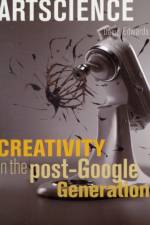
This book shows how innovation in the "post-Google generation" is often catalyzed by those who cross a conventional line between the arts and the sciences. Edwards describes how creators achieve breakthroughs in the arts and sciences by developing ideas in an intermediate zone of human creativity where neither art nor science is easily defined.
Crary argues that language is a moral acquisition and that any stretch of thought, whether or not it uses moral concepts, expresses the moral outlook encoded in a person's modes of speech. Drawing on philosophical texts, literature, and feminist theory, she poses a case for transforming our understanding of moral reflection and ethical concern.
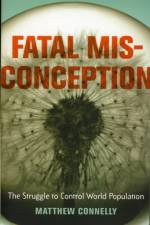
Connelly tells the disturbing story of a quest to remake ourselves by policing national borders and breeding better people. With its transnational scope and exhaustive research, this critique uncovers the cost inflicted by a misguided humanitarian movement and urges renewed commitment to the reproductive rights of all people.
On the heels of the Munich Agreement, Hitler's troops marched into Prague and established the Protectorate of Bohemia and Moravia. Nazi leaders were determined to make the region entirely German. Bryant explores the origins and implementation of these plans as part of a wider history of Nazi rule and its eventual consequences for the region.
In his latest book, Bainbridge combines an otherworldly journey through the central nervous system with an accessible and entertaining account of how the brain's anatomy has often misled anatomists about its function. Bainbridge uses the structure of the brain to set his book apart from the many volumes that focus on brain function.
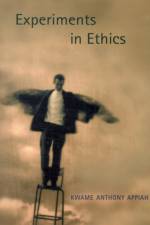
Appiah explores how new empirical moral psychology relates to the age-old project of philosophical ethics, urging that the relation between empirical research and morality, now so often antagonistic, should be seen in terms of dialogue, not contest. He thereby shows how experimental philosophy is actually as old as philosophy itself.
What should be the place of Shari'a-Islamic religious law-in predominantly Muslim societies of the world? In this book, a Muslim scholar and human rights activist envisions a positive and sustainable role for Shari'a, based on a profound rethinking of the relationship between religion and the secular state in all societies.
In this intellectual, legal, and political history of financial globalization, Abdelal argues that European policy makers promoted the liberal rules that compose the international financial architecture, while U.S. policy makers have tended to embrace unilateral, ad hoc globalization.
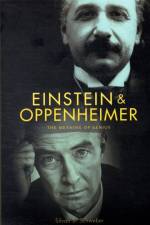
Einstein and Oppenheimer belonged to different generations, with the boundary marked by the advent of quantum mechanics. By exploring how these men differed-in their worldview, in their work, and in their day-this book provides powerful insights into the lives of two critical figures and into the scientific culture of their times.
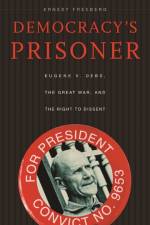
In 1920, socialist leader Eugene V. Debs ran for president while serving a ten-year jail term for speaking against America's role in World War I. In this book, Freeberg shows that the campaign to send Debs from an Atlanta jailhouse to the White House was part of a wider national debate over the right to free speech in wartime.
Presents a blueprint for revitalizing labs with 'artscience' creative thought that erases conventional boundaries between art and science to produce innovations that otherwise might never see the light of day.
This book gives us our first clear look at how the man and his moment met to create "critical theory." An intimate picture of the quintessential twentieth-century transatlantic intellectual, the book is also a window on the cultural ferment of Adorno's day-and its ongoing importance in our own.
The waters around Australia are home to the greatest diversity of sharks and rays on Earth. Fully 100 of these sea creatures (and their little-known relatives, the chimaerids) have been named or described since the first edition of this book. This second edition brings more than 300 of these species to life in full-color illustrations.
Marco Girolamo Vida (1485-1566), humanist and bishop, came to prominence as a Latin poet in the Rome of Leo X and Clement VII. Leo commissioned this famous epic, a retelling of the life of Christ in the style of Vergil, which was published in 1535. This translation, accompanied by extensive notes, is based on a new edition of the Latin text.
Sannazaro (1456-1530) is most famous for having written the first pastoral romance in European literature, the Arcadia (1504). But after this work, he devoted himself entirely to Latin poetry modeled on his beloved Virgil. In addition to his epic The Virgin Birth (1526), he also composed Piscatory Eclogues, an adaption of the eclogue form.
Abonner på vårt nyhetsbrev og få rabatter og inspirasjon til din neste leseopplevelse.
Ved å abonnere godtar du vår personvernerklæring.