













Gjør som tusenvis av andre bokelskere
Abonner på vårt nyhetsbrev og få rabatter og inspirasjon til din neste leseopplevelse.
Ved å abonnere godtar du vår personvernerklæring.Du kan når som helst melde deg av våre nyhetsbrev.

Ghettostadt is a terrifying examination of the Jewish ghetto's place in the Nazi worldview. Exploring ghetto life in its broadest context, it deftly maneuvers between the perspectives and actions of Lodz's beleaguered Jewish community, the Germans who oversaw and the ghetto's affairs, and the "ordinary" inhabitants of the once Polish city.
A psychoanalytically informed analysis of the rhetorical and conceptual mechanisms with which postwar Germans most often denied responsibility for the Nazi past. It provides important perspectives on postwar German political culture, on the dynamics of collective memory, and on Adorno's intellectual legacies.
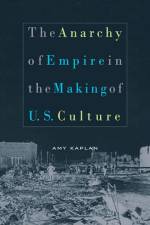
Kaplan shows how U.S. imperialism-from "Manifest Destiny" to the "American Century"-has profoundly shaped key elements of American culture at home, and how the struggle for power over foreign peoples and places has disrupted the quest for domestic order.
Multiethnic Japan challenges the received view of Japanese society as ethnically homogeneous. Employing a wide array of arguments and evidence--historical and comparative, interviews and observations, high literature and popular culture--John Lie recasts modern Japan as a thoroughly multiethnic society.
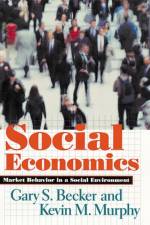
The authors offer an analytic framework for measuring how people make choices, including social environment with standard goods and services in their utility functions. These functions enable analysis of how changes in social environment affect choice, and provide a way of analyzing how social environment is determined by individuals' interactions.
Gaze toward the Nile from the hills of Mokattam and the city of Cairo unfolds, with its monumental architecture, teeming populace, and thousands of years of rich history. The extraordinary tapestry of Cairo's past and present comes vividly to life in this magisterial study by Andre Raymond, arguably the premier social historian of the Arab world.
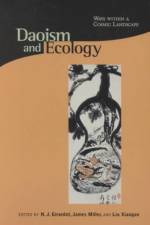
The authors consider the intersection of Daoism and ecology, looking at the theoretical and historical implications associated with a Daoist approach to the environment. They also analyze perspectives found in Daoist religious texts and within the larger Chinese cultural context in order to delineate key issues found in the classical texts.
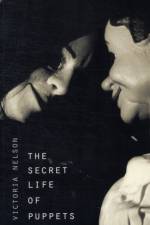
In a tour of Western culture that is at once exhilarating and alarming, Nelson shows us the distorted forms in which the spiritual resurfaced in high art but also, strikingly, in the mass culture of puppets, horror-fantasy literature, and cyborgs: from the works of Kleist, Poe, Musil, and Lovecraft to Philip K. Dick and virtual reality simulations.
Samuel Beer reveals the provenance, purpose, and origins of the ideas of nationalism and federalism in American political philosophy. From the great English republicans of the 17th century to the conflicts of ideas that exist to this day, he reveals unsuspected dimensions that have shaped-and are still shaping-America.
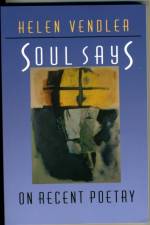
In these essays on American, British, and Irish poetry, Vendler shows us contemporary life and culture captured in lyric form by some of our most celebrated poets. Vendler explains the power of poetry; it is, she says, the voice of the soul, rather than the socially marked self, speaking directly to us through the stylization of verse.
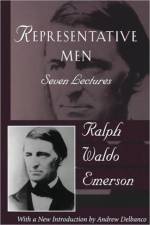
As Judith Shklar has pointed out, Emerson built Representative Men around the principle of 'rotation,' which had become a political axiom in Jacksonian America-the idea that no man, no matter how imposing, should be accorded permanent authority. Representative Men honors the language of democracy in its very title.
Many observers assume that America is a far less religious nation than it was 40 years ago, but according to Greeley, this is untrue. Citing surveys conducted over the past half-century, Greeley concludes that rates of church attendance and membership, prayer, belief in an afterlife, and other measures of religious activity have remained constant.
Leo Treitler is a central figure in American musicology, both for his writings on medieval and Renaissance music and for his influential work on historical analysis. In this elegant book he develops a powerful statement of what music analysis and criticism in relation to historical understanding can be.
Every week for a year, Matthews and eight children met to make up stories reflecting philosophical problems. With examples of these dialogues, the author invites all adults to be open to those moments when they can share with children the pleasures of joint philosophical discovery.
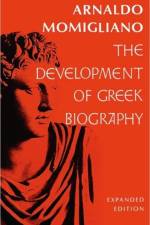
Momigliano traces the growth of ancient biography from the fifth century to the first century B.C. By clarifying the implications of the fact that the Greeks kept biography and autobiography distinct from historiography, he contributes to an understanding of a basic dichotomy in the Western tradition of historical writing.
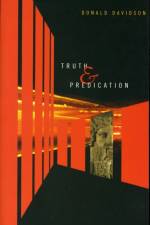
Anchored in classical philosophy, this book nonetheless makes telling use of the work of a great number of modern philosophers from Tarski and Dewey to Quine and Rorty. Representing the very best of Western thought, it reopens the most difficult and pressing of ancient philosophical problems, and reveals them to be very much of our day.
The relationship between China and Japan remains among the most significant of all the world's bilateral affairs-yet it is also the most tortured and the least understood. Akira Iriye adds brilliant clarity to the past century of Chinese-Japanese interactions in this masterful interpretive survey.
Venkatesh takes us into Maquis Park, a poor black neighborhood on Chicago's Southside, to explore the desperate and remarkable ways in which a community survives. The result is a dramatic narrative of individuals at work, a rich portrait of a community, and a devastating critique of the entrenched poverty that we so often ignore in America.
This book presents evidence by leading economists of the effects of taxes on the formation of businesses, the supply of labor, the form of executive compensation, the accumulation of wealth, the allocation of portfolios, and the realization of capital gains.
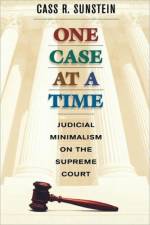
One of America's preeminent constitutional scholars, Sunstein mounts a defense of the most striking characteristic of modern constitutional law: the inclination to decide one case at a time. Examining various controversies, he shows how-and why-the Court has avoided broad rulings, and in doing so has fostered public debate on difficult topics.
Born into the first family of the British stage, Fanny Kemble was one of the most famous woman writers of the English-speaking world, a best-selling author on both sides of the Atlantic. Her autobiographical writings are compelling evidence of Kemble's wit and talent, and they also offer a dazzling overview of her transatlantic world.
This book is the first to offer a clear picture of how Generation X has been affected by the tremendous domestic changes of the last three decades. Based on a unique 15-year study begun in 1980, the book considers parents' socioeconomic resources, their gender roles and relations, and the quality of their marriages.
This book takes a fresh look at the most dynamic area of American law today, comprising the fields of copyright, patent, trademark, trade secrecy, publicity rights, and misappropriation. It demonstrates the fundamental economic rationality of intellectual property law, but is sympathetic to critics who believe that IP rights have gone too far.
In Mrs. Tully's Room tells the story of the comforting and compelling community created by the center's gifted director. This book offers hope to parents and practical guidelines for daycare providers on how to use their imaginations, and those of their charges, to enrich the children's minds and hearts.
Nozick analyzes fundamental issues, such as the identity of the self, knowledge and skepticism, free will, the foundations of ethics, and the meaning of life.
Here, for the first time, we have a comprehensive account of the death penalty in the United States. Stuart Banner tells the story of dramatic changes, over four centuries, in the ways capital punishment has been administered and experienced. Banner moves beyond the debates to give us an unprecedented understanding of America's ultimate punishment.
Visiting a London nursery school, Paley observes the schoolchildren's reception of another visitor, a handicapped boy named Teddy. A predicament arises, and the children's response offers Paley the purest evidence of kindness she has ever seen.
Humans have lived by very different conceptions of the good life. Hampshire argues that no individual and no modern society can avoid conflicts between incompatible moral interests. Combining intellectual rigor with imaginative power, he illuminates the tensions between justice and other sources of value in society and the life of the individual.
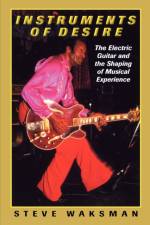
Around 1930, a group of guitar designers in Southern California fitted instruments with an electromagnetic device called a pickup and forever changed the face of popular music. This is the first full account of the historical and cultural significance of the electric guitar.
Abonner på vårt nyhetsbrev og få rabatter og inspirasjon til din neste leseopplevelse.
Ved å abonnere godtar du vår personvernerklæring.