
























Gjør som tusenvis av andre bokelskere
Abonner på vårt nyhetsbrev og få rabatter og inspirasjon til din neste leseopplevelse.
Ved å abonnere godtar du vår personvernerklæring.Du kan når som helst melde deg av våre nyhetsbrev.

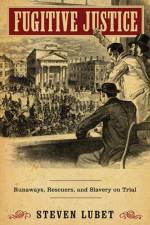
Tells the stories of three of the most dramatic fugitive slave trials of the 1850s, presenting the determination of the fugitives, the radical tactics of their rescuers, the brutal doggedness of the slavehunters, and the tortuous response of the federal courts.
Offering an overview of a half century of American politics, this book looks at the counterrevolutionary dreams of liberalism's enemies - to overturn people's reliance on expanding government, reverse the moral and sexual revolutions, and win the Culture War - and finds them largely unfulfilled.
Tracks the nation/South juxtaposition in US literature from the founding to the turn of the twentieth century, through genres including travel writing, gothic and romance novels, geography textbooks, transcendentalist prose, and abolitionist address.
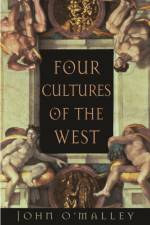
Where are we going? What in the world were we thinking? By exploring the history of four "cultures" so deeply embedded in Western history that we rarely see their instrumental role in politics, religion, education, and the arts, this timely book provides a broad framework for addressing these questions in a fresh way.
Ancient Greek culture is often described as a miracle, owing little to its neighbors. Walter Burkert argues against a distorted view, toward a more balanced picture. "Under the influence of the Semitic East-from writers, craftsmen, merchants, healers-Greek culture began its unique flowering, soon to assume cultural hegemony in the Mediterranean."
These 16 essays address the ecological crisis and the question of Confucianism from three perspectives: the historical describes the tradition's views of nature, social ethics, and cosmology; a dialogical approach links Confucianism to other traditions; an examination of engaged Confucianism looks at its involvement in concrete ecological issues.
Here are the traditions of harpsichord making as they might have been taught to young apprentices in five countries where the craft once flourished: Italy, Flanders, France, England, and Germany. The period covered ranges from approximately 1500, when concrete data became available, to 1800, after which the nature of the instrument is no longer of musicological significance. The authorâEUR(TM)s aim is to âEURgive enough information to make it possible for builders of harpsichords to base their work on certain knowledge of the designs and methods of earlier makers; to guide players of the harpsichord in their search for appropriate instruments, dispositions, and registrations in recreating the music of the past; and to serve as a useful body of information for historians and editors of early keyboard music.âEUR?A chapter each is devoted to the five most important schools of harpsichord making. Over forty plates illustrate the most typical harpsichords of each country. Each set of drawings includes a plan drawn to scale, the interior of the instrument, and interesting details of action and construction. These are supplemented by reproductions of illustrations taken from early sources. The appendixes contain texts of relevant documents, including inventories of the shops of some prominent French makers and contemporary descriptions of instruments. Frank Hubbard has drawn material from contemporary descriptions of instruments and the mechanical arts such as those found in encyclopedias, technical treatises, books on music theory, and manuals for craftsmen. In addition he has examined hundreds of instruments in European and American collections. His exceptional position as an internationally known harpsichord maker as well as a student of harpsichord history allows him to discuss technical as well as historical matters that would be outside the competence of a musicologist.
Adams was raised, educated, and groomed to be President. This polymath and troubled man, caught up in both a democratic age not to his understanding and the furies of passion, was an American lion in winter.
Thompson explores the "explanatory gap" between biological life and consciousness, drawing on sources as diverse as molecular biology, evolutionary theory, artificial life, complex systems theory, neuroscience, psychology, Continental Phenomenology, and analytic philosophy to show that mind and life are more continuous than previously accepted.
This test is sold on the understanding that the plates are not to be publicly displayed and may be purchased only by authorized persons.
In telling Kahn's story, Ghamari-Tabrizi captures a time whose innocence, gruesome nuclear humor, and outrageous but deadly serious visions of annihilation have their echoes in the "known unknowns and unknown unknowns" that guide policymakers in our own embattled world.
Hamburger argues that separation of church and state has no historical foundation in the First Amendment and shows that eighteenth-century Americans almost never invoked this principle. Although Jefferson and others retrospectively claimed a First Amendment basis for separation, it became part of American constitutional law only much later.
The national folk epic of Finland is presented in an English translation. Magoun has used prose, printed line for line as in the original so that repetitions, parallelisms, and variations are apparent. The lyrical passages and poetic images, wry humor, tall-tale extravagance, and homely realism of the Kalevala come through with great effectiveness.
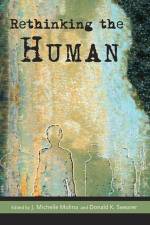
In our globalized world, differing conceptions of human nature and human values raise questions as to whether universal and partisan claims and perspectives can be reconciled, and whether a pluralistic ethos can transcend uncompromising notions as to what is true, good, and just. This title explores what it means to be human.
How has liberalism, the grand democratic ideal, come to be a dirty word? This book shows us what antiliberalism means in the modern world--where it comes from, whom it serves, and why it speaks with such a forceful, if ever changing, voice.
This solutions manual is a companion volume to the classic textbook Recursive Methods in Economic Dynamics by Stokey, Lucas, and Prescott. Efficient and lucid in approach, this manual will greatly enhance the value of Recursive Methods as a text for self-study.
Of the roughly seventy treatises in the Hippocratic Collection, many are not by Hippocrates (said to have been born in Cos in or before 460 BCE), but they are essential sources of information about the practice of medicine in antiquity and about Greek theories concerning the human body, and he was undeniably the "Father of Medicine."
"The Transformation of American Law, 1780-1860" (1977) disclosed the many ways that judge-made law favored commercial and property interests and remade law to promote economic growth. This title focuses on ideas that reshaped law as we struggled for objective and neutral legal responses to our country's crises.
Part Regency mystery, part imperial history, this title presents a tale of adventure and deceit across two worlds - British aristocrats and Australian felons - bound together in an emerging age of opportunity and individualism, where personal worth was battling power based on birth alone. It illuminates the darker side of this age of liberty.
The phrase 'Harlem in the 1920s' evokes images of the Harlem Renaissance, or of Marcus Garvey and soapbox orators haranguing crowds about politics and race. This title reveals a different dimension of African American culture that made not only Harlem but New York City itself the vibrant and energizing metropolis it was.
What did the trial of Galileo share with the trial for fraud of the foremost investigator of the effects of lead exposure on children's intelligence? This collection of essays argues that fundamentally both science and education were disputes over what methods are legitimate and authoritative.
A collection of essays that sets canonical works of African American literature in conversation with Barack Obama's "Dreams from My Father". It features the elegant readings that shed light on unexamined angles of works ranging from Frederick Douglass' "Narrative" to W.E.B. Du Bois' "Souls of Black Folk" to Toni Morrison's "Song of Solomon".
Prominent observers complain that public discourse in America is shallow and unedifying. This condition is often attributed to the resurgence of religion in public life. This title argues that this diagnosis is not primarily religion but rather the strictures of secular rationalism that have drained our modern discourse of force and authenticity.
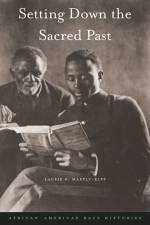
As early as the 1780s, African Americans told stories that enabled them to survive and even thrive in the midst of unspeakable assault. Tracing the narratives from the late eighteenth century to the 1920s, this work presents an extraordinary trove of sweeping race histories that African Americans wove together out of racial and religious concerns.
Arsic unpacks Ralph Waldo Emerson's repeated assertion that our reality and our minds are in constant flux. Her readings of a broad range of Emerson's writings are guided by a central question: what does it really mean to maintain that everything fluctuates, is relational, and so changes its identity?
Explores how American trade proved pivotal to the evolution of capitalism in the United States and helped to shape the course of the British Empire. This book revolutionizes our understanding of the early American economy in a global context and the relationship between the young nation and its former colonial master.
Tracing teachers' experiences in the Third Reich and East Germany, this title analyzes developments in education of crucial importance to both dictatorships.
Unlike Whitman, Dickinson, or Wordsworth, Frederick Goddard Tuckerman (1821-1873) never wanted to start a revolution in poetry. This edition of Tuckerman's poetry includes several important poems omitted in "The Complete Poems of Frederick Goddard Tuckerman".
Abonner på vårt nyhetsbrev og få rabatter og inspirasjon til din neste leseopplevelse.
Ved å abonnere godtar du vår personvernerklæring.