











Gjør som tusenvis av andre bokelskere
Abonner på vårt nyhetsbrev og få rabatter og inspirasjon til din neste leseopplevelse.
Ved å abonnere godtar du vår personvernerklæring.Du kan når som helst melde deg av våre nyhetsbrev.

Why did sustained economic growth arise in Europe rather than in China? The authors combine economic theory and historical evidence to argue that political processes drove the economic divergence between the two world regions, with continued consequences today that become clear in this innovative account.
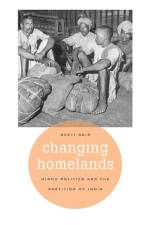
Neeti Nair's account of the partition in the Punjab rejects the idea that essential differences between the Hindu and Muslim communities made political settlement impossible. Far from being an inevitable solution, partition-though advocated by some powerful Hindus-was a stunning surprise to the majority of Hindus in the region.
Kids Don't Want to Fail uses empirical evidence to refute the widely accepted hypothesis that the black-white achievement gap in secondary schools is due to a cultural resistance to schooling in the black community. The author finds that inadequate elementary school preparation-not negative attitude-accounts for black students' underperformance.
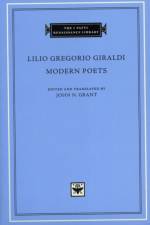
Lilio Gregorio Giraldi authored many works on literary history, mythology, and antiquities. Among the most famous are his dialogues, modeled on Cicero's Brutus, translated here into English for the first time. The work gives a panoramic view of European poetry in the late fifteenth and early sixteenth century, concentrating above all on Italy.
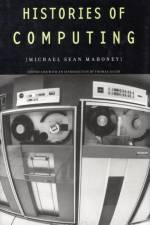
Michael Sean Mahoney was one of the first scholars to take seriously the challenges posed by information technology to our understanding of the twentieth century. Thomas Haigh collects thirteen of his essays and papers in a landmark work that will interest computer professionals as well as historians of technology and science.
In this first-ever popular introduction to "maglev"- the use of magnetic forces to overcome gravity and friction-Livingston takes lay readers on a journey of discovery, from maglev nanotechnology to Chinese trains that travel at 250 mph without touching the tracks. He finds magic in "fighting friction by fighting gravity."
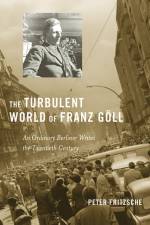
Fritzsche traces twentieth-century history through the remarkable diaries of an ordinary Berliner. Franz Goell wrote of hungry winters during WWI, the Berlin bombing, rapes by Russian soldiers, shockwaves cast by Darwin, Freud, and Einstein, the flexing of U.S. superpower, and the strange lifestyles that marked Germany's transition to modernity.
In a world of giddy celebrants and dire detractors, Milad Doueihi speaks with measured authority about what the rise of digital culture means. He ranges from literacy, citizenship, digital subjectivity, and social networks to texts, archiving, storage, and copyright-offering a rare view of the emerging digital space.
One of China's most influential intellectuals questions the validity of thinking about Chinese history and its legacy from a Western conceptual framework. Wang Hui argues that we need to more fully understand China's past in order to imagine alternative ways of conceiving Asia and world order.
The Old English poems in this volume are among the first retellings of scriptural texts in a European vernacular. More than simple translations, they recast the familiar plots in daringly imaginative ways, from Satan's seductive pride (anticipating Milton), to a sympathetic yet tragic Eve, to the lyrical nature poetry in Azarias.
One of the most influential texts in the Middle Ages, The Rule of Saint Benedict offers guidance about both the spiritual and organizational dimensions, from the loftiest to the lowliest, of monastic life. This new Latin-English edition has features for both first-time readers and scholars of medieval history and language.
In 2004 the Roman Catholic Archdiocese of Boston announced plans to close more than eighty churches. Distraught parishioners occupied several of these buildings in opposition to the decrees. Seitz tells the stories of these resisting Catholics in their own words, illuminating how they were drawn to reconsider the past and its meanings.
Criminal law became a key tool in the effort to legitimize Church authority in post-Reformation Poland. Recounting dramatic stories of torture, trial, and punishment involving Christians and Jews, this is the first book to consider the sacrilege accusations of the early modern period within the broader context of politics and common crime.
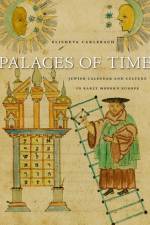
Palaces of Time resurrects the seemingly banal calendar as a means to understand early modern Jewish life. Elisheva Carlebach has unearthed a trove of beautifully illustrated calendars, to show how Jewish men and women both adapted to the Christian world and also forged their own meanings through time.
After the Bible, the Passover haggadah is the most widely read classic Jewish text. Few editions are as exquisite as the Washington Haggadah in the Library of Congress. A stunning facsimile edition, meticulously reproduced in full color, brings this illuminated fifteenth-century manuscript to life for a new generation of readers.
Are you alive? Most people believe that some law defines our status as living (or not) for all purposes. But Foley shows that "not being dead" isn't necessarily the same as being alive, in the eyes of the law. The need for more organ transplants and conservation of health care resources is exerting pressure to expand the legal definition of death.
The noted cultural critic Gerald Early explores the intersection of race and sports, and our deeper, often contradictory attitudes toward the athletes we glorify. What desires and anxieties are encoded in our worship of (or disdain for) high-performance athletes? What other, invisible contests unfold when we watch a sporting event?
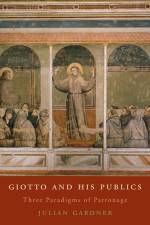
This probing analysis of three of Giotto's major works and the patrons who commissioned them goes beyond the cliches of Giotto as the founding figure of western painting. It traces the interactions between Franciscan friars and powerful bankers and illuminates the complex interactions between mercantile wealth and the iconography of poverty.
Published here for the first time is a crucial document in the history of American radicalism-the "Prison Blossoms," a series of essays, narratives, poems, and fables composed by three activist anarchists imprisoned for the 1892 assault on anti-union steel tycoon Henry Clay Frick.
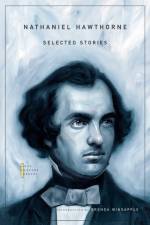
Dark, weird, psychologically complex, Hawthorne's short fiction continues to fascinate readers. Brenda Wineapple has made a generous selection of Hawthorne's stories, including some of his best-known tales as well as other, less-often anthologized gems.
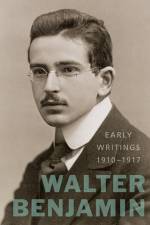
The first stirrings of this most original of critical minds-penned during the years when he transformed himself from the comfortable son of a German Jewish family into the nomadic, boundary-crossing philosopher-critic we appreciate-have until now remained largely unavailable in English. Early Writings, 1910-1917 rectifies this situation.
Liberal arts colleges represent a tiny portion of the higher education market, yet produce a stunning percentage of America's leaders. But the demand for career-related education has pressured them to become vocational, distorting their mission and core values. This book is a wake-up call for everyone who values liberal arts education.
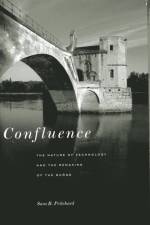
Sara B. Pritchard traces the Rhone's remaking since 1945, showing how state officials, technical elites, and citizens connected the environment and technology to political identities and state-building, and demonstrating the importance of environmental management and technological development to the culture and politics of modern France.
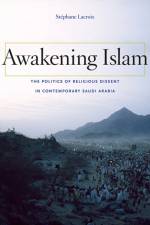
With unprecedented access to a closed culture, Lacroix offers an account of Islamism in Saudi Arabia. Tracing the last half-century of the Sahwa, or "Islamic Awakening," he explains the brand of Islam that gave birth to Osama bin Laden-one that has been exported, and dangerously misunderstood, around the world.
In a sophisticated defense of intellectual property, Merges draws on Kant, Locke, and Rawls to explain how IP rights are based on a solid ethical foundation and make sense for a just society. He also calls for appropriate boundaries: IP rights are real, but they come with real limits.
From an engineer's perspective, how do specialized adaptations among living things really work? Writing with wit and a richly informed sense of wonder, Denny and Alan offer an expert look at animals-including humans-as works of evolutionary engineering, each exquisitely adapted to a specific manner of survival.
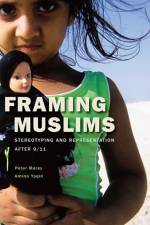
In Framing Muslims: Stereotyping and Representation after 9/11, Peter Morey and Amina Yaqin dissect how stereotypes that depict Muslims as an inherently problematic presence in the West are constructed, deployed, and circulated in the public imagination, producing an immense gulf between representation and a considerably more complex reality.
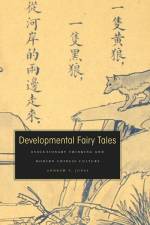
Jones revises our understanding of modern China by tracing the ways that evolutionary works developed into a form of vernacular knowledge in modern Chinese literature. From children's primers to print culture, from fairy tales to filmmaking, his analysis offers an innovative and interdisciplinary angle of vision on China's cultural evolution.
Dorothee Schneider relates the story of immigrants' passage from an old society to a new one, and American policymakers' debates over admission to the United States and citizenship. Bringing together the histories of Europeans, Asians, and Mexicans, the book opens up a fresh view of immigrant expectations and government responses.
A lot has changed since the 1970s, when the tiny snail darter went extinct on the Little Tennessee River. Joe Roman helps us understand why we should all be happy about the sweeping law that made these changes possible. Listed is an engaging tale of endangered species in the wild and the people working to save them.
Abonner på vårt nyhetsbrev og få rabatter og inspirasjon til din neste leseopplevelse.
Ved å abonnere godtar du vår personvernerklæring.