















Gjør som tusenvis av andre bokelskere
Abonner på vårt nyhetsbrev og få rabatter og inspirasjon til din neste leseopplevelse.
Ved å abonnere godtar du vår personvernerklæring.Du kan når som helst melde deg av våre nyhetsbrev.

Schuman examines the question-answer process that is basic to polls and surveys. This book is less about the substance of wording effects and more about approaches to interpreting the respondent's world, and how surveys can make that world understandable-though often in ways not anticipated by the researcher.
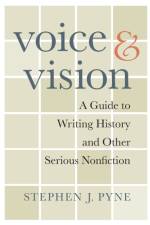
It has become commonplace these days to speak of "unpacking" texts. This book is about packing that prose in the first place. Pyne explores the many ways to understand what makes good nonfiction, and explains how to achieve it. His counsel and guidance will be invaluable to experts and novices in the art of writing serious and scholarly nonfiction.
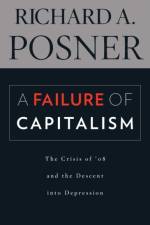
The financial and economic crisis that began in 2008 is the most alarming of our lifetime because of the warp-speed at which it is occurring. Posner presents a concise and non-technical examination of this mother of all financial disasters and of the, as yet, stumbling efforts to cope with it.
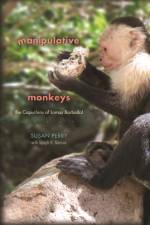
This book takes us into a Costa Rican forest teeming with simian drama, where since 1990 primatologists Perry and Manson have followed four generations of capuchins. The authors describe behavior as entertaining-and occasionally as alarming-as it is recognizable.
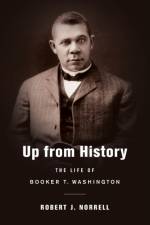
This compelling biography reveals how conditions in the segregated South led Booker T. Washington to call for a less contentious path to freedom and equality. Norrell details the positive power of Washington's vision, one that invoked hope and optimism to overcome past exploitation and present discrimination.
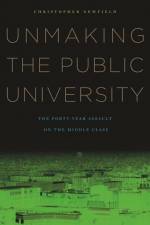
Unmaking the Public University is the story of how conservatives have maligned and restructured public universities in a campaign to end public education's democratizing influence on American society.
In Johnson's own day he was best known as an essayist, critic, and lexicographer. At the center of this collection are the periodical essays from the Rambler, Adventurer, and Idler. Together, these works-allied in their literary, social, and moral concerns-are the ones that continue to speak urgently to readers today.
Hellman develops a much-needed general theory of discrimination. She demonstrates that many familiar ideas about when discrimination is wrong-when it is motivated by prejudice, grounded in stereotypes, or simply departs from merit-based decision-making-won't adequately explain our widely shared intuitions.
With Commonwealth, Michael Hardt and Antonio Negri conclude the trilogy begun with Empire and continued in Multitude, proposing an ethics of freedom for living in our common world and articulating a possible constitution for our common wealth.
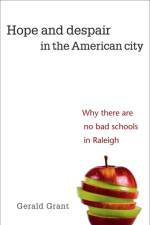
Grant compares two cities-his hometown of Syracuse, New York, and Raleigh, North Carolina-in order to examine the consequences of the nation's ongoing educational inequities. The result is an ambitious portrait-sometimes disturbing, often inspiring-of two cities that exemplify our nation's greatest educational challenges.
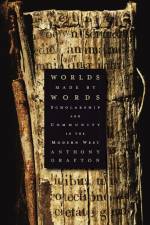
Grafton reveals the microdynamics of the scholarly life through a series of essays on institutions and on scholars ranging from early modern polymaths to modern intellectual historians to American thinkers and writers. Grafton's engaging, erudite essays could be a rallying cry for the revival of the liberal arts.
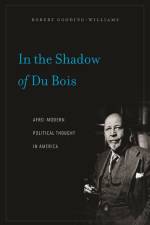
Here, in a major addition to American studies and the first book-length philosophical treatment of Du Bois's thought, Robert Gooding-Williams examines the conceptual foundations of Du Bois's interpretation of black politics.
Edelson examines the relationships between planters, slaves, and the natural world they colonized to create the Carolina Lowcountry. With a bold interdisciplinary approach, Plantation Enterprise reconstructs the environmental, economic, and cultural changes that made it one of the most prosperous and repressive regions in the Atlantic world.
This book consists of eight comparative studies drawn from history, archeology, economics, economic history, geography, and political science. The studies cover a spectrum of approaches; geographically, they include the United States, Mexico, Brazil, western Europe, tropical Africa, India, Siberia, Australia, New Zealand, and other Pacific islands.
A moose frustrates commuters by wandering onto the highway; an alligator suns himself in a strip mall parking lot. DeStefano draws on decades of experience as a biologist and conservationist to examine the interplay between urban sprawl and wayward wildlife. He asks us to rethink the meaning of progress and create a new suburban wildlife ethic.
Charles Darwin's On the Origin of Species is one of the most important and yet least read scientific works in the history of science. The Annotated Origin is a facsimile of the first edition of 1859, and is accompanied by James T. Costa's marginal annotations, drawing on his extensive experience with Darwin's ideas in the field, lab, and classroom.
Rebecca D. Cox draws on five years of interviews and observations at community colleges, where she shows how students and their instructors misunderstand and ultimately fail one another, despite good intentions.
In Biology Is Technology, author Robert Carlson offers a uniquely informed perspective on the endeavors that contribute to current progress in the science of biological systems and the technology used to manipulate them.
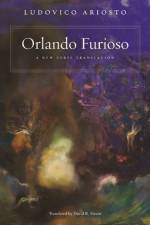
With this lively new verse translation of one of the great literary achievements of the Italian Renaissance, Slavitt introduces readers to Ariosto's now-neglected masterpiece-a poem whose impact on Western literature can scarcely be exaggerated. Slavitt's translation captures the energy, comedy, and great fun of Ariosto's Italian.
Widely praised for his translations of Boethius and Ariosto, esteemed translator David R. Slavitt here returns to Ovid, once again bringing to the contemporary ear the spirited, idiomatic, audacious charms of this master poet. The love here described is of the anguished, ruinous kind, like a sickness, and Ovid prescribes cures.
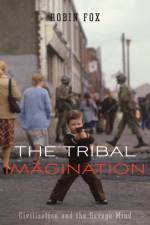
Fox traces our ongoing struggle to maintain open societies in the face of profoundly tribal human needs that, paradoxically, hold the key to our survival. This latest book ranges from incest and arranged marriage to poetry and myth, from human rights and vengeance to pop icons such as Seinfeld.
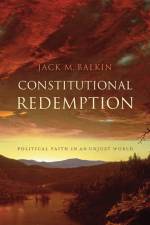
Political constitutions are compromises with injustice. What makes the U.S. Constitution legitimate is Americans' faith that the constitutional system can be made "a more perfect union." Balkin argues that the American constitutional project is based in hope and a narrative of shared redemption, and its destiny is still over the horizon.
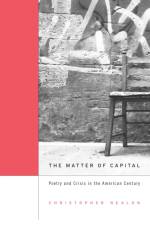
Christopher Nealon's reexamination of North America's poetry in English, from Ezra Pound and W. H. Auden to younger poets of the present day, argues persuasively that the central literary project of the past century was to explore the relationship between poetry and capitalism-its impact on individuals, communities, and cultures.
What warranted the skewering of Richard Bentley (whom Rhodri Lewis called "perhaps the most notable-and notorious-scholar ever to have English as a mother tongue") by two of the literary giants of his day? Kristine Haugen offers a fascinating portrait of Europe's most infamous classical scholar and the intellectual turmoil he set in motion.
Why did the USSR linger so long in Afghanistan? What makes this account of the Soviet-Afghan conflict both timely and important is its focus on the factors that prevented the Soviet leadership from ending a demoralizing and costly war and on the long-term consequences for the Soviet Union and the region.
The letters of Bartolomeo Fonzio-a leading literary figure in Florence of the time of Lorenzo de' Medici and Machiavelli-are a window into the world of Renaissance humanism and classical scholarship. This first English translation includes the famous letter about the discovery on the Via Appia of the perfectly preserved body of a Roman girl.
The Solutions Manual contains answers to problems in General Equilibrium, Overlapping Generations Models, and Optimal Growth Theory. Truman F. Bewley's book-a cornerstone of microeconomics, general equilibrium theory, and mathematical economics courses-covers the main premises behind insurance, capital theory, growth theory, and social security.
What is property? Stuart Banner here offers a guided tour through the many manifestations, and innumerable uses, of property throughout American history. From indigenous culture to our genes, from one's celebrity to Internet content, American Property reveals how our ideas of ownership evolve to suit our ever-changing needs.
Surgical Anatomy of the Head and Neck was hailed as indispensable when it was first published in 2001. This classic atlas-packed with over 700 exceptional drawings, 537 of them in full color-is now available again after years of being out of print. An invaluable reference for surgeons, residents, and medical students.
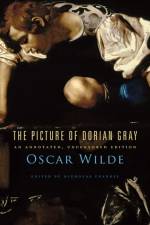
The Picture of Dorian Gray altered the way Victorians understood the world they inhabited, heralding the end of a repressive era. Now, more than 120 years after Wilde handed it over to his publisher, Wilde's uncensored typescript is published here for the first time, in an annotated, extensively illustrated edition.
Abonner på vårt nyhetsbrev og få rabatter og inspirasjon til din neste leseopplevelse.
Ved å abonnere godtar du vår personvernerklæring.