





















Gjør som tusenvis av andre bokelskere
Abonner på vårt nyhetsbrev og få rabatter og inspirasjon til din neste leseopplevelse.
Ved å abonnere godtar du vår personvernerklæring.Du kan når som helst melde deg av våre nyhetsbrev.

This richly illustrated annotated edition brings unmatched vitality to Austen's most passionate and introspective love story. Commentary alongside the text explains difficult allusions, while the Introduction explicates the novel's central conflicts as well as its relationship to Austen's other works and to those of her contemporaries.
Why do the paintings and poetry of the Italian Renaissance-a celebration of classical antiquity-also depict the Florentine countryside populated with figures dressed in contemporary silk robes and fleur-de-lys crowns? Charles Dempsey argues that a fusion of classical form with contemporary content was the defining characteristic of the period.
As they immerse themselves in foreign cultures, trained anthropologists find that accepting difference is one thing, experiencing it is quite another. In tales that entertain and illuminate, these writers show how the moral and intellectual challenges of living cross-culturally revealed to them the limits of their perception and understanding.
Emerson remains one of America's least understood writers, having spawned neither school nor follower. Those wishing to discover or reacquaint themselves with Emerson's writings but who have not known where or how to begin will not find a better starting place or more reliable guide than David Mikics in this richly illustrated Annotated Emerson.
In the first comprehensive life of Frederick III, Muller reconstructs how the beloved persona of "Our Fritz" was created and used for various political purposes before and after the emperor's tragic death from throat cancer. Frederick III served as a canvas onto which different political forces projected their hopes and fears for Germany's future.
Why do so many evangelicals follow leaders with dubious credentials when they have other options in their own faith? Exploring intellectual authority within evangelicalism, the authors reveal how the concept of anointing-being chosen by God to speak for him-established a conservative evangelical leadership isolated from secular arts and sciences.
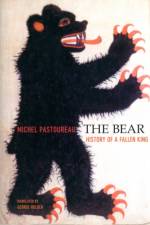
From antiquity to the Middle Ages, the bear's centrality in cults and mythologies left traces in European languages, literatures, and legends. Michel Pastoureau considers how this once venerated creature was deposed by Christianity and continued to sink lower in the symbolic bestiary before rising again in Pyrrhic triumph as the teddy bear.
In 1895 not a single case of dementia praecox was reported in the United States. By 1912 tens of thousands of people with this diagnosis were locked up in asylums, hospitals, and jails. By 1927 it was fading away. This book explains how such a terrible disease could be discovered, affect so many lives, and then turn out to be something else.
With a circulating credit currency, a modern national debt, and sophisticated financial markets, England developed a fiscal-military state that instilled fear and facilitated the first industrial revolution. Yet this new system of credit was precarious and prone to accidents, and it depended on trust, public opinion, and ultimately violence.
The Jews of the Pale of Settlement created a distinctive way of life little known beyond its borders. Just before World War I, a socialist revolutionary named An-sky and his team collected jokes, recorded songs, took thousands of photographs, and created a revealing questionnaire in Yiddish, translated here in its entirety for the first time.
Insects and other arthropods show complex behaviors that are products of versatile brains which, in a sense, think. Strausfeld weaves anatomical observations, molecular biology, neuroethology, cladistics, and the fossil record to explore how arthropod brains process sensory information to produce learning, strategizing, cooperation, and sociality.
The founding fathers emphasized a system in which "the people" were allowed to play only a limited role. Radical democrats insisted that the people, and only the people, should rule. Anthony King shows how this initial conflict has played out in the turmoil of our nation's public life, and he offers a way to address it.
This book documents the tension between Americans' faith in education as a panacea and the moderate pace of change in educational practices. The authors suggest that reformers need to focus on ways to help teachers improve instruction from the inside out instead of decreeing change by remote control.
As influential as prophecy is in the worldview of so many, the belief in the phenomenon remains a popular mystery, largely unstudied and little understood. When Time Shall Be No More offers for the first time an in-depth look at the subtle, pervasive ways in which prophecy belief shapes contemporary American thought and culture.
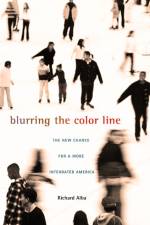
Alba argues that the social cleavages separating Americans into distinct, unequal ethno-racial groups could narrow dramatically in the coming decades. In Blurring the Color Line, Alba explores a future in which socially mobile minorities could blur stark boundaries and gain much more control over the social expression of racial differences.
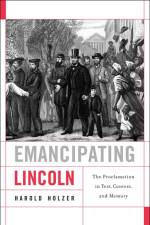
The Emancipation Proclamation is responsible both for Lincoln's being hailed as the Great Emancipator and for his being pilloried by those who consider his once-radical effort at emancipation insufficient. Holzer examines the impact of Lincoln's announcement at the moment of its creation, and then as its meaning has changed over time.
Henry Friendly is frequently grouped with Oliver Wendell Holmes, Louis Brandeis, Benjamin Cardozo, and Learned Hand as the best American jurists of the twentieth century. In this first, comprehensive biography of Friendly, Dorsen opens a unique window onto how a judge of this caliber thinks and decides cases, and how Friendly lived his life.
What is a Palestinian state worth? This book poses questions about the history, meaning, future, and resolution of the Israel/Palestine conflict.
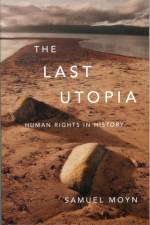
Human rights offer a vision of international justice that idealistic millions hold dear. Yet the very concept on which the movement is based became familiar only a few decades ago when it profoundly reshaped our hopes for an improved humanity. This book elevates that extraordinary transformation to center stage.
For Latin America, the Cold War was anything but cold. Nor was it the so-called "long peace" afforded the world's superpowers by their nuclear standoff. Taking an international perspective on the postwar decades in the region, this book explains what exactly happened in Latin America during the Cold War, and why it was so traumatic.
In the spring of 1929, Martin Heidegger and Ernst Cassirer met for a public conversation in Davos, Switzerland. They were arguably the most important thinkers in Europe, and their exchange touched upon the most urgent questions in the history of philosophy. This title shows how the life and work of these philosophers remained closely intertwined.
Offers an interpretation of care labor in the United States by tracing the roots of inequity along two interconnected strands: unpaid caring within the family; and slavery, indenture, and other forms of coerced labor.
This book consists of 12 case studies-from building the foundation for eliminating the military draft in 1973 to implementing the Pension Reform Act in 2006-that demonstrate how economic research has improved economic and social conditions over the past half century by influencing public policy decisions.
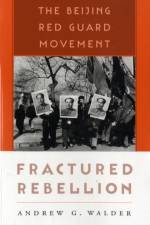
This book is the first full-length account of the evolution of China's Red Guard Movement in Beijing from its beginnings in 1966 to its forcible suppression in 1968. Walder combines historical narrative with sociological analysis to explore the radical student movement's crippling factionalism, devastating social impact, and ultimate failure.
This book, a rare melding of human and animal research and theoretical and empirical science, ventures into the most interesting realms of behavioral biology to examine the intimate role of endocrinology in social relationships.
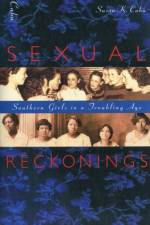
Focusing on the period from 1920 to 1960, Cahn reveals how both the life of the South and the meaning of adolescence underwent enormous political, economic, and social shifts, with the modern awareness of female sexuality clashing mightily against the white supremacist and patriarchal legacies of the old South.
In 1963, West Germany was gripped by a dramatic trial of former guards who had worked at Auschwitz. It was the country's largest, most public trial and attracted international attention. Using pretrial files and extensive trial audiotapes, Wittmann offers a fascinating reinterpretation of Germany's first major attempt to confront its past.
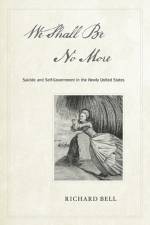
Though suicide is an individual act, Richard Bell reveals its broad social implications in early America. From Revolution to Reconstruction, everyone-parents, newspapermen, ministers and abolitionists alike-debated the meaning of suicide as a portent of danger or of possibility in a new nation struggling to define itself and its power.
The world shows up for us, but, as Alva Noe contends in his latest exploration of the problem of consciousness, it doesn't show up for free. We must show up, too, and bring along what knowledge and skills we've cultivated. As with a painting in a gallery, the world has no meaning-no presence to be experienced-apart from our able engagement with it.
Contemporary philosophers of mind tend to explain rationality by viewing the mind as a kind of machine-the only alternative, it has seemed, to a ghostly supernatural explanation. Marcus rejects this choice as false and defends a third way-via rational causation, which draws on the theoretical and practical inferential abilities of human beings.
Abonner på vårt nyhetsbrev og få rabatter og inspirasjon til din neste leseopplevelse.
Ved å abonnere godtar du vår personvernerklæring.