











Gjør som tusenvis av andre bokelskere
Abonner på vårt nyhetsbrev og få rabatter og inspirasjon til din neste leseopplevelse.
Ved å abonnere godtar du vår personvernerklæring.Du kan når som helst melde deg av våre nyhetsbrev.

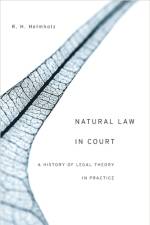
Natural-law theory grounds human laws in universal truths of God's creation. The task of the judicial system was to build an edifice of positive law on natural law's foundations. R. H. Helmholz shows how lawyers and judges made and interpreted natural law arguments in the West, and concludes that historically it has advanced the cause of justice.
The lizard genus Anolis contains more species than any other genus of reptile, bird, or mammal. Caribbean members of this group have been intensively studied, but knowledge of Central and South American anoles has lagged behind. James R. McCranie and Gunther Koehler begin to fill this gap with a detailed account of the anoles of Honduras.
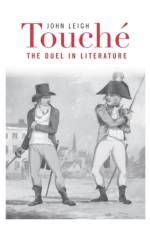
Many of the West's best writers fought in duels or wrote about them, seduced by glamour or risk or recklessness. A gift as a plot device, the duel also offered a way to discover how we face fears of humiliation, pain, and death. John Leigh's literary history of the duel illuminates these and other tensions attending the birth of the modern world.
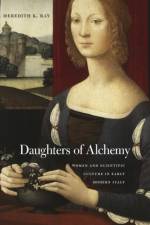
Meredith Ray shows that women were at the vanguard of empirical culture during the Scientific Revolution. They experimented with medicine and alchemy at home and in court, debated cosmological discoveries in salons and academies, and in their writings used their knowledge of natural philosophy to argue for women's intellectual equality to men.
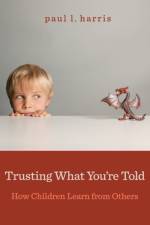
If children were little scientists who learn best through firsthand observations and mini-experiments, how would a child discover that the earth is round-never mind conceive of heaven as a place someone might go after death? Trusting What You're Told begins by reminding us of a basic truth: Most of what we know we learned from others.
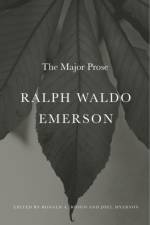
Ronald A. Bosco and Joel Myerson have gathered Emerson's most memorable prose published under his direct supervision, enhanced by additional writings. Ralph Waldo Emerson: The Major Prose is the only single-volume anthology that presents the full range of Emerson's written and spoken prose-sermons, lectures, addresses, and essays.
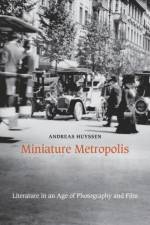
Andreas Huyssen explores the history and theory of metropolitan miniatures-short prose pieces about urban life written for European newspapers. His fine-grained readings open vistas into German critical theory and the visual arts, revealing the miniature to be one of the few genuinely innovative modes of spatialized writing created by modernism.
There are bizarre moments when we feel like strangers to ourselves. Through an investigation of Heidegger's concept of uncanniness, Katherine Withy explores what such experiences reveal. She shows that we can be what we are only if we do not fully understand what it is to be us, and points toward what it is to live well as an uncanny human being.
Unintimidated by Old World sophistication or travel to undeveloped parts of the globe, Mark Twain spent a surprising amount of time outside the continental United States. Roy Morris, Jr. focuses on the dozen years he lived overseas and the books he wrote encouraging middle-class Americans to follow him around the world, at the dawn of mass tourism.
For sublimity and philosophical grandeur Milton stands almost alone in world literature. His peers are Homer, Virgil, Dante, Wordsworth, and Goethe. Gordon Teskey shows how Milton's aesthetic joins beauty to truth and value to ethics and how he rediscovers the art of poetry as a way of thinking in the world as it is, and for the world as it can be.
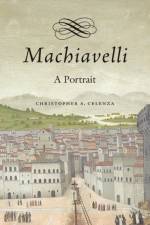
The man whose name is shorthand for all that is ugly in politics was more nuanced than his reputation suggests. Christopher Celenza's portrait of Machiavelli removes the varnish to reveal not just the hardnosed philosopher but the skilled diplomat, learned commentator on ancient history, comic playwright, tireless letter writer, and thwarted lover.
Patrice Gueniffey, the leading French historian of the Revolutionary and Napoleonic age, takes up the epic narrative at the heart of this turbulent period: the life of Napoleon himself, from his boyhood in Corsica, to his meteoric rise during the Italian and Egyptian campaigns, to his proclamation as Consul for Life in 1802.
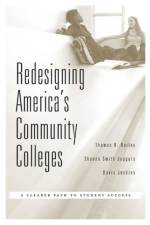
Community colleges enroll half of the nation's undergraduates. Yet only 40 percent of entrants complete an undergraduate degree in six years. Redesigning America's Community Colleges explains how two-year colleges can increase their students' success rate quickly and at less cost, through a program of guided pathways to completion.
Throughout his life James Boswell struggled to fashion a clear account of himself, but try as he might he could not reconcile the truths of his era with those of his religious upbringing. Few periods better crystallize this turmoil than 1763-1765, the years of his Grand Tour and the focus of Robert Zaretsky's thrilling intellectual adventure.
Brendan O'Flaherty brings the tools of economic analysis-incentives, equilibrium, optimization-to bear on racial issues. From health care, housing, and education, to employment, wealth, and crime, he shows how racial differences powerfully determine American lives, and how progress in one area is often constrained by diminishing returns in another.
After Union forces captured New Orleans in 1862, Rose Herera's owners fled to Havana, taking her three children with them. Adam Rothman tells the story of Herera's quest to rescue her children from bondage after the war. As the kidnapping case made its way through the courts, it revealed the prospects and limits of justice during Reconstruction.
Sara Fieldston shows how humanitarian child welfare agencies sponsored by Americans filtered political power through the prism of familial love after World War II. These well-meaning institutions shaped perceptions of the United States as the benevolent parent in a family of nations, and helped to expand American hegemony around the globe.
Barry Allen explores the concept of knowledge in Chinese thought over two millennia and compares the different philosophical imperatives that have driven Chinese and Western thought. Challenging the hyperspecialized epistemology of modern Western philosophy, he urges his readers toward an ethical appreciation of why knowledge is worth pursuing.
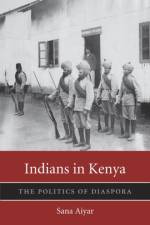
Sana Aiyar chronicles the strategies by which Indians sought a political voice in Kenya, from the beginning of colonial rule to independence. She examines how the strands of Indians' diasporic identity influenced Kenya's leadership-from partnering with Europeans to colonize East Africa, to collaborating with Africans to battle racial inequality.
A widely-accepted explanation for India's national unity is a narrative called the bhakti movement-poet-saints singing bhakti from India's southern tip to the Himalayas between 600 and 1600. John Hawley shows that this narrative, with its political overtones, was created by the early-twentieth-century circle around Rabindranath Tagore in Bengal.
A human rights lawyer travels to hot zones around the globe before and after 9/11 to document abuses by warlords, terrorists, and counterterrorism forces. John Sifton reminds us that human rights advocates can only shame the world into better behavior; to invoke rights is to invoke the force to uphold them, including the very violence they deplore.
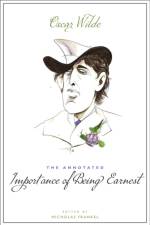
The Annotated Importance of Being Earnest provides facing-page commentary on Oscar Wilde's greatest play. Editor Nicholas Frankel highlights the play's relation to the author's homosexuality and to the climate of sexual repression that led to Wilde's imprisonment just months after the play's London opening in 1895.
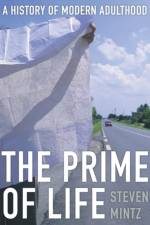
Steven Mintz reconstructs the emotional interior of a life stage too often relegated to self-help books and domestic melodramas. He describes the challenges of adulthood today and puts them into perspective by exploring how past generations achieved intimacy and connection, raised children, sought meaning in work, and responded to loss.
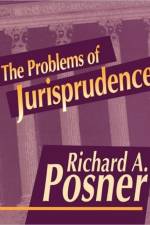
Here one of America's most distinguished scholar-judges shares with us his vision of the law. Posner argues for a pragmatic jurisprudence, one that eschews formalism in favor of the factual and the empirical. Laws, he argues, are not abstract, sacred entities, but socially determined goads for shaping behavior to conform with society's values.
Disembodiment--rendering the body an object and the self bodyless--is the foundational gesture of medicine. How, then, does medical practice acknowledge the presence of the person in the objectified body? Katharine Young considers in detail the "choreography" such a maneuver requires.
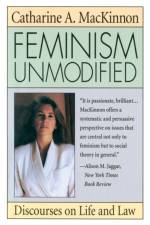
Catharine A. MacKinnon, noted feminist and legal scholar, explores and develops her original theories and practical proposals on sexual politics and law. These discourses, originally delivered as speeches, have been brilliantly woven into a book that retains all the spontaneity and accessibility of a live presentation. MacKinnon offers a unique retrospective on the law of sexual harassment, which she designed and has worked for a decade to establish, and a prospectus on the law of pornography, which she proposes to change in the next ten years. Authentic in voice, sweeping in scope, startling in clarity, urgent, never compromised and often visionary, these discourses advance a new theory of sex inequality and imagine new possibilities for social change. Through these engaged works on issues such as rape, abortion, athletics, sexual harassment, and pornography, MacKinnon seeks feminism on its own terms, unconstrained by the limits of prior traditions. She argues that viewing gender as a matter of sameness and difference--as virtually all existing theory and law have done--covers up the reality of gender, which is a system of social hierarchy, an imposed inequality of power. She reveals a political system of male dominance and female subordination that sexualizes power for men and powerlessness for women. She analyzes the failure of organized feminism, particularly legal feminism, to alter this condition, exposing the way male supremacy gives women a survival stake in the system that destroys them.
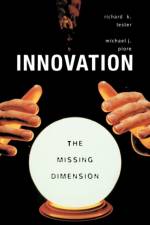
Amid mounting concern over job loss to low-wage economies, one fact is clear: America's prosperity hinges on the ability of its businesses to continually innovate. But what makes for a creative economy? For an answer, the authors examine innovation strategies in such dynamic economic sectors as cell phones, medical devices, and blue jeans.
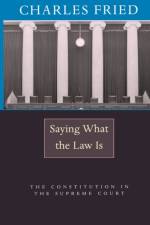
Taking the reader up to and through such controversial Supreme Court decisions as the Texas sodomy case and the University of Michigan affirmative action case, Fried sets out to make sense of the main topics of constitutional law: the nature of doctrine, federalism, separation of powers, freedom of expression, religion, liberty, and equality.
Knots are the object of mathematical theory, used to unravel ideas about the topological nature of space. In recent years knot theory has been brought to bear on the study of equations describing weather systems, mathematical models used in physics, and even molecular biology. This book is an engaging introduction to this complicated subject.
Abonner på vårt nyhetsbrev og få rabatter og inspirasjon til din neste leseopplevelse.
Ved å abonnere godtar du vår personvernerklæring.