












Gjør som tusenvis av andre bokelskere
Abonner på vårt nyhetsbrev og få rabatter og inspirasjon til din neste leseopplevelse.
Ved å abonnere godtar du vår personvernerklæring.Du kan når som helst melde deg av våre nyhetsbrev.

As a didactic explanation of pagan ancient Greek culture to Orthodox Christians, John Tzetzes's Allegories of the Iliad is deeply rooted in the mid-twelfth-century circumstances of the cosmopolitan Comnenian court. As a critical reworking of the Iliad, it is part of the millennia-long global tradition of Homeric adaptation.
Scholars normally emphasize the contrast between the two great eighteenth-century thinkers Jean-Jacques Rousseau and Adam Smith. Rousseau is seen as a critic of modernity; Smith as an apologist. However, Istvan Hont finds significant commonalities in their work, arguing that both were theorists of commercial society but from different perspectives.
When Japan invaded China in 1937, Chinese journalists greeted the news with euphoria, convinced their countrymen, led by Chiang Kai-shek, would triumph. Parks Coble shows that correspondents underplayed China's defeats for fear of undercutting morale and then saw their writings disappear and themselves denounced after the Communists came to power.
Anders Engberg-Pedersen shows how the Napoleonic Wars inspired a new discourse on knowledge in the West. Soldiers returning from battle were forced to reconsider what it is possible to know and how decisions are made in a fog of imperfect knowledge. Chance no longer appeared exceptional but normative-a prism for understanding the modern world.
Their empire unmatched in military and cultural might, the Aztecs were poised on the brink of a golden age, when the arrival of the Spanish changed everything. Colin MacLachlan explains why Mexico is culturally Mestizo while ethnically Indian and why Mexicans remain orphaned from their indigenous heritage-the adopted children of European history.
Though Massachusetts banned slavery in 1780, prior to the Civil War a law prohibiting marriage between whites and blacks reinforced the state's racial caste system. Amber Moulton recreates an unlikely collaboration of reformers who sought to rectify what they saw as an indefensible injustice, leading to the legalization of interracial marriage.
The First Seminole War shaped how the United States demarcated its spatial and legal boundaries. Rooted in exceptionalism, manifest destiny, and racism, the legal framework that emerged from Andrew Jackson's invasion of Florida laid the groundwork for the Monroe Doctrine, the Dred Scott decision, and westward expansion, as Deborah Rosen shows.
This study of the evolution of Chinese capitalism chronicles the Song family of North China under five successive authoritarian governments. Brett Sheehan shows both foreign and Chinese influences on private business, which, although closely linked to the state, was neither a handmaiden to authoritarianism nor a natural ally of democracy.
Nazis began detaining Jews in camps as soon as they came to power in 1933. Kim Wunschmann reveals the origin of these extralegal detention sites, the harsh treatment Jews received there, and the message the camps sent to Germans: that Jews were enemies of the state, dangerous to associate with and fair game for acts of intimidation and violence.
For Descartes, knowledge exists as ideas in the mind that represent the world. In a radical critique, Hubert Dreyfus and Charles Taylor argue that knowledge consists of much more than the representations we formulate in our minds. They affirm our direct contact with reality-both the physical and the social world-and our shared understanding of it.
Human-generated greenhouse gas emissions imperil a global resource: a biosphere capable of supporting life as we know it. What is the fair way to share this scarce resource across present and future generations and across regions of the world? This study offers a new perspective based on the guiding ethics of sustainability and egalitarianism.
As anyone who has wielded a camera knows, photography has a unique relationship to chance. It also represents a struggle to reconcile aesthetic aspiration with a mechanical process. Robin Kelsey reveals how daring innovators expanded the aesthetic limits of photography in order to create art for a modern world.
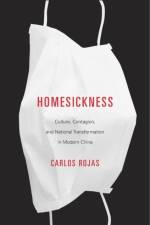
Carlos Rojas focuses on the trope of "homesickness" in China-discomfort caused not by a longing for home but by excessive proximity to it. This inverse homesickness marks a process of movement away from the home, conceived of as spaces associated with the nation, family, and individual body, and gives rise to the possibility of long-term health.
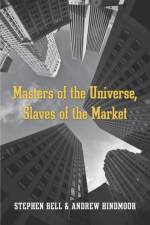
Stephen Bell and Andrew Hindmoor compare banking systems in the U.S. and UK to those of Canada and Australia and explain why the system imploded in the former but not the latter. Canadian and Australian banks were able to make profits through traditional lending practices, unlike their competition-driven, risk-taking U.S. and UK counterparts.
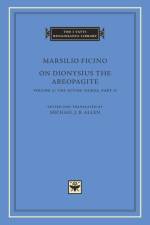
In 1490/92 the Florentine Platonist Marsilio Ficino made new translations of two treatises he believed were the work of Dionysius the Areopagite, the disciple of St. Paul mentioned in the Acts of the Apostles. They are presented here in new critical editions accompanied by English translations, the first into any modern language.
Having studied with pioneers in philosophy and science, Bernardus Silvestris became a renowned teacher of literary and poetic composition. His versatility as scholar, philosopher, and scientist is apparent in this collection, particularly his masterpiece the Cosmographia, which has been compared to the poetry of Lucretius and Giordano Bruno.
Between 1608 and 1610 the canopy of the night sky was ripped open by an object created almost by accident: a cylinder with lenses at both ends. Galileo's Telescope tells how this ingenious device evolved into a precision instrument that would transcend the limits of human vision and transform humanity's view of its place in the cosmos.
August Weismann's 1892 theory that inheritance is transmitted through eggs and sperm provided the biological mechanism for natural selection. In this full-length biography, Frederick Churchill situates Weismann in the swirling intellectual currents of his day and shows how his work paved the way for the modern synthesis of genetics and evolution.
Sarah Bridger examines the ethical debates that tested the U.S. scientific community during the Cold War, and scientists' contributions to military technologies and strategic policymaking, from the dawning atomic age through the Strategic Defense Initiative (Star Wars) in the 1980s, which sparked cross-generational opposition among scientists.
In class actions, attorneys effectively hire clients rather than act as their agent. Lawyer-financed, lawyer-controlled, and lawyer-settled, this entrepreneurial litigation invites lawyers to act in their own interest. John Coffee's goal is to save class action, not discard it, and to make private enforcement of law more democratically accountable.
Does the green movement remain a transformative force in American life? In Environment in the Balance Jonathan Cannon interprets a wide range of U.S. Supreme Court decisions over four decades and explores the current ferment among activists, to gauge the practical and cultural impact of environmentalism and its future prospects.
In the decade after the 1973 Supreme Court decision on abortion, advocates on both sides sought common ground. But as pro-abortion and anti-abortion positions hardened over time into pro-choice and pro-life, the myth was born that Roe v. Wade was a ruling on a woman's right to choose. Mary Ziegler's account offers a corrective.
Wilhelm Reich's experiments in the 1930s with cutting-edge light microscopy and time-lapse micro-cinematography were considered discredited, but not because of shoddy lab technique, as has been claimed. Scientific opposition to Reich's experiments, James Strick argues, grew out of resistance to his unorthodox sexual theories and Marxist leanings.
Seema Alavi challenges the idea that all pan-Islamic configurations are anti-Western or pro-Caliphate. A pan-Islamic intellectual network at the cusp of the British and Ottoman empires became the basis of a global Muslim sensibility-a political and cultural affiliation that competes with ideas of nationhood today as it did in the last century.
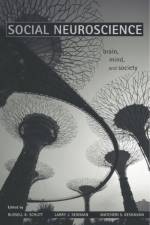
Human beings evolved in the company of others. Mutually reinforcing connections between brains, minds, and societies have profound implications for physical and emotional health. Social Neuroscience offers a comprehensive new framework for studying human brain development and human behavior in their social context.
John Medearis argues that democracies face challenges which go beyond civic lethargy and unreasonable debate. Democracy is inherently a fragile state of affairs because citizens create the very institutions that overwhelm them. Hostile threats are the product of their own collective activities, and preserving democracy will always entail struggle.
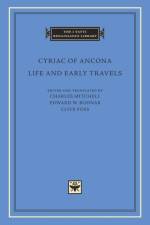
Cyriac of Ancona (1391-1452) was among the first to study the physical remains of the ancient world in person and is sometimes regarded as the father of classical archaeology. This volume contains a life of Cyriac to the year 1435 by his friend Francesco Scalamonti, along with several letters and other texts illustrating his early life.
Lauren Faulkner Rossi plumbs the moral justifications of Catholic priests who served willingly and faithfully in the German army in World War II. She probes the Church's accommodations with Hitler's regime, its fierce but often futile attempts to preserve independence, and the shortcomings of Church doctrine in the face of total war and genocide.
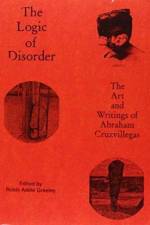
The Logic of Disorder presents for the first time to the English-speaking world the writings of seminal Mexican contemporary visual artist Abraham Cruzvillegas. Each of the texts included in this volume is fully annotated and is accompanied by a number of critical studies by leading curators and scholars.
Like its state emblem the double-headed eagle, Russia has always looked to both East and West for secure trade routes, allies, and defensible frontiers. Restless Empire illuminates the epic sweep of Russian history in a full-color atlas depicting the essential cultural, political, economic, and military developments of Russia's past.
Abonner på vårt nyhetsbrev og få rabatter og inspirasjon til din neste leseopplevelse.
Ved å abonnere godtar du vår personvernerklæring.