












Gjør som tusenvis av andre bokelskere
Abonner på vårt nyhetsbrev og få rabatter og inspirasjon til din neste leseopplevelse.
Ved å abonnere godtar du vår personvernerklæring.Du kan når som helst melde deg av våre nyhetsbrev.

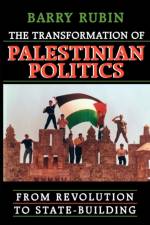
A comprehensive overview and analysis of the Palestinians' move from revolutionary movement to state, The Transformation of Palestinian Politics outlines the difficulties in the transition now under way arising from Palestinian history, society, and diplomatic agreements.
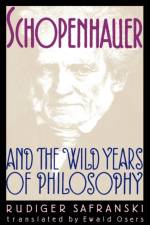
With equal attention to both the life and work of his subject, Safranski places the visionary skeptic in the context of philosophical predecessors and contemporaries like Kant, Fichte, Schelling, and Hegel, and explores the sources of Schopenhauer's profound alienation from their "secularized religion of reason."
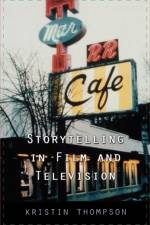
Derided as simple, dismissed as inferior to film, characterized as a vast wasteland, television nonetheless exerts an undeniable, apparently inescapable power. The secret of television's success may lie in the narrative complexities underlying its seeming simplicity, complexities the author unmasks in her analysis here.
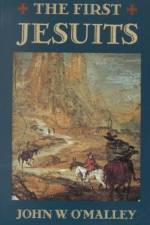
John W. O'Malley gives us the most comprehensive account ever written of the Society of Jesus in its founding years, one that heightens and transforms our understanding of the Jesuits in history and today.
Paley tells in this book a story of her own farewell from teaching, as well as a story of the self-discovery of Reeny, a little girl with a fondness for the color brown. Led by Reeny, Paley and the children develop a passion for the books of Italian author Leo Lionni, exploring the essential human need to create and to belong.
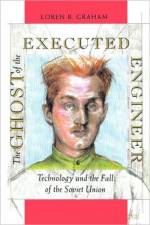
Through Graham, executed engineer Peter Palchinsky tells of Soviet technology and industry, the mistakes he condemned in his lifetime, the corruption and collapse he predicted, the ultimate price paid for silencing those who were not afraid to speak out. Palchinsky's story is also the story of the Soviet Union's industrial promise and failure.
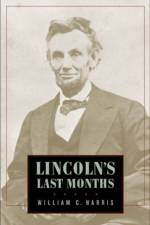
Lincoln Prize winner Harris turns to the last months of Lincoln's life in an attempt to penetrate this central figure of the Civil War, and arguably America's greatest president. Lincoln's ability to master the daunting affairs of state during the final nine months of his life proved critical to his apotheosis as savior and saint of the nation.
This contribution to European historical literature provides a clear and dispassionate account of successive ecclesiastical-secular conflicts and controversies in Spain and deftly summarizes the diverse ideological and intellectual currents of the times.
This volume collects one hundred of the most important and beloved Late Antique and Medieval Latin hymns from Western Europe. Ranging from Ambrose in the late fourth century to Bonaventure in the thirteenth, the authors meditate on the ineffable, from Passion to Paradise, and cover a broad gamut of poetic forms and meters.
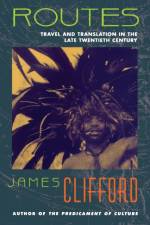
When culture makes itself at home in motion, where does an anthropologist stand? Clifford offers a new view of anthropology. It is, he says, a moving picture of a world that reveals itself en route. In this collage of essays, meditations, poems, and travel reports, Clifford takes travel and translation as openings into a complex modernity.
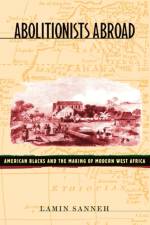
In 1792, nearly 1,200 freed American slaves crossed the Atlantic and established in Freetown, West Africa, a community dedicated to anti-slavery and opposed to the African chieftain hierarchy that was tied to slavery. Lamin Sanneh's engrossing book narrates this story.
A careful, factual account of the institutional forms and foreign relations in the Ch'ing dynasty after 1860.
Sisters in Arms is the first definitive history of Catholic nuns in the Western world. Unfolding century by century, this epic drama encompasses every period from the dawn of Christianity to the present.
This classic portrayal of Boston's glorious maritime past opens a window onto the history of American port cities.
In March 1933, Nazi storm troopers seized control of the Odenwaldschule, a small German boarding school founded in 1910 by educational reformer Paul Geheeb. Shirley explores how Nazi school reforms catalyzed Geheeb's alienation from the regime and galvanized his determination to close the school and leave Germany.
The Hubble Space Telescope is the largest, most complex, and most powerful observatory ever deployed in space. Now Eric Chaisson, the senior scientist on the HST project, tells the inside story of the much heralded mission to fix the telescope.
This is an incisive and fully illustrated history of Harvard's architecture told by the distinguished architectural historian Bainbridge Bunting, author of Houses of Boston's Back Bay.
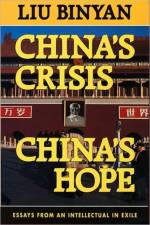
This book-written in one man's eloquent voice-is testimony to his belief that the need for democratic reform has taken root among the Chinese people and that they will ultimately take steps to transform their nation.
This book presents the earliest South Indian inscriptions (ca. second century B.C. to sixth century A.D.), written in Tamil in local derivations of the Ashokan Brahmi script. The work includes texts, transliteration, translation, detailed commentary, inscriptional glossary, and indexes.
Edwin J. Cohn and his associates' expertise in the study of blood put them in a unique position to carry out the search for essential new blood products at the onset of World War II. This book discloses how the wartime emergency called into play Cohn's talents as a leader who drew together chemists, clinicians, and others to attain a complex goal.
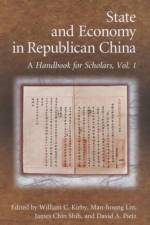
This manual for students focuses on archival research in the economic and business history of the Republican era (1911-1949). Following a general discussion of archival research and research aids for the Republican period, the handbook introduces the collections of archives in the People's Republic of China and the Republic of China on Taiwan.
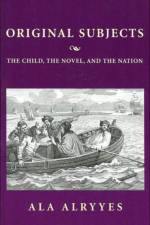
Original Subjects explores the interweaving of the child-hero and the fortunes of a nation, as these are portrayed in a wide selection of novels and national narratives in the French and English traditions.
There has never been any doubt that the Adams family was America's first family in our politics and memory. This research-based and insightful book is a multigenerational biography of that family from the founder father John through the mordant writer Brooks.
New Geographies, 7 examines the forms, imprints, places, and territories of information and communication technologies (ICTs) through spatially grounded and nuanced accounts of the hybrid conditions that ICTs generate, the scales at which they operate, and how this production of space is manifested in both advanced and emerging economies.
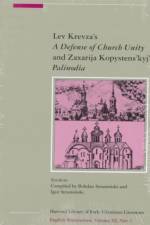
Krevza's Defense, on the Uniate side, and Kopystens'kyj's Palinodia (1621), a defense of the Eastern Church, are perhaps the most illuminating works on the debate that culminated at the time of the Union of Brest (1596), when much of the Ruthenian ecclesiastical hierarchy declared itself in communion with the Roman Catholic Church.
Abonner på vårt nyhetsbrev og få rabatter og inspirasjon til din neste leseopplevelse.
Ved å abonnere godtar du vår personvernerklæring.