
















Gjør som tusenvis av andre bokelskere
Abonner på vårt nyhetsbrev og få rabatter og inspirasjon til din neste leseopplevelse.
Ved å abonnere godtar du vår personvernerklæring.Du kan når som helst melde deg av våre nyhetsbrev.

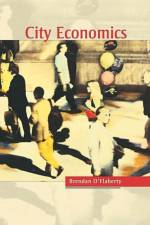
This introductory textbook on the economics of cities is for students of urban and regional policy and of undergraduate economics. It deals with standard topics, including transportation, pollution, housing, and education, but also discusses topics such as segregation, water supply, sewerage, garbage, homelessness, crime, and economic development.
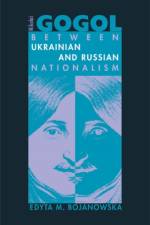
The 19th-century author Nikolai Gogol occupies a key place in the Russian cultural pantheon as an ardent champion of Russian nationalism. In exploring Gogol's fluctuating nationalist commitments, Bojanowska traces the connections between the Russian and Ukrainian nationalist paradigms in his work and situates both in the larger imperial context.
The relation between religion and liberal democracy in America has long been vexed and complex-and crucial to what it is and aspires to be. Amid increasingly contentious exchanges over fundamentalism, abortion rights, secularism, and pluralism, Bane reminds us of the critical role that religion plays in the health and well-being of a democracy.
Like the popular first three volumes of DARE, the fourth is a treasure-trove of linguistic gems, a book that invites exclamation, delight, and wonder. More than six hundred maps pinpoint where you might live if your favorite card games are sheepshead and skat; if you eat pan dulce rather than pain perdu.
A world-renowned authority on religion and ethics in America, Martin Marty here gives a judicious account of how the body politic has been torn between the imperative of one people, one voice, and the separate urgings of distinct identities--racial, ethnic, religious, gendered, ideological, economic.
This first complete biography of the longtime member and chief judge of the New York Court of Appeals and Justice of the Supreme Court of the United States during the turbulent years of the New Deal is a monumental achievement by a distinguished interpreter of constitutional law.
Weitzman explores the tactics cultures use to sustain themselves in the face of intractable realities. This book focuses on a resilient culture caught between two disruptive acts of sacrilege: ancient Judaism between the destruction of the First Temple (by the Babylonians) and the destruction of the Second Temple (by the Romans).
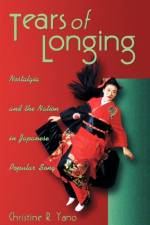
Informed by theories of nostalgia, collective memory, cultural nationalism, and gender, this book draws on the author's extensive fieldwork in probing the practice of identity-making and the processes at work when Japan becomes "Japan."
Reviewing research and presenting empirical data from Sweden and elsewhere, the authors examine basic concepts, possible hypotheses, explanatory models, and policy solutions for the biological and social causes of the differences in health between men and women.
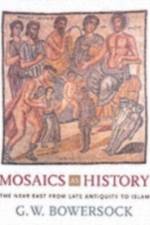
In the past century, exploration and serendipity have uncovered mosaic after mosaic in the Near East-maps, historical images and religious scenes constituting a treasure of new testimony from antiquity. In them, Bowersock finds historical evidence, illustrations of literary and mythological tradition, religious icons, and monuments to civic pride.
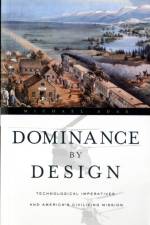
Long before the U.S. became a major force in global affairs, U.S. expansionists assumed a mandate to "civilize" non-Western peoples by demanding submission to American technological prowess and design. Adas pursues the history of this mission through America's foreign relations over nearly four centuries.
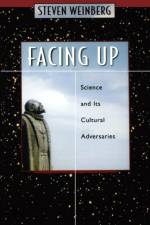
Defending the spirit of science against its cultural adversaries, these essays express a viewpoint that is reductionist, realist, and devoutly secular. Together, they afford the general reader the unique pleasure of experiencing the superb sense, understanding, and knowledge of one of the most interesting and forceful scientific minds of our era.
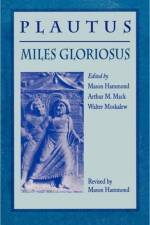
Miles Gloriosus or "Braggart Warrior" is one of the best-known and liveliest Roman comedies. It shows Plautus at his ablest in ingenious plot construction, vivid characterization, fast-moving action, and humorous dialogue.
In contrast to the time-line narratives of previous books on Enron that offer interesting but largely unsystematic insight into individual actions and organizational processes, Innovation Corrupted pursues a more methodical analysis of the causes and lessons of Enron's collapse.
In the mid-19th century, philosophers, theologians, and educators hailed Laura Bridgman as a miracle because she was the first deaf and blind person to learn language. Her life was transformed by educational crusader Dr. Samuel Gridley Howe. Freeberg tells this extraordinary tale of mentor and student, scientist and experiment.
Reinterpreting the emergence of the Soviet state, Holquist situates the Bolshevik Revolution within the continuum of mobilization and violence that began with World War I and extended through Russia's civil war, thereby providing a genealogy for Bolshevik political practices that places them clearly among Russian and European wartime measures.
Griliches was a modern master of empirical economics. Here, he recounts what he and others have learned about the sources of economic growth, and conveys how he tackled research problems. For Griliches, theorizing without measurement produces mere parables, but measurement without theory is blind. Judgment enables one to strike the right balance.
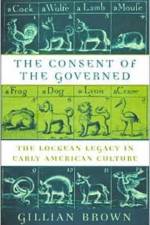
What made the United States what it is began long before a shot was fired at a redcoat in Lexington, Massachusetts in 1775. The theories of reading developed by John Locke were the means by which a revolutionary attitude toward authority was disseminated throughout the British colonies in North America.
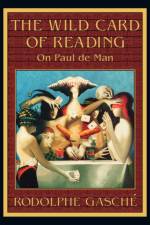
One of the most knowledgeable and provocative explicators of Paul de Man's writings, Rodolphe Gasche, a philosopher by training, demonstrates, for the first time, the systematic coherence of the critic's work, insisting that de Man continues to merit close attention despite his notoriously difficult and obscure style.
This extraordinary family account begins with the author's two illustrious grandfathers: one, a provincial samurai who became a founding father of the Meiji government; the other, a scion of a wealthy and enterprising peasant family who almost single-handedly developed the silk trade with America.
Hovenkamp confronts not only the problems of poorly designed, overly complex, and inconsistent antitrust rules but also the current disarray of antitrust's rule of reason, offering an antitrust policy faithful to the consumer welfare principle and more readily manageable by the federal courts and other antitrust tribunals.
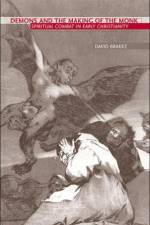
Drawing on biographies of exceptional monks, collections of monastic sayings and stories, letters from ascetic teachers to their disciples, sermons, and community rules, Brakke crafts a compelling picture of the embattled religious celibate in fourth- and fifth-century Egypt.
Johnson argues that states are no more rational than people, who are susceptible to exaggerated ideas of their virtue, of the scope of their control, and of the future. By looking at such "positive illusions" in evolutionary biology, psychology, and politics of international conflict, this book offers compelling insights into why states wage war.
In this exploration of the 20th-century civil rights and black power eras, Martin uses cultural politics as a lens through which to understand the African-American freedom struggle. In freedom songs, in the exuberance of an Aretha Franklin concert, in Faith Ringgold's exploration of race and sexuality, the personal and social became the political.
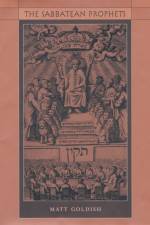
The tale of Shabbatai and his prophets has mainly been explored by specialists in Jewish mysticism. Goldish shifts the focus of Sabbatean studies from the theology of Lurianic Kabbalah to widespread 17th-century belief in latter-day prophecy, integrating this messianic movement into the early modern world, making its story accessible to readers.
A veteran entomologist and accomplished birdwatcher presents this introduction to the intricate interplay of insects and birds, with a beguiling blend of anecdote, ornithology, and entomology. Profusely illustrated with drawings and color photographs, this book offers a cornucopia of facts about the life history and behavior of insects and birds.
Stowe traces the evolution of sacred music from colonial times to the present, from the Puritans to Sun Ra, and shows how these cultural encounters have produced a rich harvest of song and faith.
Abonner på vårt nyhetsbrev og få rabatter og inspirasjon til din neste leseopplevelse.
Ved å abonnere godtar du vår personvernerklæring.