




















Gjør som tusenvis av andre bokelskere
Abonner på vårt nyhetsbrev og få rabatter og inspirasjon til din neste leseopplevelse.
Ved å abonnere godtar du vår personvernerklæring.Du kan når som helst melde deg av våre nyhetsbrev.

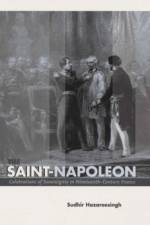
In 1852, President Louis Napoleon of France declared that August 15-Napoleon Bonaparte's birthday-would be celebrated as France's national day. Drawing on a wealth of archival evidence, Hazareesingh vividly reconstructs the symbolic richness and political complexity of the Saint-Napoleon festivities.
Harman shows how, within the most miniscule of worlds, Darlington sought answers to the biggest questions-how species originate, how variation occurs. But Darlington did not stop there: Chromosomes held untold, dark truths about man and his culture. This conviction led once-famed Darlington down a path of rebuke, isolation, and finally obscurity.
This book proposes a new political imagination found in the works of Weber, Freud, and Foucault. Chowers characterizes it as one of "entrapment," whereby modern identity is constituted by participation in and internalization of the regulatory norms of the institutions that originated in the modern imagination.
The authors explore a lengthy controversy surrounding fishing, hunting, and gathering rights of Chippewa Indians in Wisconsin. The book uses a carefully designed survey of public opinion to explore the dynamics of prejudice and political contestation, and to further our understanding of how and why racial prejudice enters into politics in the U.S.
Race, ethnicity, and nation, Lie argues, are modern notions, associated with the rise of the modern state, the industrial economy, and Enlightenment ideas. The state is responsible for the development and nurturing of feelings of belonging associated with ethnic, racial, and national identity; but also for racial and ethnic conflict, even genocide.
Demos offers a portrait of how colonial Americans viewed their life experiences. The earliest settlers lived in a traditional world of natural cycles that shaped their behavior. During the transitional world of the American Revolution, people began to see their society with a linear world view.
From Alexanderplatz, the bustling Berlin square, to Moabit, site of the city's most feared prison, this book illuminates the culture of criminal justice in late imperial Germany. Hett explores the individuals who inhabited this world and examines how the law reflected the broader urban culture and politics of a rapidly changing city.
The reforms initiated by Peter the Great transformed Russia not only into a European power, but into a European culture--a shift, argues Cracraft, that was nothing less than revolutionary. The author of seminal works on visual culture in the Petrine era, Cracraft now turns his attention to the changes that occurred in Russian verbal culture.
This book examines patterns of environmental regulation in the EU and four federal polities-the US, Germany, Australia, and Canada. Kelemen develops a theory of regulatory federalism based on his comparative study, arguing that the greater the fragmentation of power at the federal level, the less discretion is allotted to component states.
The foremost authority on foreign investment in the U.S. continues her magisterial history in a work covering the critical years 1914-1945. Integrating economic, business, technological, legal, and diplomatic history, this comprehensive study is essential to understanding the internationalization of the American economy and broader global trends.
Ever since their arrival in North America, European colonists and their descendants have struggled to explain the epidemics that decimated native populations. Jones examines crucial episodes in this history, from Puritan responses to Indian depopulation to programs to test new antibiotics and implement modern medicine on the Navajo reservation.
Bourbon asserts that our complex and variable relation with language defines a domain of meaning and being misconstrued and missed in philosophy, in literary studies, and in our ordinary understanding of what we are and how things make sense. He seeks to demonstrate how the study of literature gives us the means to understand this relationship.
Shepherd enters the debate over the wartime behavior of the Wehrmacht with a detailed study of the motivation and conduct of its anti-partisan campaign in the USSR. This book offers a nuanced discussion of behaviors within the German army and a compelling exploration of the war and counterinsurgency operations on the eastern front.
An alphabetical compendium of short but substantial essays about Harvard University--its undergraduate college and nine professional schools--this volume traverses the gamut of Harvardiana from Aab and Admissions to X Cage and Z Closet.
A Spanish-born Jesuit trained in psychology at the University of Chicago and killed by a Salvadoran death squad in 1989, Martin-Baro devoted much of his career to making psychology speak to the community and to the individual. This collection clarifies his importance in Latin American psychology and reveals a major force in social theory.
During the reign of Emperor Ch'ien-lung, mass hysteria broke out among the common people, who feared that sorcerers were roaming the land and clipping the ends of men's braids in order to steal their souls. In his chronicle of this epidemic of fear and the official prosecutions that ensued, Kuhn opens a window on eighteenth-century China.
Drawing on myriad sources, this second volume in the celebrated series offers new perspectives on women. Twelve historians examine the image of women in the masculine mind, their social condition, and their daily experience from the end of the Roman Empire to the genesis of the Italian Renaissance.
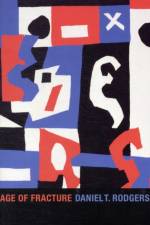
Shows how the collective purposes and meanings that had framed social debate became unhinged and uncertain. This title offers a reinterpretation of the ways in which the decades surrounding the 1980s changed America. It explains how structures of power came to seem less important than market choice and fluid selves.
Ross demonstrates how the expanding ranks of learned women in the Renaissance era presented the first significant challenge to the traditional definition of "woman" in the West. The Birth of Feminism demonstrates that because of their education, these women laid the foundation for the emancipation of womankind.
This book takes us to the shores of the Indian Ocean, in a brilliant reinterpretation of how culture developed and history was made at the height of the British raj. Bose explores the social and economic webs of these shores from 1850-1950, finding evidence of the interdependence of the peoples from the Middle East to East Africa to Southeast Asia.
An investigation into the politics of consumerism in East Germany during the years between the Berlin Blockade of 1948-49 and the building of the Berlin Wall in 1961, Dictatorship and Demand shows how the issue of consumption constituted a crucial battleground in the larger Cold War struggle.
Crispin Wright's Truth and Objectivity brought about a far-reaching reorientation of the metaphysical debates concerning realism and truth. The essays in this companion volume prefigure, elaborate, or defend the proposals put forward in that landmark work.
Rice was a major plantation crop during the first 300 years of settlement in the Americas. It accompanied slaves across the Middle Passage throughout the New World to Brazil, the Caribbean, and the southern U.S. Carney reveals how racism has shaped our historical memory and neglected this critical African contribution to the making of the Americas.
Charles Rosen gives us a performance of literary criticism as high art, a critical conjuring of the Romantic period by way of some of its central texts. Throughout this volume we hear the voice of a shrewd aesthetic interpreter, performing the critic's task even as he redefines it in his sparkling fashion.
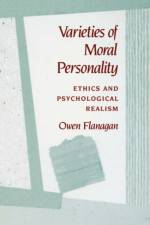
Owen Flanagan argues in this book for a more psychologically realistic ethical reflection and spells out the ways in which psychology can enrich moral philosophy.
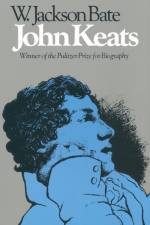
Bate has been concerned to show the organic relationship between the Keats's art and his larger, more broadly humane development. This is a book of many dimensions, not a restricted critical or biographical study but a fully integrated whole.
In succinct and engaging fashion Michael Walzer demystifies the activity of the social critic, providing a philosophical framework for understanding social criticism as social practice.
Even the demonic Hitler had a comprehensive philosophy, and Eberhard Jackel probes deeply into the dictator's mind to determine how he viewed the world.
Abonner på vårt nyhetsbrev og få rabatter og inspirasjon til din neste leseopplevelse.
Ved å abonnere godtar du vår personvernerklæring.