



















Gjør som tusenvis av andre bokelskere
Abonner på vårt nyhetsbrev og få rabatter og inspirasjon til din neste leseopplevelse.
Ved å abonnere godtar du vår personvernerklæring.Du kan når som helst melde deg av våre nyhetsbrev.

This narrative history surveying one thousand years of Jewish life integrates the Jewish experience into the context of the overall culture and society of medieval Europe. It presents a new picture of the interaction between Christians and Jews in this tumultuous era.
Camp rejects the philosophical conceit that confusion is a kind of ambiguity; his fundamental claim is that confusion is not a mental state. He proposes a novel characterization of confusion, and then demonstrates its fruitfulness with several applications in the history of philosophy and the history of science.
This is the first book to challenge the "broken-windows" theory of crime, which argues that permitting minor misdemeanors to go unpunished only encourages more serious crime. Bernard Harcourt argues that although the broken-windows theory has been around for nearly thirty years, it has never been empirically verified.
This book offers a firsthand glimpse into the intellectual challenges that Russia's turbulent transition generated. It deals with many of the most important reforms, from Gorbachev's half-hearted "perestroika," to the mass privatization program, to the efforts to build legal and regulatory institutions of a market economy.
In a world of mutually exclusive nation-states, international migration constitutes a fundamental anomaly. Such states have been inclined to select migrants according to their origins; the result is ethnic migration. But Joppke shows that after World War II there has been a trend toward non-discriminatory immigration policies across Western states.
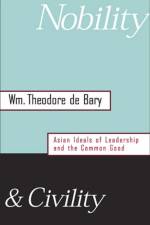
De Bary argues that the concepts of leadership and public morality in the major Asian traditions-Buddhist, Hindu, Confucian, and Japanese-offer a valuable perspective on humanizing the globalization process.
Weddings in 15th-century Italian courts were grand, sumptuous affairs, often requiring guests to listen to lengthy orations given in Latin. D'Elia shows how Italian humanists used these orations to support claims of legitimacy and assertions of superiority among families jockeying for power, as well as to advocate for marriage and sexual pleasure.
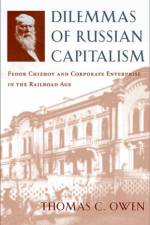
Fedor Chizhov built the first railroad owned entirely by Russian stockholders, created Moscow's first bank and mutual credit society, and launched the first profitable steamship line based in Archangel. In this valuable book, Thomas Owen vividly illuminates the life and world of this seminal figure in early Russian capitalism.
MacGilvray argues that we should shift our attention away from the problem of identifying uncontroversial public ends in the present and toward the problem of evaluating potentially controversial public ends through collective inquiry over time.
In a book addressing those interested in the transformation of monarchy into the modern state and in intersections of gender and political power, Crawford examines the roles of female regents in early modern France.
This is the first extensive study in English or Chinese of China's reception of the celebrated physicist and his theory of relativity. In a series of biographical studies of Chinese physicists, Hu describes the Chinese assimilation of relativity and explains how Chinese physicists offered arguments and theories of their own.
In dialogue about genetically modified crops, visions of the triumph of biotechnology vie with dire views of medical and environmental disaster. As he seeks a middle ground where concerns about genetic engineering can be rationally discussed and resolved, Winston gives us a full and balanced view of the forces at play in the chaotic debate.
In multidisciplinary efforts to understand and manage our planet, contemporary ocean science plays an essential role. Volumes 13 and 14 of The Sea focus on two of the most important components in the field of ocean science today-the coastal ocean and its interactions with the deep sea, and coupled physical-biogeochemical and ecosystem dynamics.
In multidisciplinary efforts to understand and manage our planet, contemporary ocean science plays an essential role. Volumes 13 and 14 of The Sea focus on two of the most important components in the field of ocean science today-the coastal ocean and its interactions with the deep sea, and coupled physical-biogeochemical and ecosystem dynamics.
This book shows why at any given time there exists no single scientific "paradigm," but rather a spectrum of competing perspectives. Considering conflicts between Heisenberg and Einstein, Bohr and Einstein, and P. W. Bridgman and B. F. Skinner, Holton demonstrates a masterly understanding of modern science and how it influences our world.
Using dynamic systems theory, employed to study human communication, King demonstrates the complexity of apes' social communication, and the extent to which their interactions generate meaning. As King describes, apes create meaning primarily through their body movements-and go well beyond conveying messages about food, mating, or predators.
This book is a collection of original essays about the people and places that live in the minds and memories of Bostonians and all Americans. Pursuing the legend and the lore, these essays celebrate the players, the games, and the arenas that are at the heart of the city.
Fear overturns the dominant understanding of German management as "backward" relative to the U.S. and uncovers an autonomous and sophisticated German managerial tradition. Beginning with founder August Thyssen, Fear traces the evolution of management in the Thyssen-Konzern and the Vereinigte Stahlwerke (United Steel Works) between 1871 and 1934.
This book contrasts experiences of mainland China and Hong Kong to explore the pressing question of how governments can transform a culture of widespread corruption to one of clean government. Manion examines Hong Kong as the best example of the possibility of reform.
Maffeo Vegio (1407-1458) was the outstanding Latin poet of the first half of the 15th century. This volume includes Book XIII of Vergil's Aeneid, the famous continuation of the Roman epic, which was popular in the later Renaissance, printed many times and translated into every major European language. It also contains three other epic works.
Aldo Moro's kidnapping and violent death in 1978 had much the same effect in Italy as the assassination of President John F. Kennedy had in the U.S., with both cases giving rise to endless conspiracy theories. Drake provides a detailed portrait of the tragedy and its aftermath as complex symbols of a turbulent age in Italian history.
The angry emotions, and the problems they presented, were an ancient Greek preoccupation from Homer to late antiquity. Drawing on a wide range of ancient texts, and on recent work in anthropology and psychology, Harris explains the rise and persistence of this concern.
For this updated edition of her acclaimed work on historians and historiography, Himmelfarb adds four new essays. In examining the effects of postmodernism, the illusions of cosmopolitanism, A. J. P. Taylor and revisionism, and Fukuyama's "end of history," Himmelfarb enriches her exploration of the ways historians make sense of the past.
The inequalities that persist in America have deep historical roots. Glenn untangles this complex history in a unique comparative regional study from the end of Reconstruction to the eve of World War II.
Magic, During suggests, has helped shape modern culture. Devoted to this deceptively simple proposition, During's work gets at the aesthetic questions at the very heart of the study of culture. How can the most ordinary arts-and by "magic," During means not the supernatural, but the special effects and conjurings of magic shows-affect people?
Drawing on the largest extant bi-racial correspondence in the Civil War era, this book braids together Gerrit Smith, Frederick Douglass, James McCune Smith, and John Brown's struggles to reconcile ideals of justice with the reality of slavery and oppression.
Historians overwhelmingly have blamed the demise of Reconstruction on Southerners' persistent racism. Richardson argues instead that class, along with race, was critical to Reconstruction's end.
Brown chronicles engagements in the science wars-from the "Sokal affair" to angry confrontations over the nature of evidence, the possibility of objectivity, and the methods of science-to show how the contested terrain is science, but the prize is political: Whoever wins the science wars will have an unprecedented influence on our governance.
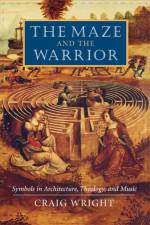
Craig Wright explores the complex symbolism of the labyrinth in architecture, religious thought, music, and dance from the Middle Ages to the present.
A crossover venture begun at Seattle's Experience Music Project, this book captures the academic and the critical, the musical and the literary in an impromptu dialogue that suggests the breadth and vitality of pop inquiry today.
Abonner på vårt nyhetsbrev og få rabatter og inspirasjon til din neste leseopplevelse.
Ved å abonnere godtar du vår personvernerklæring.