



















Gjør som tusenvis av andre bokelskere
Abonner på vårt nyhetsbrev og få rabatter og inspirasjon til din neste leseopplevelse.
Ved å abonnere godtar du vår personvernerklæring.Du kan når som helst melde deg av våre nyhetsbrev.

A longtime activist-scholar takes readers through the changing landscape of academic freedom. From the aftermath of September 11th to the new frontier of blogging, O'Neil examines the tension between institutional and individual interests. Many cases boil down to one contested question: who has the right to decide what is taught in the classroom?
Drawing on political oratory, diplomatic correspondence, crusade propaganda, and historical treatises, Meserve shows how research into the origins of Islamic empires sprang from-and contributed to-contemporary debates over the threat of Islamic expansion in the Mediterranean.
The nineteenth century was the heyday of furious contention between American political parties, and Joel Silbey has recaptured the drama and substance of those battles in a representative sampling of party pamphlets. The pamphlets demonstrate how, for this fifty-year period, political parties were surrogates for American demands and values.
The 19th century was the heyday of furious contention between American political parties, and Silbey has recaptured the drama and substance of those battles in a sampling of party pamphlets. The nature of political controversy, as well as the substance of politics, is embedded in these party documents which both united and divided Americans.
As part of his personal archive, Krawciw's maps were bequeathed to Harvard University upon his death in 1975. This book serves as both a catalog of his collection and a description of how the maps he collected serve as an invaluable source for Ukraine's history and a symbol of Ukrainian national identity.
This study of how American literature is enmeshed with literatures of Asia begins with Western encounters with the Pacific in such titles as Moby Dick. Huang then turns to Asian American encounters with the Pacific, concentrating on the "Angel Island" poems and works by Theresa Hak Kyung Cha, Lawson Fusao Inada, and Araki Yasusada.
How can we prevent future atrocities, and stop the ones that are happening now? This book tells the powerful story of the successes and failures of the modern human rights movement. Drawing on firsthand accounts from fieldworkers around the world, the book gives a painfully clear picture of the human cost of confronting inhumanity in our day.
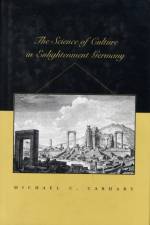
In the late 1770s, as a wave of revolution and republican unrest swept across Europe, scholars looked with urgency on the progress of European civilization. Carhart examines their approaches to understanding human development by investigating the invention of a new analytic category, "culture."
Anderson uses one man's compelling story to explore the collision of Christianity with Native religion in colonial North America. Pastedechouan's story illuminates struggles to retain and impose religious identity on both sides of the 17th-century Atlantic, even as it has relevance to the contemporary encounter between native and nonnative peoples.
In a new perspective on the formation of national identity in Central Europe, Wingfield analyzes what many historians have treated separately-the construction of the Czech and German nations-as a single phenomenon. Illustrations show how people absorbed, on many levels, visual clues that shaped how they identified themselves and their groups.
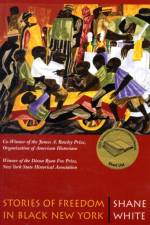
This book re-creates the experience of black New Yorkers as they moved from slavery to freedom. In the early decades of the nineteenth century, New York City's black community strove to realize what freedom meant, to find a new sense of itself, and, in the process, created a vibrant urban culture.
Lawrence J. Vale's groundbreaking book is both a comprehensive institutional history of public housing in Boston and a broader examination of the nature and extent of public obligation to house socially and economically marginal Americans during the past 350 years.
In the 18th century, bioprospectors sponsored by European imperial powers brought back medicines, luxuries, and staples from the New World to their king and country. This book explores the movement, triumph, and extinction of knowledge in the course of encounters between Europeans and the Caribbean populations.
Ranging from Plato to writers as diverse as Shakespeare, Proust, Forster, Beckett, Huxley, and Lawrence, Reeve brings the vast resources of Western literature and philosophy to bear on the question of love. He invites us to think more broadly about love, and to find the confusions that inevitably result to be creative rather than disturbing.
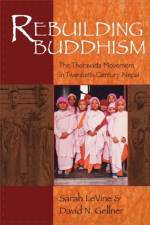
LeVine and Gellner describe in evocative detail the experiences and achievements of Nepalis who have adopted Theravada Buddhism. Based on extensive fieldwork, interviews, and historical reconstruction, the book provides a rich portrait of the different ways of being a Nepali Buddhist over the past seventy years.
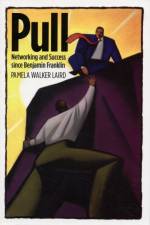
In retelling success stories from Benjamin Franklin to Andrew Carnegie to Bill Gates, Laird goes beyond personality, upbringing, and social skills to reveal the critical common key--access to circles that control and distribute opportunity and information. She contrasts how Americans have prospered--or not--with how we have talked about prospering.
Religious beliefs and practices, which permeated all aspects of life in antiquity, traveled well-worn routes throughout the Mediterranean. This collection of essays, drawn from the groundbreaking reference work Religions of the Ancient World, offers an expansive, comparative perspective on this complex spiritual world.
Goldman examines the changing relationship between the Chinese people and the state. Correcting the conventional view of China as having instituted extraordinary economic changes but having experienced few political reforms in the post-Mao period, she details efforts by individuals and groups to assert their political rights.
Eisgruber focuses directly on the Constitution's seemingly undemocratic features, locating the Constitution's value in its capacity to sustain an array of institutions that render self-government meaningful for a large and diverse people.
The ending of absolute monarchy and the start of political combat between nobles and commoners make 1787-1788 the first stage of the French Revolution. In a detailed look at this critical transition, Gruder explores how the French people became engaged in an opposition movement that culminated in demands for the public's role in government.
This is the standard reader in American law and constitutional development. The selections demonstrate that the legal order, once defined by society, helps in molding the various forces of the social life of that society. The essays cover the entire period of the American experience, from the colonies to postindustrial society.
Thrailkill offers a new understanding of late-nineteenth-century American literary realism that draws on neuroscience and cognitive psychology, positioning her argument against the emotionless interpretations of the New Critics.
Conservative politicians in the last thirty years have capitalized on voters' resentment of ethnic minorities to win votes and undermine government aid to the poor. Racism, Xenophobia, and Distribution offers a theoretical model to calculate the effect of voters' attitudes about race and immigration on political parties' stances.
Ramsey describes the constitutional law of foreign affairs derived from an historical understanding of the Constitution's text. Examining recurring foreign affairs controversies such as the power to enter armed conflict, the author shows how the words, structure, and context of the Constitution can resolve pivotal court cases and modern disputes.
Here is a notably compact account of the diversity and complex cultures of Native Americans, with a special section on the history of federal policy.
In a staunch defense of the possibility for meaningful and profound democratic decision making, Lewin finds that, not only do political leaders exert enough control to be assigned responsibility, but also that the meaning of a functioning democracy requires the people to hold their leaders accountable.
In the 1960s, a number of Catholic women in the U.S. abandoned traditional apostolic works to experiment with new and often unprecedented forms of service among non-Catholics. Koehlinger explores this phenomenon through close examination of one of its most visible forms-the experience of white sisters working in African-American communities.
Howard Evans described over 900 species in over a dozen entomology and natural history books. Upon his death in 2002, he left behind an unfinished manuscript. O'Neill, Evans's former student and coauthor, has completed and enlarged this work into a tribe-by-tribe, species-by-species review of Bembicinae studies from the last four decades.
Most new law is statutory law; that is, law enacted by legislators. An important question, therefore, is how should this law be interpreted by courts and agencies, especially when the text of a statute is not entirely clear. This book focuses on what judges should do once the legal materials fail to resolve the interpretive question.
Innovative in its historical use of hagiographical literature, this work advances our understanding of early Normandy and the Vikings' transformation from pagan raiders to Christian princes, shedding light on the intersection of religious tradition, identity, and power.
Abonner på vårt nyhetsbrev og få rabatter og inspirasjon til din neste leseopplevelse.
Ved å abonnere godtar du vår personvernerklæring.