




















Gjør som tusenvis av andre bokelskere
Abonner på vårt nyhetsbrev og få rabatter og inspirasjon til din neste leseopplevelse.
Ved å abonnere godtar du vår personvernerklæring.Du kan når som helst melde deg av våre nyhetsbrev.

John Fine offers a major reassessment of the history of Greece from prehistoric times to the rise of Alexander. Throughout he indicates the nature of the evidence on which our present knowledge is based, masterfully explaining the problems and pitfalls in interpreting ancient accounts.
From the Iliad to Aristophanes, from the gospel of Matthew to Augustine, Greek and Latin texts are constellated with images of dreams. This cultural history draws on contemporary post-Freudian science and careful critiques of the ancient texts. Harris reminds us of specificities, contexts, and changing attitudes through history.
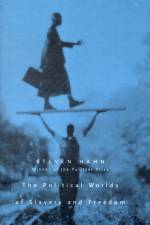
Pulitzer Prize-winner Hahn challenges deep-rooted views in the writing of American and African-American history. Moving from 18th-century slave emancipations through slave activity during the Civil War and on to the black power movements of the 20th century, he asks us to rethink African-American history and politics in bolder, more dynamic terms.
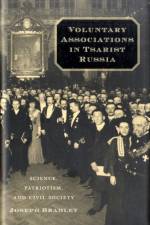
On the eve of World War I, Russia, not known as a nation of joiners, had thousands of voluntary associations. Joseph Bradley examines the crucial role of voluntary associations in the development of civil society in Russia from the late eighteenth to the early twentieth century.
This book examines the revolution in Sanskrit poetics initiated by the ninth-century Kashmiri Anandavardhana. Anandavardhana replaced the formalist aesthetic of earlier poeticians with one stressing the unifunctionality of literary texts, arguing that all components of a work should subserve the communication of a single emotional mood (rasa).
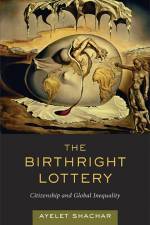
Shachar argues that birthright citizenship in an affluent society can be thought of as a form of property inheritance: that is, a valuable entitlement transmitted by law to a restricted group of recipients under conditions that perpetuate the transfer of this prerogative to their heirs.
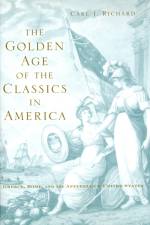
Richard explores the enshrinement of the classics in American antebellum culture. For the first time, knowledge of the classics extended beyond aristocratic males to the middle class, women, African Americans, and frontier settlers, but the Civil War led to a radical alteration of the educational system that steadily eroded their preeminence.
Kimmage tells the story of postwar America's political evolution through Trilling and Chambers, who went on to intellectual prominence, sharing the questions, crises, and challenges of their generation. Kimmage argues that the divergent careers of these two men exemplify the emergence of modern conservatism and the rise of moderate liberalism.
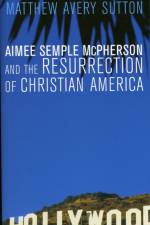
McPherson was the most flamboyant, controversial minister in the U.S. between the world wars, building a megachurch, a mass media empire, and a political career to resurrect what she saw as America's Christian heritage. Sutton's study reveals a trail-blazing pioneer, marking the beginning of Pentecostalism's advance to mainstream American culture.
Nuclear bombs in suitcases, anthrax in ventilators, tsunamis and meteors, avian flu, scorchingly heat: nightmares that were once the plot of Hollywood movies are now frighteningly real possibilities. Sunstein explores these and other worst-case scenarios and how we might best prevent them in this vivid, illuminating, and highly original analysis.
There may be no finer edition of Donne's Songs and Sonets than Redpath's annotated volume. Out of print for a decade, it is reprinted here in its second, revised edition. The book's twofold origin is evident on every page of commentary: it arises partly from a life of scholarship and partly from Redpath's experiences as a teacher.
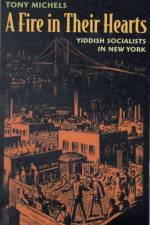
The Yiddish socialist movement shaped Jewish communities across the U.S. well into the 20th century and left a political legacy that extends to the rise of neoconservatism. A story of hopeful successes and bitter disappointments, A Fire in Their Hearts brings to vivid life this formative period for American Jews and the American left.
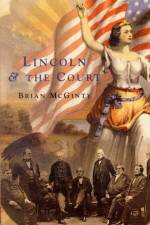
This meticulously researched and engagingly written narrative rescues the story of Abraham Lincoln and the Supreme Court from long and undeserved neglect, recounting the compelling history of the Civil War president's relations with the nation's highest tribunal and the role it played in resolving the agonizing issues raised by the conflict.
Debt was a fact of life in early America. At the beginning of the 18th century, its sinfulness was preached by ministers and the right to imprison debtors was unquestioned. By 1800, imprisonment for debt was under attack and insolvency was no longer seen as a moral failure. Mann illuminates this crucial transformation in early American society.
Levi takes us inside nuclear terrorism and behind the decisions a terrorist leader would confront in pursuing a nuclear plot. He shows how a defense integrating weapon and materials security, law enforcement, intelligence, border controls, diplomacy, and the military can compound the possibility that nuclear terrorists will fail.
The rich have always valued early education, and for decades, millions of poorer kids have had Head Start. Now, more and more middle class parents have realized that a good preschool is the smartest investment they can make in their children's future. With journalistic verve and scholarly authority, Kirp is the ideal guide to this quiet movement.
Kelsay's timely and important work focuses on jihad of the sword in Islamic thought, history, and culture. Making use of original sources, Kelsay delves into the tradition of shari'a-Islamic jurisprudence and reasoning-and shows how it defines jihad as the Islamic analogue of the Western "just" war.
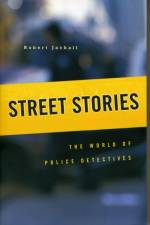
Based on years of fieldwork with the New York City Police Department and the District Attorney of New York, this book examines the moral ambiguities of the detectives' world as they shuttle between the streets and a bureaucratic behemoth.
This volume is a bilingual collection of shaman oral texts from the Bhuji Valley of Western Nepal, in the original Nepali and with line-by-line English translation. Accompanying the book is a DVD of audio recordings of the texts, supplementary texts, videos of shaman performances, and additional video and photographic documentation.
Drawing on extensive archives of teachers' letters and accounts, Zimmerman's narrative explores the teachers' shifting attitudes about their country and themselves, in a world that was more unexpected than they could have imagined.
Surveying the study of prejudice since World War II, Elisabeth Young-Bruehl suggests an approach that distinguishes between different types of prejudices, the people who hold them, the social and political settings that promote them, and the human needs they fulfill.
Sonnino examines the diplomatic negotiations that took place in Westphalia from 1643 to 1648, which brought an end to the agonizing civil and religious conflict of the Thirty Years' War.
The authors synthesize the results of their long-running study of Gunnison's prairie dogs (Cynomys gunnisoni), one of the keystone species of the short-grass prairie ecosystem. By examining the complex factors behind prairie dog decline, we can begin to understand the problems inherent in our adversarial relationship with the natural world.
The world's foremost experts write about the dynamics of geophysical processes involved in tsunami generation, propagation, and inundation, along with the statistical and geophysical properties of tsunami recurrence, and their application to tsunami forecasts and warnings.
Drawing on the work of the classical-Marxian economists and their modern successors, this book sets forth a new model of economic growth and distribution, and applies it to two major policy issues: public debt and social security.
In the course of several centuries, Western masculinity has established itself as the voice of reason, knowledge, and sanity-the basis for patriarchal rule-in the face of massive testimony to the contrary. Micale challenges this triumphant vision by examining the central role played by modern science and medicine in constructing and sustaining it.
Presidents have exercised extraordinary power to protect the nation in ways that raised serious constitutional concerns about individual liberties and separation of powers. Evaluating a variety of constitutional perspectives, Matheson achieves a deeper understanding of wartime presidential power.
From Jim Crow to the early 21st century, struggles over racism persist despite court decisions and legislation. Although a painful history to confront, this book inspires as it probes the enduring story of racial inequality and the ongoing fight for freedom in black America.
Why do the United States and Canada have such divergent political cultures when they share one of the closest economic and cultural relationships in the world? Kaufman examines the North American political landscape to draw out the essential historical factors that underlie the countries' differences.
Abonner på vårt nyhetsbrev og få rabatter og inspirasjon til din neste leseopplevelse.
Ved å abonnere godtar du vår personvernerklæring.