





















Gjør som tusenvis av andre bokelskere
Abonner på vårt nyhetsbrev og få rabatter og inspirasjon til din neste leseopplevelse.
Ved å abonnere godtar du vår personvernerklæring.Du kan når som helst melde deg av våre nyhetsbrev.

Fitzhugh (1806-1881) offers a stinging attack on free society, laissez-faire economy, and wage slavery, and their philosophical underpinnings, using socialist doctrine to defend slavery. Drawing on the same evidence Marx used in his indictment of capitalism, he holds that socialism is only "the new fashionable name for slavery."
This is the ninth Monograph and twelfth volume that presents the results achieved at Sardis since 1958.
Gary Fine explores how Americans attempt to give meaning to the natural world that surrounds them. Fine suggests that the meanings we assign to the natural environment are culturally grounded and he supports this claim by examining the fascinating world of mushrooming.
Amid the chaos of questions and conflicting information, Aaron Wildavsky arrives with just what the beleaguered citizen needs: a clear, fair, and factual look at how the rival claims of environmentalists and industrialists work, what they mean, and where to start sorting them out.
Darnton explores some fascinating territory in the genre of histoire du livre and tracks the diffusion of Enlightenment ideas. He is concerned with the form of the thought of the great philosophes as it materialized into books and with the way books were made and distributed in the business of publishing.
Yates places the oft-competing aims of efficiency and democracy in historical perspective and presents a unique theory of the politics of bureaucracy. He argues that the U.S. operates under a system in which governmental decisions increasingly are made in private, bureaucratic settings.
Traces the evolution of Iowa from being arguably the most racist free state in the ante-bellum Union, to one of its most outspokenly egalitarian. Dykstra explains how this came about, reflecting the precepts and methods of social, legal, constitutional and political history.
Roskies shows how Yiddish storytelling became a politics of rescue for generations of displaced Jewish artists, embodying their hopes and fears in the languages of tradition. Its protagonists are modern writers who returned to storytelling in the hope of harnessing the folk tradition, and who created copies that are better than the original.
In essays on issues from censorship to underground poetry, Baranczak explores the role that culture-and particularly literature-has played in keeping the spirit of intellectual independence alive in Eastern and Central Europe.
Vendler's masterful study of changes in style yields a new view of the interplay of moral, emotional, and intellectual forces in a poet's work. Throughout, Vendler reminds us that what distinguishes successful poetry is a mastery of language at all levels-including the rhythmic, the grammatical, and the graphic.
Supreme Court Justice Stephen Breyer explores three generic difficulties plaguing efforts to reduce health risks and sets out a proposal for a new administrative entity to develop a coherent regulatory system adaptable for use in different risk-related programs-a mission-oriented, independent agency commanding significant prestige and authority.
As fresh in 1991 as when it first published a half-century ago, Boston's Immigrants illuminates the history of a particular city and an important phase of the American experience. Focusing on the life of people from the perspective of the social historian, the book explores a wide range of subjects.
The rise of the Bolsheviks is an epic Russian story that now has a definitive end. The major historian of the subject, Adam Ulam, has enlarged his classic work with a new Preface that puts the revolutionary moment, and especially Lenin, in perspective for our modern age.
This book synthesizes much of the exciting recent research in the biology of language. Drawing on data from anatomy, neurophysiology, physiology, and behavioral biology, Lieberman develops a new approach to the puzzle of language, arguing that it is the result of many evolutionary compromises.
Since World War II, cell biology and molecular biology have worked separately in probing the central question of cancer research. But a new alliance is being forged in the effort to conquer cancer. Drawing on more than 500 classic and recent references, Baserga's work provides the unifying background for this cross-fertilization of ideas.
Health and Human Rights: Basic International Documents assembles in one book the basic instruments of international law and policy that express the values of human rights for advancing health. Topics include ethics; biotechnology; right to health; freedom from torture; women and reproductive health; children; right to a clean environment; and more.
The two richly illustrated volumes of Renaissance Studies in Honor of Joseph Connors demonstrate Villa I Tatti's role as the world's leading center for Italian Renaissance studies. Gathered to honor I Tatti's director from 2002 to 2010, the 177 essays represent the cutting edge of Renaissance scholarship in art history, literature, music, and more.
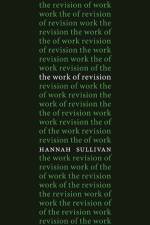
Revision seems to be an intrinsic part of good writing. But Hannah Sullivan argues that we inherit our faith in redrafting from the modernist period. Examining changes made in manuscripts, typescripts, and proofs by Eliot, Joyce, Woolf, and others, she shows how rewriting shapes literary style, and how the impulse to touch up can go too far.
How can 40,000 bees working in the dark, by instinct alone, construct a honey comb? Synthesizing decades of experiments, The Spirit of the Hive presents the genetic and physiological mechanisms underlying the division of labor in honey bee colonies and explains how it is an inevitable product of group living, evolving over millions of years.
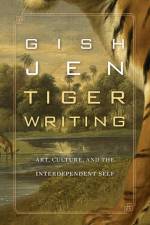
Drawing on a rich array of sources, including her father's striking account of his childhood in China, Tiger Writing not only illuminates Gish Jen's work but explores the aesthetic and psychic roots of the independent and interdependent self-each mode of selfhood yielding a distinct way of observing, remembering, and narrating the world.
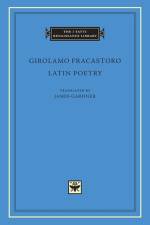
A medical authority, Girolamo Fracastoro (1478-1553) was also a prominent Neo-Latin poet. This volume includes his didactic poem Syphilis, which gave the name to the disease and contains the first poetical description of Columbus' discovery of America; a short Biblical epic, the Joseph; and the Carmina, a collection of shorter poetry.
Other than his name, we have no biographical details of Cynewulf, not even where or when he lived. Yet his Old English poems attest to a powerfully inventive imagination, deeply learned in Christian doctrine and traditional verse-craft. He reveals an expert control of structure and a flair for extended similes and dramatic dialogue.
Abonner på vårt nyhetsbrev og få rabatter og inspirasjon til din neste leseopplevelse.
Ved å abonnere godtar du vår personvernerklæring.