






















Gjør som tusenvis av andre bokelskere
Abonner på vårt nyhetsbrev og få rabatter og inspirasjon til din neste leseopplevelse.
Ved å abonnere godtar du vår personvernerklæring.Du kan når som helst melde deg av våre nyhetsbrev.

Velimir Khlebnikov is one of the great Russian poets of the 20th century. Hailed by contemporaries and by later scholars as the creative genius behind the Russian Futurist movement, Khlebnikov is famous for his inaccessibility. Now, in a powerful American rendition, we are given access to his strange and beautiful world.
In The Real American Dream literary scholar Andrew Delbanco shows how Americans have organized their days and ordered their lives-and ultimately created a culture-to make sense of the pain, desire, pleasure, and fear that are the stuff of human experience.
This volume, the tenth of Hippocrates' invaluable texts on the practice of medicine in antiquity, provides essential information about human reproduction and reproductive disorders and expounds a general theory of physiology and pathology, in five Greek treatises presented with facing English translation.
"Ontogeny recapitulates phylogeny" was Haeckel's answer to 19th-century biology's most vexing question: what is the relationship between individual development and the evolution of species and lineages? Gould documents the history of the idea of recapitulation from its first appearance among the pre-Socratics to its fall in the early 20th century.
This book interprets the ethnography of the Mru and Khumi, Tibeto-Burmese speaking horticulturalists who practice swidden agriculture in the hills straddling Bangladesh, India, and Burma. Their material and spiritual cultures are described in detail here, from dwellings to religious rituals. Nearly a hundred color photographs provide illustration.
This companion volume to DARE enhances readers' use of the five volumes of text. It includes all the regional maps, an index to entries, and more than 400 fieldwork questions and the speakers' answers. Like its predecessors, Volume VI is a treasure trove of American linguistic creativity.
Volume V of a projected six-volume Vulgate Bible presents the twelve minor prophetical books of the Old Testament, as well as two deuterocanonical books, 1 and 2 Maccabees. The major prophets' themes of judgment and redemption are further developed here by the minor prophets. Influential martyrdom narratives anticipate Christian hagiography.
African American literature is over. With this provocative claim, the author sets out to identify a distinctly African American literature - and to change the terms with which we discuss it.
Even before the emergence of the civil rights movement, African American religion and progressive politics were assumed to be inextricably intertwined. Savage counters this assumption with the story of a highly diversified religious community whose debates over engagement in the struggle for racial equality were as vigorous as they were persistent.
In a brisk revisionist history, William Rowe challenges the standard narrative of Qing China as a decadent, inward-looking state that failed to keep pace with the modern West. This original, thought-provoking history of China's last empire is a must-read for understanding the challenges facing China today.
Here in a newly annotated edition are the two founding documents of the United States of America: the Declaration of Independence (1776), our great revolutionary manifesto, and the Constitution (1787-88). A Pulitzer Prize-winning historian serves as a guide to these texts, providing historical contexts and offering interpretive commentary.
As a young anthropologist, the author undertook fieldwork in Jamaica, Haiti, and Puerto Rico. This title presents a summation of his work in the region and is a reminder of how anthropology allows people to explore the deep truths that history may leave unexamined.
According to a major health survey, nearly half of all Americans have been mentally ill at some point in their lives - more than a quarter in the last year. Can this be true? The author defends the careful approach of describing disorders by patterns of symptoms that can be seen, and shows how often the system medicalizes everyday emotional life.
Argues that state policies that created conditions conducive to financialization allowed the state to avoid a series of economic, social, and political dilemmas that confronted policymakers as postwar prosperity stalled beginning in the late 1960s and 1970s. This book also focuses on deregulation of financial markets during the 1970s and 1980s.
Harold James examines the vulnerability and fragility of processes of globalization, both historically and in the present. This book applies lessons from past breakdowns of globalization-above all in the Great Depression-to show how financial crises provoke backlashes against global integration.
Following his recent Biography: A Brief History (from Harvard), award-winning biographer and teacher Nigel Hamilton tackles the practicalities of doing biography in the first succinct primer to elucidate the tools of the biographer's craft.
Whether in family life, social interactions, or business negotiations, half the people in the world speak more than one language every day. Yet many myths persist about bilingualism and bilinguals. This book explores the many facets of life with two or more languages.
DNA exonerations have shattered confidence in the criminal justice system by exposing how often we have convicted the innocent and let the guilty walk free. In this unsettling analysis, Garrett examines what went wrong in the cases of the first 250 people exonerated by DNA testing, and proposes systemic reforms.
Today, many believe the Civil War was fought over slavery. This view satisfies our contemporary sense of justice, but as Gallagher's searing revisionist history shows, it is an anachronistic judgment. Northern citizen-soldiers fought the war to preserve the Union. Emancipation was secondary to the war's primary goal of safeguarding the republic.
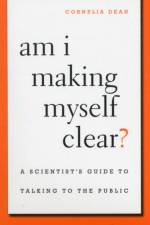
Am I Making Myself Clear? shows scientists how to speak to the public, handle the media, and describe their work to a lay audience on paper, online, and over the airwaves. It is a book that will improve the tone and content of debate over critical issues and will serve the interests of science and society.
In 1749, Francois Bonis, a medical student in Paris, found himself hauled off to the Bastille for distributing an abominable poem about the king. So began the Affair of the Fourteen, a police crackdown on ordinary citizens for unauthorized poetry recitals. Why was the official response to these poems so intense? This book deals with this topic.
On the one hundredth anniversary of the death of William James, the author assembles essays and writings that reveal the evolution of James' thought over time, especially as it was continually being shaped by the converging influences of psychology, philosophy, and religion throughout his life.
No longer viewed by scientists as the cell's fixed master molecule, DNA is a dynamic script that is ad-libbed at each stage of development. What our parents hand down to us is just the beginning. Genetic Explanations urges us to replace our faith in genetic determinism with scientific knowledge about genetic plasticity and epigenetic inheritance.
In 1039 Byzantium was the most powerful empire in Europe and the Near East. By 1079 it was a politically unstable state half the size, menaced by enemies on all sides. The History of Michael Attaleiates is our main source for this astonishing reversal. This translation, based on the most recent critical edition, includes notes, maps, and glossary.
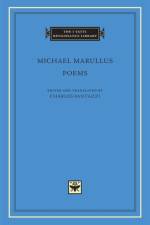
Michael Marullus (c. 1453/4-1500), born in Greece, began life as a mercenary soldier but became a prominent Neo-Latin poet and scholar in Italy. Later poets imitated him in vernacular love poetry, especially Ronsard. This edition contains Marullus' complete Latin poetry. All of these works appear in English translation for the first time.
Published in London just as the idea of an "American" was becoming a reality, Letters introduced Europeans to America's landscape, customs, and then-new people. Moore's reader's edition situates these twelve letters, which shift from hope to disillusion, in the context of thirteen other essays representative of Crevecoeur's writings in English.
This illustrated history is a comprehensive introduction to Chinese healing practices across time and cultures. Global contributions from 58 scholars in archaeology, history, anthropology, religion, and medicine make this a vital resource for those working in East Asian or world history, medical history, anthropology, biomedicine, and healing arts.
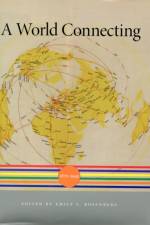
Between 1870 and 1945, advances in communication and transportation simultaneously expanded and shrank the world. In five interpretive essays, A World Connecting goes beyond nations, empires, and world wars to capture the era's defining feature: the profound and disruptive shift toward an ever more rapidly integrating world.
The renowned author of The War Against the Jews sets out to solve a historiographical mystery. Why has the mass murder of European Jews been overlooked or trivialized by historians throughout the world? In a forceful, outspoken work, Lucy Dawidowicz looks for explanations.
Rex and Etter present the first synthesis of patterns and causes of biodiversity in organisms that dwell in the vast sediment ecosystem of ocean floor. They offer a new understanding of marine biodiversity that will be of general interest to ecologists and is crucial to responsible exploitation of natural resources at the deep-sea floor.
Abonner på vårt nyhetsbrev og få rabatter og inspirasjon til din neste leseopplevelse.
Ved å abonnere godtar du vår personvernerklæring.