


















Gjør som tusenvis av andre bokelskere
Abonner på vårt nyhetsbrev og få rabatter og inspirasjon til din neste leseopplevelse.
Ved å abonnere godtar du vår personvernerklæring.Du kan når som helst melde deg av våre nyhetsbrev.

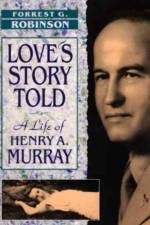
Searching out the private man as well as the public figure, this elegantly written biography follows Henry Murray through his life as a pioneer in the field of clinical psychology, as a co-founder of Harvard's Psychological Clinic, as the co-inventor of the Thematic Apperception Test, and as a biographer of Herman Melville.
In this stirring analysis, Anthony Kronman describes a spiritual crisis affecting the American legal profession. He attributes it to the collapse of what he calls the ideal of the lawyer-statesman: a set of values that prizes good judgment above technical competence and that encourages a public-spirited devotion to the law.
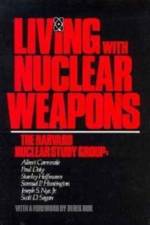
This book presents all sides of the nuclear debate while explaining what everyone needs to know to develop informed and reasoned opinions about the issues. Among the specifics are a history of nuclear weaponry; an examination of current nuclear arsenals; and a discussion of what can be done to promote arms control and disarmament.
Is there such a thing as a specifically literary discourse distinguishable from other modes of thought and writing? Drawing on work in the philosophies of language and action, Knapp presents a definition of "the literary", developing a defence of the notion of a uniquely literary mode of discourse.
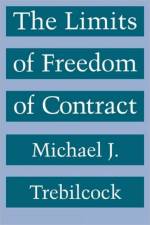
Our legal system is committed to the idea that private markets and the law of contracts that supports them are the primary institutions for allocating goods and services in a modern economy. Yet the market paradigm, this book argues, leaves substantial room for challenge.
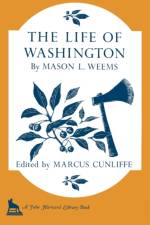
The effect of this "single, immortal, and dubious anecdote," and others like it, has made this book one of the most influential in the history of American folklore. The first republication of the book since 1927, it is unique in its detailed commentary on Weems and other biographers of Washington.
Follows the labyrinthine controversies that the two perspectives of liberalism and republicanism have generated in their day and in current times. Appleby addresses the tensions that remain to be resolved in the democratic societies of the late 20th century.
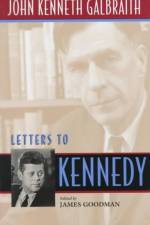
A unique document in the history of the Kennedy years, these letters offer a firsthand look at the working relationship between a president and one of his close advisers, John Kenneth Galbraith. Here is an intimate picture of the lives and minds of a political intellectual and an intellectual politician during a rich moment in American history.
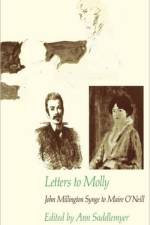
When John Millington Synge and Molly Allgood fell in love, he was thirty-five, she nineteen. Neither knew that he had Hodgkin's disease and would die in three years. Seldom able to be alone together, they wrote letters almost daily. Synge's letters-hers do not survive-are a poignant record of a love that was foredoomed.
A collection of Freud's boyhood correspondence with his friend, Silberstein. Covering ten years, these 80 letters document Freud's adolescence, bringing to light such matters as his attitude towards Bismarck and social democracy, first love, and thoughts on the differences between the sexes.
America, Warner shows, became a nation by developing a new kind of reading public, where one becomes a citizen by taking one's place as writer or reader. At heart, the United States is a republic of letters, and its birth can be dated from changes in the culture of printing in the early eighteenth century.
Exploring the Lenin cult's mystical, historical, and political aspects, Tumarkin demonstrates the galvanizing power of ritual in the establishment of the post-revolutionary regime. In a new Preface and Postscript, she brings the story up to date, considering the fall of the Soviet Union and Russia's new democracy.
Peterson investigates how recent presidents have engaged Congress on domestic policy issues. Rejecting the presidency-centered perspective on national government, so firmly rooted in the popular imagination, he argues that Congress's to presidential initiatives is often far more cooperative than the presidency-centered perspective suggests.
Incisively and stylishly written, this book constitutes an open challenge to reconsider the fundamental question of the relationship of law to society.
Bruch sets out to accomplish what has, until now, been all but impossible-the teaching of psychotherapy using the written word. Bruch's unique success at a task that has been tried and tried again, only to result in stereotyped do's and don'ts, stems from her own experiences with two great teachers: Harry Stack Sullivan and Frieda Fromm-Reichmann.
Nine eminent political scientists and historians here present their assessments of the leadership styles and organizational talents of presidents from Franklin D. Roosevelt through Ronald Reagan. Their insights and anecdotes provide an unprecedented opportunity to observe the presidency within historical context.
How can public officials move large government agencies to produce significant results? In Leadership Counts Robert Behn explains exactly what managers in the inherently political environment of government need to do to obtain such performance.
In a richly detailed survey of labor law and labor history, Forbath challenges the notion of American "individualism." He shows that, over time, struggles with the courts and the legal order were crucial in reshaping labor's outlook, driving the labor movement to temper its radical goals.
Explores the slow shift from one form of public community to another - from the ancient city to the Christian Church. He explains how in the four centuries between Marcus Aurelius (161-180) and Justinian (527-565), the Mediterranean world passed through a series of profound transmutations.
The study of language acquisition has become a center of scientific inquiry into the nature of the human mind. The result is a windfall of new information about language, about learning, and about children themselves.
Cordoba's labor wars have been mythologized as a Latin American equivalent to French student strikes of May-June 1968 and the Italian "hot summer" of the same period. Brennan demonstrates that the militancy and even political radicalism of the Cordoban working class were due in large part to the dynamic relationship between factory and society.
Paley sets out to discover the truth about the multicultural classroom from those who participate in it. Here are the voices of black teachers and minority parents, immigrant families, a Native American educator, and the children themselves, whose stories mingle with the author's to create a candid picture of the integrated classroom.
In this study of the political uses of perceived kinship from the Homeric age to Byzantium, Jones provides an unparalleled view of mythic belief in action and addresses fundamental questions about communal and national identity.
Abonner på vårt nyhetsbrev og få rabatter og inspirasjon til din neste leseopplevelse.
Ved å abonnere godtar du vår personvernerklæring.