
























Gjør som tusenvis av andre bokelskere
Abonner på vårt nyhetsbrev og få rabatter og inspirasjon til din neste leseopplevelse.
Ved å abonnere godtar du vår personvernerklæring.Du kan når som helst melde deg av våre nyhetsbrev.

When feminists argued for political rights in the context of liberal democracy, they insisted that the differences between men and women were irrelevant for citizenship. Yet by acting on behalf of women, they introduced the very idea of difference they sought to eliminate. Scott reads feminist history in terms of this paradox.
A history of German resistance to Hitler in high places, this book offers a glimpse into one of the most intractable mysteries. Why did high-ranking army officers, civil servants, and religious leaders support Hitler, and Why did they ultimately turn against him?
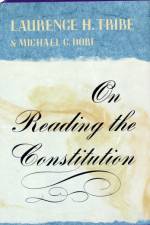
Our Constitution speaks in general terms that seem to invite readers to reflect in them their own agendas. Recognizing that the Constitution cannot be merely what its interpreters wish it to be, this volume's authors draw on literary and mathematical analogies to explore how the fundamental charter of American government should be construed today.
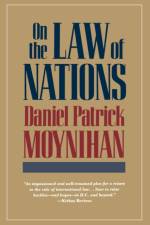
Our founding fathers had a firm grasp on the importance and centrality of international law, Daniel Patrick Moynihan writes; later presidents affirmed it and tried to establish international institutions based on such high principles, but we lost our way in the fog of the Cold War.
The left hand has traditionally represented the powers of intuition, feeling, and spontaneity. In this classic book, Jerome Bruner inquires into the part these qualities play in determining how we know what we do know; how we can help others to know-that is, to teach; and how our conception of reality affects our actions and is modified by them. The striking and subtle discussions contained in On Knowing take on the core issues concerning man's sense of self: creativity, the search for identity, the nature of aesthetic knowledge, myth, the learning process, and modem-day attitudes toward social controls, Freud, and fate. In this revised, expanded edition, Bruner comments on his personal efforts to maintain an intuitively and rationally balanced understanding of human nature, taking into account the odd historical circumstances which have hindered academic psychology's attempts in the past to know man. Writing with wit, imagination, and deep sympathy for the human condition, Jerome Bruner speaks here to the part of man's mind that can never be completely satisfied by the right-handed virtues of order, rationality, and discipline.
Ceci argues that traditional conceptions of intelligence ignore the role of society in shaping intelligence and underestimate the intelligence of non-Western societies. He puts forth a "bio-ecological" framework of individual differences in intellectual development intended to address major deficiencies of extant theories of intelligence.
Though Wallace Stevens' shorter poems are perhaps his best known, his longer poems, Vendler suggests in this book, deserve equal fame and equal consideration. She proposes that Stevens development as a poet can best be seen, not in description-which must be repetitive-of the abstract bases of his work, but rather in a view of his changing styles.
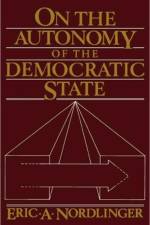
On the Autonomy of the Democratic State challenges the assumption that elected and appointed public officials are consistently constrained by society in the making of public policy. Nordlinger demonstrates that the opposite is true and systematically identifies the state's many capacities and opportunities for enhancing its autonomy.
In showing why the Carbonari conspiracy developed and how it was handled, the author has illuminated the workings of the political system of the Restoration-the structure and organization of its administration and political police and the operation of political justice in its courts.
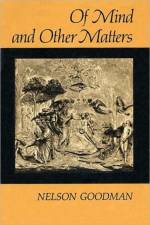
This book displays both the remarkable diversity of Goodman's concerns and the essential unity of his thought. As a whole the volume will serve as a concise introduction to Goodman's thought for general readers, and will develop its more recent unfoldings for those philosophers and others who have grown wiser with his books over the years.
We speak of rights as though they are matters of fact that have a crucial bearing on how we ought to behave. Yet few, if any, rights are universally acknowledged without wide differences of meaning. Weinreb makes the first significant advance toward an understanding of what rights are, how they function in our lives, and why we need them.
Given the breadth of government funding of nonprofit agencies, this first study of the social, political, and organizational effects of this service strategy is an essential contribution to the current raging debates on the future of the welfare state.
Nonprofit organizations are all around us. Written in a clear, direct style without technicalities, The Nonprofit Economy is addressed to a broad audience and deals comprehensively with what nonprofits do, how well they do it, how they are financed, and how they interact with private enterprises and government.
In a brilliant assessment of American culture on the eve of the millennium, Mark Edmundson asks why we're determined to be haunted, courting the Gothic at every turn-and, at the same time, committed to escape through any new scheme for ready-made transcendence.
'A sensitive and compelling work about the confrontation of a classical spirit with the raw disorders of the modern scientific age.'---Daniel J. Kevles, New York Times Book Review
States resort to regulatory agreements to address problems as disparate as nuclear proliferation, international trade, species destruction, and intellectual property, while threatening military or economic sanctions in order to deter noncompliance. This book argues that this approach is misconceived, and proposes a new model of treaty compliance.
This companion volume to Siri von Reis's previous exploration of ethnobotanical notes in the Harvard herbaria brings to light a new array of plants with drug or food potential, offering wide-ranging possible applications for pharmacologists, chemists, botanists, and even anthropologists.
This book describes efforts made at Harvard Medical School during the past to reorient general medical education. Harvard's New Pathway has received national attention since its inception-including a multipart special on PBS's Nova-because it offers a radical restructuring of the traditional medical school curriculum.
Placing the medical profession in its historical context, Jonsen describes its ethical tensions. He addresses the conflict between altruism and self-interest which he believes is built into the structure of medical care and woven into the very fabric of physicians' lives.
One of the first, most widely-read and respected histories of Korea, Ki-baik Lee's Han'guksa Sillon has been translated into English by Edward W. Wagner. A New History of Korea offers Western readers a distillation of the best scholarship on Korean history and culture from the earliest times to the student revolution of 1960.
In The New England Mind: From Colony to Province, as well as its predecessor The New England Mind: The Seventeenth Century, Perry Miller asserts a single intellectual history for America that could be traced to the Puritan belief system.
In 1859 John Sibley began a series of biographical sketches of all Harvard graduates; at his death in 1885 he had published three volumes, covering the Classes from 1642-1689. In 1930 the work was resumed by Shipton, who carried the series through the Class of 1750. This book offers a selection from the nine volumes of Shipton's biographies.
Two leading sociologists of the family examine the changing role of American grandparents-how they strive for both independence and family ties.
Containing three representative repertoires and over 250 texts, this bilingual (Nepali and English) volume includes both publicly chanted recitals and privately whispered spells of Western Nepal's three leading shamans, annotated with extensive notes.
From the origins of the term "race" to the cultural sources of the "Tragic Mulatto," and from the calculus of color to the retellings of various plots, Sollors examines what we know about race, analyzing recurrent motifs in scientific and legal works as well as in fiction, drama, and poetry.
The Law of the Sea (LOS) treaty resulted from some of the most complicated multilateral negotiations ever conducted. Bargaining produced a sophisticated agreement on the financial aspects of deep ocean mining and on the financing of a new international mining entity. Sebenius analyzes those negotiations and the U.S. rejection of their results.
Abonner på vårt nyhetsbrev og få rabatter og inspirasjon til din neste leseopplevelse.
Ved å abonnere godtar du vår personvernerklæring.