






















Gjør som tusenvis av andre bokelskere
Abonner på vårt nyhetsbrev og få rabatter og inspirasjon til din neste leseopplevelse.
Ved å abonnere godtar du vår personvernerklæring.Du kan når som helst melde deg av våre nyhetsbrev.

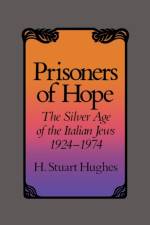
An eminent cultural historian examines the works of Italo Svevo, Alberto Moravia, Carlo Levi, Primo Levi, Natalia Ginzburg, and Giorgio Bassani-six Italian writers of Jewish or part-Jewish origin-and gracefully shows how these writers combine in various measures their ancestral Jewish heritage with recent experiences of antisemitic persecution.
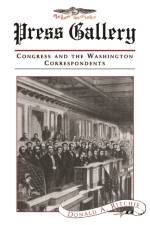
In a lively study of the people who covered Congress in the 19th and early 20th centuries, Donald Ritchie profiles many writers who, like Greeley, found the Washington scene alluring and disorienting. Despite adversarial rhetoric and mutual suspicion, close personal relationships have long flourished between members of Congress and the press.
"Poetry does not impose, it exposes itself," wrote Paul Celan. Werner Hamacher's investigations into crucial texts of philosophical and literary modernity show that Celan's apothegm is also valid for the structure of understanding and for language in general.
A great moralist and social thinker illuminates the most vexing issues of our time¿war, old age, racism, abortion, boredom, crime and punishment, sociobiology, and seventy odd others¿in a dazzling book that is by turns hilarious and somber but always vigorous and stimulating. Upon each subject Robert Nisbet offers piercing and often unexpected insights.Joining the colorful company of Montaigne, Voltaire, Burke, and Mencken, Nisbet writes for his own age and with his own prejudices. He ranges from the historical to the contemporary, from great men to lesser ones, from pieties and wisdoms to fads and effronteries. The work, in other words, is neither philosophy nor a dictionary (except that the subject matter is arranged in alphabetical order), but the distillation of Nisbet¿s wisdom, learning, and profound moral conviction. He argues for liberty over equality, for authority against permissiveness, for religion but also for science, for the individual and his rights but against individualism and entitlements. The center of his thinking is the fervent wish for a community linked by history, religion, and ritual, in which children are raised by families rather than by the state, but in which blind custom and belief are questioned and creativity emerges. Determinism of any kind he finds untrue to human nature and history. Man is free to improve himself or destroy himself.
In Prejudice, the history and psychology of discriminatory policies is contrasted with efforts to overcome discrimination.
A unique and practical guide to clinical risk management, this book combines the expertise of mental health professionals, judges, attorneys, and insurance industry experts, to help the clinician provide effective treatment while reducing the risk of legal liability.
Edited and contributed to by one of America's most respected political and economic thinkers, and containing essays by an impressive roster of experts, The Power of Public Ideas offers a controversial, timely, and incisive analysis of the impact of the public interest on governmental policy making.
Earth's human population inhabits a complex web shaping population movements and patterns of births and deaths. Nine experts explore the nature of the interplay linking rich and poor countries. The demographic experience of each nation occurs in a larger context of social, political, economic, cultural, religious, military, and biological forces.
This is a story of how men worked, intrigued, and made business deals in an Italy invaded by continental countries and England. It brings together diplomacy, war, business, and politics, juxtaposing differing institutional structures and political ways among Italy's city states, and bringing into focus the new men of the Renaissance.
The authors chart the development of Milosz's art, relating his life and his works to the unfolding of his thought. This book is not only an introduction to Milosz; it is also a record of the poet's own interpretations of his work.
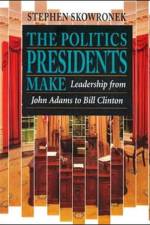
This wholly innovative study demonstrates that presidents are persistent agents of change, continually disrupting and transforming the political landscape. But each president also inherits a particular type of political context, a regime shaped by his predecessors that he either rejects or affirms.
Edward Dickinson traces the story of German child welfare policy over an extended period of conflict and compromise among competing groups-progressive social reformers, conservative Protestants, Catholics, Social Democrats, feminists, medical men, jurists, and welfare recipients themselves.
Blending political, cultural and economic perspectives, this text traces the evolution of Asian countries in the 20th century. Its aim is to determine the mix of culture, experience, scale, timing, leadership and policy that shapes individual developing nations.
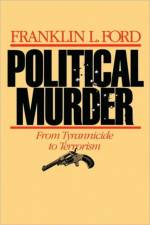
Ford's exploration of calculated, personalized assassination draws on history, literature, law, philosophy, sociology, and religion. Addressing the vast array of cases and combing thousands of years of history, he asks most of all whether assassination works.
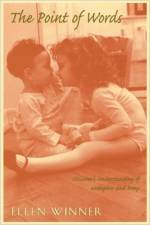
Psychologist Ellen Winner studies the creative, nonliteral discourse of children's spontaneous speech, examining how their abilities to use and interpret figurative language change as they grow older, and what such language shows us about the changing features of children's minds.
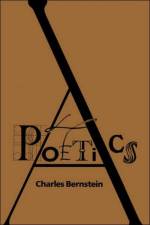
In a wild variety of topics, polemic, and styles, Bernstein surveys the poetry scene and addresses hot issues of poststructuralist literary theory. What role should poetics play in contemporary culture? Bernstein finds the answer in dissent, in both argument and form-a poetic language that resists being absorbed into the conventions of our culture.
This book is an invitation to the life of philosophy in the United States, as Emerson once lived it and as Stanley Cavell now lives it-in all its topographical ambiguity.
Abonner på vårt nyhetsbrev og få rabatter og inspirasjon til din neste leseopplevelse.
Ved å abonnere godtar du vår personvernerklæring.