

















Gjør som tusenvis av andre bokelskere
Abonner på vårt nyhetsbrev og få rabatter og inspirasjon til din neste leseopplevelse.
Ved å abonnere godtar du vår personvernerklæring.Du kan når som helst melde deg av våre nyhetsbrev.

In this original study of the classic text of urban modernism-the newspaper page-Peter Fritzsche analyzes how reading and writing dramatized Imperial Berlin and anticipated the modernist sensibility that celebrated discontinuity, instability, and transience.
Mazur reexamines the circumstances that made an upstate New York neighborhood synonymous with ecological catastrophe and triggered federal "Superfund" legislation to clean up thousands of hazardous waste sites. Borrowing the multi-viewpoint technique of Rashomon, the book reveals that there are many versions of what occurred at Love Canal.
Sedgwick presents an intensive examination of the political problems confronting French Royalists, Catholics, and conservative Republicans in their attempt to form a conservative party, within the framework of the Republic, in the decade dominated by the Panama Scandal and the Dreyfus Affair.
Based on the author's conversations with white junior high and middle school girls, this book allows us to hear how girls adopt some expectations about gender but strenuously resist others, how they use traditionally feminine means to maintain their independence, and how they recognize and resist pressures to ignore their own needs and wishes.
This sober report by 15 leading desegregation experts is the product of an American Academy study to assess the radically changed character of the urban school desegregation struggle since the Supreme Court's landmark decision. The contributors differ sharply in their ideas about the nature of this vexing social problem and in proposed remedies.
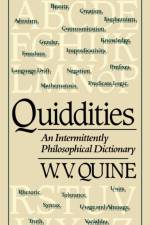
Moving from A (alphabet) to Z (zero), Quiddities roams through more than eighty topics, each providing a full measure of piquant thought, wordplay, and wisdom, couched in easy and elegant prose.
How did the Nazis put Germany back to work? Was the recovery genuine? If so, how and why was it so much more successful than that of other industrialized nations? Hitler's Economy addresses these questions and contributes to our understanding of the internal dynamics and power structure of the Nazi regime in the early years of the Third Reich.
In a felicitous blend of documents and narrative Heimert and Delbanco recapture the sweep and restless change of Puritan thought from its incipient Americanism through its dominance in New England society to its fragmentation in the face of dissent from within and without.
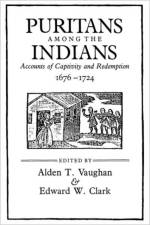
These eight reports by white settlers held captive by Indians have gripped the imaginations of American writers through our history. The book presents the best of the New England narratives, delineating the social and ideological struggle between captors and settlers, and constituting a dramatic rendition of a spiritual struggle for redemption.
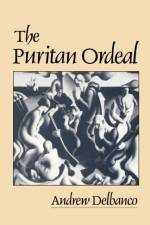
More than an ecclesiastical or political history, this book is a vivid description of the earliest American immigrant experience. It depicts the dramatic tale of the seventeenth-century newcomers to our shores as they were drawn and pushed to make their way in an unsettled and unsettling world.
This social history is an ideal model for evaluating our current definition of public health. Rosenkrantz perceptively traces the development of the Massachusetts State Board of Health-established in 1869 as the first state institution in the United States responsible for preventing unnecessary mortality and promoting all aspects of public health.
Despite its title, Psychology: Briefer Course is more than a simple condensation of the great Principles of Psychology. It remains a useful and highly readable introduction to James's views on psychology and is an essential source for anyone interested in studying all of his psychological writings.
Cavell elaborates the view, traceable from Wittgenstein to Davidson, that there is no thought, and thus no meaning, without language, and shows how this concurs with psychoanalytic theory and practice.
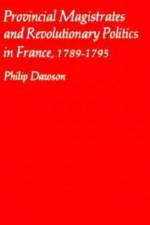
Dawson contributes research findings to the historical controversy over the political motives and conduct of the upper bourgeoisie during the French Revolution, treating magistrates' activities as members of corporate groups before 1790 and following many of them as individuals through the revolutionary years to 1795.
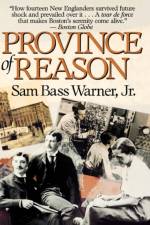
This book sees the sweeping changes of the 20th century through the eyes of 14 Bostonians in an attempt to understand the disorienting experiences of recent history. These lives span the years from 1850 to 1980, a time when American cities were being rebuilt according to the specifications of science, engineering, mass wealth, and big corporations.
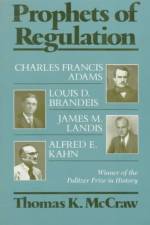
In this ingenious book Thomas McCraw unfolds the history of four powerful men: Charles Francis Adams, Louis D. Brandeis, James M. Landis, and Alfred E. Kahn. The absorbing stories he tells make this a book that will appeal across a wide spectrum of academic disciplines and to all readers interested in history, biography, and Americana.
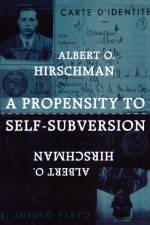
In these 20 essays Hirschman casts his sharp analytical eye on his own ideas, questioning and qualifying some of his major propositions on social change and economic development. Hirschman's self-subversion, as well as the self-affirmation also present here, bring us fresh perspective on the material in his 12 previous books and countless essays.
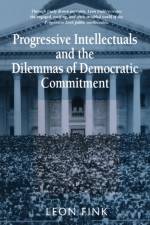
The long-standing dilemma for the progressive intellectual, how to bridge the world of educated opinion and that of the working masses, is the focus of Leon Fink's penetrating book, the first social history of the progressive thinker caught in the middle of American political culture.
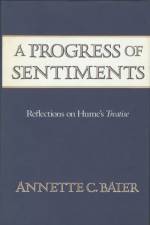
Baier aims to make sense of Hume's Treatise as a whole. Hume's family motto was "True to the End." Baier argues that it is not until the end of the Treatise that we get his full story about "truth and falsehood, reason and folly." By the end, we can see the cause to which Hume has been true throughout the work.
This is the first book to explore how pessimism could be the psychological basis for the Victorians' progressive conception of history. Throughout, von Arx skillfully interweaves threads of religion, politics, and history, showing how ideas in one sphere cannot be understood without reference to the others.
Along with the criteria for mild cognitive impairment and normal cognitive ageing, this text addresses the question of optimal cognitive ageing, identifying its characteristics and searching out their implications for the maintenance of intellectual abilities in the post-retirement years.
Stanley Fish raises a provocative challenge to those who try to turn literary studies into an instrument of political change, arguing that when literary critics try to influence society at large by addressing social and political issues, they cease to be literary critics at all.
Drawing on diverse intellectual traditions, including those rooted in economics, psychology, sociology, and political science, Kuran provides a unified theory of how preference falsification shapes collective decisions, orients structural change, sustains social stability, distorts human knowledge, and conceals political possibilities.
Abonner på vårt nyhetsbrev og få rabatter og inspirasjon til din neste leseopplevelse.
Ved å abonnere godtar du vår personvernerklæring.