
















Gjør som tusenvis av andre bokelskere
Abonner på vårt nyhetsbrev og få rabatter og inspirasjon til din neste leseopplevelse.
Ved å abonnere godtar du vår personvernerklæring.Du kan når som helst melde deg av våre nyhetsbrev.

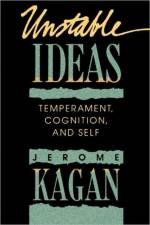
Kagan demonstrates that innovative research methods in the behavioral sciences and neurobiology, together with a renewed philosophical commitment to rigorous empiricism, are transforming our understanding of human behavior. He calls into question a number of techniques that have been mainstays of psychological investigation.
Bringing his book up to date with reflections since its first publication a decade ago, Charles Maier writes that the historians' controversy gave Germany a chance to air the issues immediately before unification and, in effect, the controversy substituted for the constitutional debate that a united Germany never got around to holding.
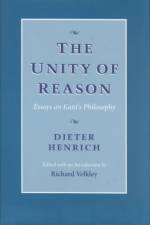
The four essays on Kant contained in this text describe the development of Kant's moral philosophy and provide an account of the argumentative strategies determining all aspects of Kant's philosophy, reflecting the author's interest in the unity of reason and self-consciousness.
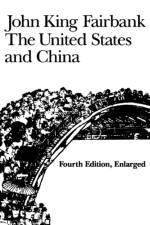
In this enlarged 4th edition Fairbank includes a new Preface and an Epilogue that bring the book up to date through 1982. He has also updated the bibliography and indexes. This book stands almost alone as a history of China, an analysis of Chinese society, and an account of Sino-American relations.
In a stimulating synthesis of cognitive science, anthropology, and linguistics, Lieberman tackles the fundamental questions of human nature: How and why are human beings so different from other species? Can the Darwinian theory of evolution explain human linguistic and cognitive ability? What accounts for human moral sense?
How can the infinite, a subject remote from finite experience, be an everyday tool for working mathematicians? Blending history, philosophy, mathematics, and logic, Lavine answers this question with clarity. He demonstrates that knowledge of the infinite is possible, even according to strict standards requiring some intuitive basis for knowledge.
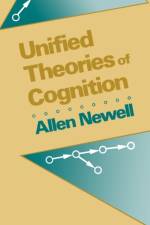
Newell introduces Soar, an architecture for general cognition. A pioneer system in AI, Soar is the first problem-solver to create its own subgoals and learn continuously from its own experience. Its ability to operate within the real-time constraints of intelligent behavior illustrates important characteristics of human cognition.
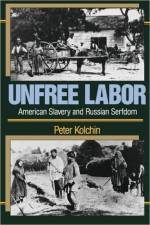
The American enslavement of blacks and the Russian subjection of serfs flourished in different ways and varying degrees until legally abolished in the mid-19th century. Kolchin compares and contrasts the two systems over time, highlighting their basic similarities while identifying key differences discernible only in comparative perspective.
Understanding Capital is a brilliantly lucid introduction to Marxist economic theory. Duncan Foley builds an understanding of the theory systematically, from first principles through the definition of central concepts to the development of important applications.
David Alan Rich weaves together several levels of narrative to show how the increasingly sophisticated, scientific, and positivistic work attitudes and habits Russia's general staff during the second half of the nineteenth century acculturated younger officers, redefining their relationship with, and responsibilities to, the state.
The goal of philosophers is truth, but for a century or more they have been bothered by Nietzsche's question, "What is the good of truth?" Barry Allen shows what truth has come to mean in the philosophical tradition, what is wrong with many conceptions of truth, and why philosophers refuse to confront squarely the question of the value of truth.
A Pulitzer Prize winner and mentor for more than a generation of American historians, Handlin instructs his readers in the fundamentals of his field. He tells us how to deal with evidence, how to discern patterns amid flux, how to situate ourselves in history, and how to recognize where fact shades subtly into opinion.
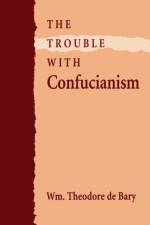
In East and Southeast Asia, as well as China, people are asking, "What does Confucianism have to offer today?" For some, Confucius is still the symbol of a reactionary and repressive past; for others, he is the humanist admired by generations of scholars and thinkers, East and West, for his ethical system and discipline.
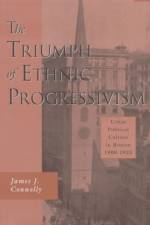
Progressivism, Connolly argues, was a form of political action available to a range of individuals and groups. In showing that the reform visions arising in Boston included not only the progressivism of its business leaders but also a series of ethnic progressivisms, Connolly offers a new approach to urban public life in the early 20th century.
The Arnauld family rose to prominence at the end of the sixteenth century by attaching themselves to King Louis XIV with absolute loyalty and obedience. Sedgwick's engaging history chronicles the Arnauld family's reaction to momentous political and religious developments and offers a unique perspective on a tumultuous period in French history.
In a remarkable book based on prodigious research, Horwitz offers a sweeping overview of the emergence of a national legal system from English and colonial antecedents. He treats the evolution of common law as intellectual history and demonstrates how shifting views of private law became a dynamic element in the economic growth of the U.S.
The late Perry Miller once stated, ¿I have been compelled to insist that the mind of man is the basic factor in human history,¿ and his study of the mind in America has shaped the thought of three decades of scholars. The fifteen essays here collected¿several of them previously unpublished¿address themselves to the facets of the American consciousness and to their expression in literature from the time of the Cambridge Agreement to the Nobel Prize acceptance speeches of Hemingway and Faulkner. A companion volume to Errand into the Wilderness, its general theme is one adumbrated in Miller¿s two-volume masterpiece, The New England Mind¿the thrust of civilization into the vast, empty continent and its effect upon Americans¿ concept of themselves as ¿nature¿s nation.¿The essays first concentrate on Puritan covenant theology and its gradual adaptation to changing condition in America: the decline in zeal for a ¿Bible commonwealth,¿ the growth of trade and industry, and the necessity for coexisting with large masses of unchurched people. As the book progresses, the emphasis shifts from religion to the philosophy of nature to the development of an original literature, although Miller is usually analyzing simultaneously all three aspects of the American quest for self-identity. In the final essays, he shows how the forces that molded the self-conscious articulateness of the early New Englanders still operate in the work of contemporary American writers.
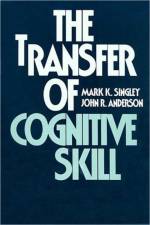
The issue of the transfer of learning from one domain to another is a classic problem in psychology and an educational question of great importance, which this book sets out to solve through a theory of transfer based on a comprehensive theory of skill acquisition.
Vogel challenges conventional wisdom that trade liberalization and agreements promoting free trade undermine national health, safety, and environmental standards. He analyzes international and regional trade agreements and treaties, unraveling the important and contentious relationship between trade and environmental, health, and safety standards.
A collection of 28 essays, five previously unpublished, grouped into nine categories: Philosophy, Natural Selection, Adaptation, Darwin, Diversity, Species, Speciation, Macroevolution, and Historical Perspective.
Peasants of remote history rarely speak to us in their own voices, but Thomas Bisson's engagement with the records of several hundred twelfth-century rural Catalonians enables us to hear these voices. Bisson describes these peasants socially and culturally, showing how their experience figured in a wider crisis of power during the twelfth century.
France has long been characterized as a statist or dirigiste political economy, with state "strength" predicated on autonomy from a weak and divided civil society. Levy shows that this disdain for societal and local institutions has come back to haunt French officials.
This text presents a re-evaluation of American literature from 1830 to 1930, showing how white and black literature form a single interwoven tradition. By examining African America's contested relation to the intellectual and literary forms of white culture, it reviews American literary tradition.
Joyce Malcolm illuminates the historical facts underlying the current passionate debate in America about gun-related violence, the Brady Bill, and the National Rifle Association, revealing the original meaning and intentions behind the individual right to "bear arms."
Thomas Bonner unveils the dramatic history of women's long struggle to become physicians, focusing both on international comparisons and on the personal histories of many of the pioneers.
Abonner på vårt nyhetsbrev og få rabatter og inspirasjon til din neste leseopplevelse.
Ved å abonnere godtar du vår personvernerklæring.