

















Gjør som tusenvis av andre bokelskere
Abonner på vårt nyhetsbrev og få rabatter og inspirasjon til din neste leseopplevelse.
Ved å abonnere godtar du vår personvernerklæring.Du kan når som helst melde deg av våre nyhetsbrev.

By carefully tracing the public lives of Bunche, Clark, and Hansberry, Keppel shows how the mainstream media selectively appropriated the most challenging themes and goals of the struggle for racial equality so that difficult questions about the relationship between racism and American democracy could be softened, if not entirely evaded.
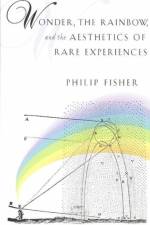
In three instructive instances-a pair of paintings by Cy Twombly, the problem of doubling the area of a square, and the history of attempts to explain rainbows-Fisher examines the experience of wonder as it draws together pleasure, thinking, and the aesthetic features of thought.
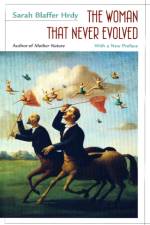
Hrdy argues that evolutionary theorists' emphasis on sexual competition among males for access to females overlooks selection pressures on females themselves. In this account of what female primates themselves do to secure their own reproductive advantage, she demolishes myths about sexually passive, "coy," compliant, exclusively nurturing females.
Feminist thought has wrestled with the question of whether religion has been principally responsible for the oppression of women or instead has provided access to culture, public life, and-sometimes-power. This study of Italian women and Catholicism from the fourth through the twentieth century reflects this conflict.
Duden asserts that the most basic biological and medical terms that we use to describe our own bodies-male and female, healthy or sick-are cultural constructions. To illustrate this, she delves into records of an 18th-century German physician who documented the medical histories of 1,800 women of all ages and backgrounds, often in their own words.
A Nobel laureate reflects upon poetry's testimony to the events of our tumultuous time.
Examines the policies that determine who teaches in American schools and separates the policies that work from those that are destined to fail. It tracks the lives of 50,000 graduates and describes how prospective, current and former teachers respond to the incentives and disincentives they face.
What is Literature? challenges anyone who writes as if literature could be extricated from history or society. But Sartre does more than indict. He offers a definitive statement about the phenomenology of reading, and he goes on to provide a dashing example of how to write a history of literature that takes ideology and institutions into account.
This first sustained study of violence toward wives in America reflects on societal changes that have affected violence: wife-beating was quietly condoned until the spread of an ethos of self-restraint in the late 19th century; the practice increased with a vengeance with the florescence of expressive individualism during the 20th century.
Through interviews with 521 MPs, Searing looks at how members of the British Parliament understand their goals, their careers and their impact on domestic and global issues. He explores how Westminster's world both controls and is created by individuals.
Where not very long ago Americans sought assimilation, they now pursue multiculturalism. Nowhere has this transformation been more evident than in the public schools. In a book that brings clarity and reason to this highly charged issue, Nathan Glazer explores these changes and offers an incisive account of why we all have become multiculturalists.
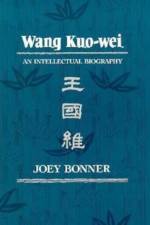
In this biography of brilliant Chinese scholar Wang Kuo-wei, Bonner throws light on the range and course of ideas in early 20th-century China. She critically examines Wang's essays on German philosophy and aesthetics; his poetry, literary criticism, and aesthetic theory; and his works on ancient Chinese history, particularly of the Shang dynasty.
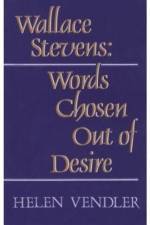
In this book Vendler brings her remarkable skills to bear on a number of Stevens's short poems. She shows us that this most intellectual of poets is in fact the most personal of poets; that his words are not devoted to epistemological questions alone but are also "words chosen out of desire."
In this institutional history, Sass explores the evolution of the financial support system that now commands trillions of dollars of investment capital and supports hundreds of thousands of older Americans. He traces the pension system to the present, exploring how our modern corporate economy is confronting the challenges of an aging population.
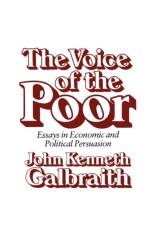
John Kenneth Galbraith writes about what advice the poor nations (as, avoiding euphemism, he calls them) ought to offer to the more fortunate countries. In this little book there are essential lessons to ponder-for the governments of the rich countries, for those of the poor lands, and for the concerned citizens of both.
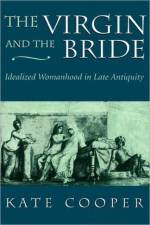
During the last centuries of the Roman Empire, the prevailing ideal of feminine virtue was radically transformed: the pure but fertile heroines of Greek and Roman romance were replaced by a Christian heroine who ardently refused the marriage bed. Cooper explores how this new concept connected with and abetted social and religious change.
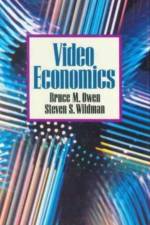
Video Economics is a rigorous yet accessible analysis of the economics and business strategies of the television industry. Owen and Wildman identify the complex chain of program producers, distributors, and retailers whose objectives are to obtain viewers in order to sell them to advertisers, to charge them an admission fee, or both.
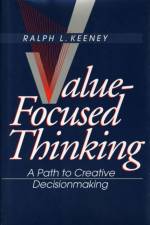
Rather than placing emphasis on mechanics and fixed solutions, Keeney argues, we should focus on the bottom-line objectives that give decisionmaking its meaning: through recognizing and articulating fundamental values, we can better identify decision opportunities-and thereby create better decision alternatives.
Proctor lucidly demonstrates how value-neutrality is a reaction to larger political developments, including the use of science by government and industry, the specialization of professional disciplines, and the efforts to stifle intellectual freedoms or to politicize the world of the academy.
Ladd describes the struggle of German leaders to bring order to their rapidly growing cities during the age of industrial expansion before World War I, setting the emerging theory and practice of city planning in the context of debates about the nature of the modern city and the possibility of improving society by regulating physical environments.
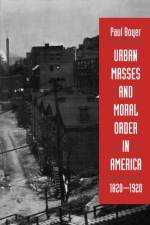
Boyer explores the links between urban reforms of the Progressive era and efforts of prior generations. By the 1890s thinking about urban planning and social control gravitated between a bleak assessment that led to coercive strategies and a hopeful evaluation that stressed the value of environmental betterment as a means of urban moral control.
The Urban Crucible boldly reinterprets colonial life and the origins of the American Revolution. Through a century-long history of three seaport towns--Boston, New York, and Philadelphia--Gary Nash discovers subtle changes in social and political awareness and describes the coming of the revolution through popular collective action and challenges to rule by custom, law and divine will. A reordering of political power required a new consciousness to challenge the model of social relations inherited from the past and defended by higher classes. While retaining all the main points of analysis and interpretation, the author has reduced the full complement of statistics, sources, and technical data contained in the original edition to serve the needs of general readers and undergraduates.
Abonner på vårt nyhetsbrev og få rabatter og inspirasjon til din neste leseopplevelse.
Ved å abonnere godtar du vår personvernerklæring.