


Gjør som tusenvis av andre bokelskere
Abonner på vårt nyhetsbrev og få rabatter og inspirasjon til din neste leseopplevelse.
Ved å abonnere godtar du vår personvernerklæring.Du kan når som helst melde deg av våre nyhetsbrev.

There's plenty to do when planning the curriculum in primary schools. If it feels daunting, then one of the most helpful things is to talk to other people about how they have developed the curriculum for their particular subject or key stage. This is what John Tomsett and Mary Myatt have done. After the secondary 'Huh: Curriculum conversations between subject and senior leaders' was published, they were flooded with requests to produce a primary version. They enlisted the help of renowned primary specialists, Rachel Higginson, Lekha Sharma and Emma Turner to have conversations with primary teachers and key stage co-ordinators who are doing great curriculum development work. Each chapter provides insights into the importance of individual subjects and the unique contribution each makes to pupils' cognitive and personal development. The subject chapters discuss the steps colleagues take to ensure that there is a coherent thread across the year groups, as the discrete subjects deliver, collectively, the primary curriculum. These conversations show how the craft of creating a rich, challenging curriculum for every subject is not a quick fix. This is a nuanced piece of work, and there are many ways of approaching it. Each chapter also contains links to subject associations and helpful resources. Primary Huh has been written for subject leaders and key stage co-ordinators; it has also been written for senior leaders, as they prepare to have supportive conversations with their colleagues who are responsible for curriculum development. Primary Huh is offered as a prompt rather than the last word. Informed debate is, as they say, the fuel of curriculum development. And why have John and Mary called it 'Huh'? Well, John discovered that Huh is the Egyptian god of endlessness, creativity, fertility and regeneration, and they thought that was a pretty good metaphor for their work on the curriculum!
Futureproof shows school leaders and teachers how they can educate for digital citizenship through the adoption of a new, comprehensive and coherent framework. The book addresses a gap as there are currently no well-known frameworks that provide a comprehensive approach to teaching digital citizenship education in UK schools. This is surprising given how digital technologies are part and parcel of most young people's lives today and will continue to be so in the future. Given that the technologies are constantly changing, it might be said that those responsible for teaching digital citizenship are shooting in the dark whilst trying to hit a moving target. The book brings clarity by explaining the theory and research behind the Futureproof framework, and through its focus on how it can be implemented in primary and secondary schools. The book includes details of the digital citizenship framework, an overview of learning and teaching outcomes and examples from practice throughout. The main features of Futureproof are it: introduces a new practical digital citizenship education framework for primary and secondary schools that addresses digital risks and opportunities together and holistically. addresses key concerns in ways that relate to digital citizenship, including, issues of online safety and security, digital literacy, online crime, employment, cyberbullying, online harms, digital wellbeing, e-learning, and civic and political participation. adopts a character strengths-based approach preparing young people for their future lives and work. is not deficit-based - it celebrates the positives of digital technologies and how they can contribute to individual and societal flourishing and wellbeing. aligns with current policy on online safety from the UK Department for Education (DfE), the Living in the Connected World Framework as well as advice from other prominent organisations. is hands on and practical - it provides a step-by-step approach and shows, by using examples, how school leaders, teachers and others working in education can implement the framework. is grounded in established theory and underpinned by research and evidence.
Following the break-out success of Teaching WalkThrus Volume 1 (2020) and Volume 2 (2021), Tom Sherrington and Oliver Caviglioli present the third instalment of their five-step instructional coaching techniques. Volume 3 features 50 more essential teaching methods in the authors' concise and accessible format, covering all the key areas of teaching: behaviour and relationships; curriculum planning; explaining and modelling; questioning and feedback; practice and retrieval; and Mode B teaching. Tom and Oliver have teamed up with a stellar supporting cast of educators to present the new WalkThrus, with contributions from: Adam Boxer, Alison Wilcox, Andy Buck, Andy Tharby, Ayellet McDonnell, Bennie Kara, Blake Harvard, Christopher Such, David Goodwin, Efrat Furst, Emma Slade, Emma Turner, Eva Hartell, Harry Fletcher-Wood, Josh Goodrich, Kat Howard, Leila MacTavish, Mary Myatt, Peps Mccrea, Richard Kennett, Shaun Allison, Sonia Thompson, and Tom Needham. Each technique is concisely explained and beautifully illustrated in five steps, to make sense of complex ideas and support student learning. The WalkThrus books are supported by an online PD toolkit, which is now used by 2,000 organisations in 35 countries. For more info, visit www.walkthrus.co.uk
Being a principal requires you to serve many different people. The job can feel overwhelming. But it does not need to feel that way. Because many principals have already figured out what works and how to be great. This book is the culmination of over 400 interviews the author conducted on his Transformative Principal Podcast and these interviews hold the key to finding success as a principal - a principal that is not just trying to lead a school but making lasting change that will make their school better for their students. With insight from some of the greatest minds in education and some of the best principals that nobody has ever heard of, Jones distils the secrets to success into small action steps you can take to make your school amazing. Jones relates stories of great success, horrific failures, and everything in between. The book is structured to help you focus on one area in each month for a school year. Truly, you can start anywhere and work on that piece in that month. Further, each chapter has activities to help you make improvements in each area. Whether you are a brand-new principal or working in your 32nd year in a school, this book will help you improve your leadership.
Economics teachers often work by themselves or in small departments. This can mean they are forced to plan a lot of lessons from scratch with limited scope for shared planning or collaboration. Even as teaching becomes more research-informed, there is still the problem of having to work out how this best applies when teaching Economics, especially when there has been limited training in this. This can mean teachers are forced to adopt a trial-and-error approach, attempting to implement generic teaching and learning tips into economics lessons. Teachers plan each explanation individually, only learning what common misconceptions are through the painstaking experience of seeing puzzled expressions on multiple pupils' faces over the years. This book aims to change that. By looking at what the latest cognitive science research tells us about how pupils learn and crucially how that can be implemented in economics lessons, this book provides a short-cut to that trial-and-error approach. While the book summarises what the research tells us about pupil learning, this is fundamentally a 'doing' book. It is packed with practical examples of how research can be implemented in Economics lessons looking at explanations, misconceptions, assessment, curriculum and much more.
If the sky was the limit, what would you do to become the best educator that you can be? In 2016, Ollie Lovell asked himself this same question, and concluded that asking the world's foremost leaders in education what they do would be a great place to start. And so he did just that. Over the past five years, Ollie has spoken to sixty of the world's most prominent teachers, leaders, and education researchers. With guests including John Hattie, Tom Sherrington, Anita Archer, Dylan Wiliam, Jim Knight, Judith Hochman, Jay McTighe, Tom Bennett, Daisy Christodoulou, Bill Rogers, Daniel Willingham, and many more, Ollie digs deep to work out what works in education, and what doesn't. This book aims to share those insights with you. It summarises the most useful techniques, tactics and mental models from these sixty conversations, and presents them in a clear, practical, and actionable form for you to start improving your teaching and learning from the first page. Tools for Teachers will help you to teach, lead, and learn like the world's best educators.
"e;Follow the science."e;How often have you picked up an education book to read how, according to the authors, the system is broken, failing, and flailing-but their ideas for fixing it will bring about a miraculous transformation?That's not the approach of this volume. Sure, the editors believe that our system of education could achieve significantly better results. But they also recognize that schools have gotten better over time. One explanation is the progress schools have made in "e;following the science"e;. Especially in early reading and math instruction, scholars know more now about what works than we did in the past, and more schools are putting that knowledge into practice. Now, in the wake of a horrific pandemic, even the best elementary schools are struggling to help their students get their momentum back again. In this book, the editors share high-quality syntheses of evidence and insights from leading educators, academics, and other experts. And they communicate those findings in user-friendly language, with an understanding of the real-world complexities of schools and classrooms.
How do you embed excellence into schools' everyday practices, not as an incidental or an accident, but as an actual ethic? Like the original book, this book is not a manual but what it offers is a thorough analysis of the Ethic of Excellence toolkit strategies, which can be applied across all ages and phases. The examination is placed within a framework of relevant research and is aimed at corroborating Berger's strategies and ethics, as they apply to classroom practice. The book is written with the full support, and the ethical guidance of the author of 'An Ethic of Excellence: Building a Culture of Craftsmanship with Students', Ron Berger. Each chapter exemplifies the active ingredients for each of the key principles and underpins them with evidence-informed practice and practical examples, from across the curriculum. The book offers case studies and insights from senior leaders and teachers on what excellence looks like, within their contexts. Whilst school improvement is never finished, the book offers a manual for identifying Berger's principles of excellence. Through focused and evidence-informed offering, it considers how to make excellence as an ethic permanent across any school and any curriculum.
Tanya Ovenden-Hope (Editor) brings together insights from those most closely connected to the ECF; the training providers, school leaders and academics involved in understanding the efficacy of professional development and learning in schools.
This book provides you with practical, easy-to-implement classroom ideas and strategies for teaching and leading MFL in a primary school and will support you to prepare for MFL Ofsted 'deep dives'. There are a huge amount of practical ideas provided, from curriculum design, long, medium and short term planning with real examples in French and Spanish, so you can see how it works in practice. Challenge, differentiation and mixed age teaching are covered, as well as motivating and way to teach vocabulary, phonics and grammar. Linked to the 2019 Ofsted inspection framework and in line with the KS2 National Curriculum programme of study, chapters are devoted to memory and cultural capital, as well as innovative strategies to use stories and songs. Readers will learn how to assess using 'age-related expectations' and you will be able to access real examples of lesson plans, curriculum planning documents and resources.
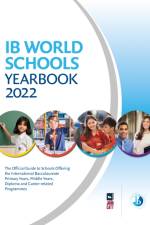
The Official Guide to Schools Offering the International Baccalaureate Primary Years, Middle Years, Diploma and Career-related Programmes.
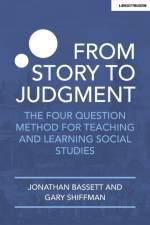
The Four Question Method identifies the questions that drive the thinking that real people do when they take the human world seriously. The authors, Jonathan Bassett and Gary Shiffman, have figured out how to describe and teach what it takes to answer those questions well. This inquiry method gives educators a way to integrate content 'coverage' - through storytelling! - with practice in thinking skills that are central to history and its affiliated academic disciplines, together called social studies. The Four Question Method helps teachers to plan more effectively and students to learn more effectively. It provides guidance for writing research essays. And it transfers: the skills our students practice will work for them when they encounter and make their own history.
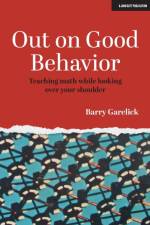
"e;Tell the administration what they want to hear, then do what is best for your students."e;That's advice Barry Garelick tries to followin the process of becoming a fully credentialed teacher which entails beingmonitored by two mentors. As the Mark Twain of education writing, Garelick presents this collection of essays which chronicle his experiences at two schools, teaching math. With essays such as,"e;Not Making Sense, and a Conversation I Never Had; "e;Math Talk"e;, Stalin's Hemorrhoids and Murder of Crows"e;,Garelick gives the reader a veritstyle glimpse into the daily routines of math teaching and exposes a lot of the nonsense that teachers are advised to follow, and which they feel guilty about when they don't.
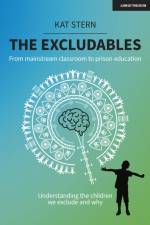
This book steps away from the worn-out discourse that surrounds behaviour in schools, and away from the notion that educators are the only relevant experts. Get ready to explore genetics, bias, epistemic trust, and the human stress-response system; all examined through the lens of the realities of behavioural challenge faced by educators.
Psychologist Graham Ramsden's insightful new book explains why people, particularly children, bully others - and helps teachers to explore a variety of ways in which they can use their existing systems and structures to address this endemic issue.
A l'occasion de son 50e anniversaire, c'est avec fierte que le Baccalaureat International (IB) vous invite a decouvrir son premier demi-siecle d'existence.
Ian Stock's gripping The Great Exception offers an alternative interpretation of what it means to teach and proposes a perspective on the profession that represents the actual work of teachers in a fairer and more accurate way.
This Practical Guide seeks to illuminate the National Standards of Excellence for Headteachers, presenting a range of perspectives to bring the text alive for current and future school leaders and for those with the vital responsibilities of proper governance.
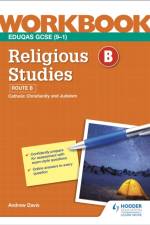
Build the confidence, knowledge and skills your students need to succeed in Eduqas GCSE Religious Studies Route B.
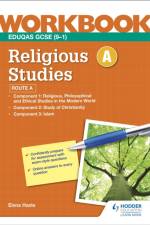
Build the confidence, knowledge and skills your students need to succeed in Eduqas GCSE Religious Studies Route A.This time-saving, write-in workbook can be used be flexibly for classwork or homework, throughout the course or for revision and exam practice.- Improve understanding through a range of activities that enable students to review, reinforce and apply their knowledge across each component of the course- Prepare for assessment with exam-style questions to help students practice and perfect their technique- Encourage independent study and progression with the answers available onlineThis workbook covers:- Component 1: Religious, Philosophical and Ethical Studies in the Modern World- Component 2: Study of Christianity- Component 3: Islam
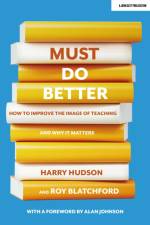
We have a serious problem with the image of teaching in this country. In the eyes of many, teaching is not truly a profession akin to other professions. In the popular imagination, it is not on a par with medicine, law or accountancy, engineering, architecture or business. It is not held in the same esteem as careers which are of equivalent importance to society.Must do better challenges this damaging and pernicious status quo. It examines the origins of our problem with teaching, it shines a light on the exciting reality of teaching in the 21st century, and it charts a new course for the image of the modern teaching profession.The book is written to be easily read by the general reader, because ultimately it is with the general reader - the parent, the employer, the politician - that lies the power to effect the change that society needs.We can and we must change the image of teaching for the better.
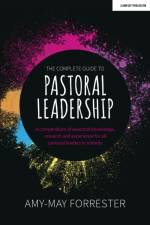
This isn't your average book about pastoral care - it is a no-nonsense exploration of the knowledge base that excellent pastoral practitioners, be they aspiring, new or experienced, need to excel in their roles. It combines theory, evidence, and research with best practice and on the job experience.
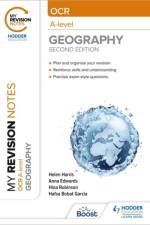
Set students on track to achieve the best grade possible with My Revision Notes.Our clear and concise approach to revision will help students learn, practise and apply their skills and understanding. Coverage of key content is combined with practical study tips and effective revision strategies to create a guide that can be relied on to build both knowledge and confidence.My Revision Notes: OCR A Level Geography (Second Edition) will help students:- Consolidate knowledge with clear, concise and relevant content coverage, based on what examiners are looking for- Extend understanding with our regular 'Now Test Yourself', tasks and answers- Improve technique through our increased exam support, including exam-style practice questions, expert tips and examples of typical mistakes to avoid- Identify key connections between topics and subjects with our 'Making Links' focus and further ideas for follow-up and revision activities- Plan and manage a successful revision programme with our topic-by-topic planner, new skills checklist and exam breakdown features, user-friendly definitions and glossary
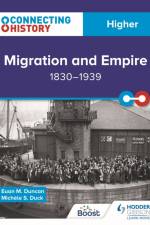
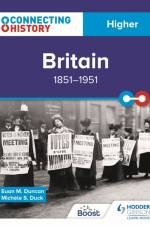
Exam board: SQALevel: HigherSubject: HistoryFirst teaching: September 2018First exam: Summer 2019Fresh stories, fresh scholarship and a fresh structure. Connecting History informs and empowers tomorrow's citizens, today.Bringing together lesser-told narratives, academic excellence, accessibility and a sharp focus on assessment success, this series provides a rich, relevant and representative History curriculum.> Connect the past to the present. Overarching themes of social justice, equality, change and power help students to understand the importance of events and issues, then and now.> Go far beyond other resources. With respect and aspiration for the transformative power of History, this series incorporates the latest research, challenges old interpretations and embeds diverse experiences throughout.> Follow a clear and consistent structure. The key issues in the specification form the chapters in each book, and the content descriptors are subheadings within the chapters. Finding the information that you need has never been easier.> Meet the demands of the assessments. Connecting History develops the knowledge and skills for success, with appropriate breadth, depth and pace. The narrative and sources take centre stage and the authors model the process of answering questions effectively through that narrative, ensuring that students have enough key points to achieve full marks. End-of-chapter activities consolidate and extend learning.> Benefit from pedagogic and academic expertise. The authors are highly experienced teachers and examiners who know how to spark critical curiosity in students. Each book has been rigorously reviewed by an academic from the University of Glasgow, so you can rest assured that the content is accurate and up to date.
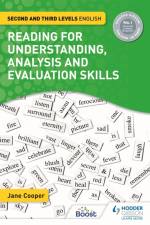
Syllabus: CfE (Curriculum for Excellence, from Education Scotland) and SQALevel: BGE S1-3: Third & Fourth LevelsSubject: EnglishCapture pupils' imagination and attention with a rich collection of quality texts, handpicked by Jane Cooper to ensure that pupils want to start reading - and keep reading.Tailored to the interests, motivations and abilities of pupils working towards Second and Third Levels in S1 to S3, this book will help you to close the attainment gap.> Unlock a world of meaning, connection and questioning. Part One teaches the close reading skills that pupils need throughout their lives, with simple explanations, lots of examples and tasks set at three levels - 'Building', 'Strengthening' and 'Extending'.> Apply and develop RUAE skills and monitor progress. Part Two contains ten practice assessments that gradually increase in difficulty, with longer passages, more complex language and more challenging questions.> Save time sourcing non-fiction text extracts. Drawing on her long career as an English teacher and author, Jane Cooper has a talent for knowing which topics pupils will find curious or fun - from the world's cheesiest pizza to a mysterious metal column that appeared in a desert.> Build the foundations for success in National qualifications. With Course Reports showing that N5 and Higher students most commonly lose marks in the RUAE papers, this book offers a proactive solution to building confidence and skills during BGE.> Support the individual needs of every pupil. Providing differentiated, age-appropriate content and tasks, this is the perfect resource for mixed-ability classrooms - especially when used alongside its companion volume, <i>Levels 3-4 English: Reading for Understanding, Analysis and Evaluation Skills</i>.</p>
Exam board: SQALevel: HigherSubject: HistoryFirst teaching: September 2018First exam: Summer 2019Fresh stories, fresh scholarship and a fresh structure. Connecting History informs and empowers tomorrow's citizens, today.Bringing together lesser-told narratives, academic excellence, accessibility and a sharp focus on assessment success, this series provides a rich, relevant and representative History curriculum.> Connect the past to the present. Overarching themes of social justice, equality, change and power help students to understand the importance of events and issues, then and now.> Go far beyond other resources. With respect and aspiration for the transformative power of History, this series incorporates the latest research, challenges old interpretations and embeds diverse experiences throughout.> Follow a clear and consistent structure. The key issues in the specification form the chapters in each book, and the content descriptors are subheadings within the chapters. Finding the information that you need has never been easier.> Meet the demands of the assessments. Connecting History develops the knowledge and skills for success, with appropriate breadth, depth and pace. The narrative and sources take centre stage and the authors model the process of answering questions effectively through that narrative, ensuring that students have enough key points to achieve full marks. End-of-chapter activities consolidate and extend learning.> Benefit from pedagogic and academic expertise. The authors are highly experienced teachers and examiners who know how to spark critical curiosity in students. Each book has been rigorously reviewed by an academic from the University of Glasgow, so you can rest assured that the content is accurate and up to date.
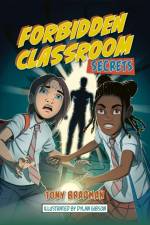
Welcome to Rockhead Primary, a school so ordinary even the teachers think it's boring. But things start to change when a builder knocks down an internal wall and reveals something totally weird ... Two Year 6 pupils - Verna Lee and Jamie Ballard - join forces to investigate a whole series of secrets. What terrifying event took place on December 21st 1983? Why has the school caretaker suddenly started to behave strangely? And what is really inside the Forbidden Classroom? The answers to all these questions are inside this book. Open it ... if you dare! Forbidden Classroom: Secrets is part of the Astro range from Rising Stars Reading Planet. Astro books are ideal for struggling and reluctant readers aged 7-11. Each book is dual-banded so that children can improve their fluency whilst enjoying exciting fiction and non-fiction relevant to their age. Reading Planet books have been carefully levelled to support children in becoming fluent and confident readers. Each book features useful notes and questions to support reading at home and develop comprehension skills. Interest age: 8-9 Reading age: 7-8 years
Abonner på vårt nyhetsbrev og få rabatter og inspirasjon til din neste leseopplevelse.
Ved å abonnere godtar du vår personvernerklæring.