















Gjør som tusenvis av andre bokelskere
Abonner på vårt nyhetsbrev og få rabatter og inspirasjon til din neste leseopplevelse.
Ved å abonnere godtar du vår personvernerklæring.Du kan når som helst melde deg av våre nyhetsbrev.

Includes a 2014 Postscript addressing Occupy Wall Street and other developments. Efforts to secure the American city have life-or-death implications, yet demands for heightened surveillance and security throw into sharp relief timeless questions about the nature of public space, how it is to be used, and under what conditions. Blending historical and geographical analysis, this book examines the vital relationship between struggles over public space and movements for social justice in the United States. Don Mitchell explores how political dissent gains meaning and momentum--and is regulated and policed--in the real, physical spaces of the city. A series of linked cases provides in-depth analyses of early twentieth-century labor demonstrations, the Free Speech Movement and the history of Peoples Park in Berkeley, contemporary anti-abortion protests, and efforts to remove homeless people from urban streets.
D.A. Clark, S. Rhyno, Unwanted Intrusive Thoughts in Nonclinical Individuals: Implications for Clinical Disorders. S.A. Falsetti, J. Monnier, H.S. Resnick, Intrusive Thoughts in Posttraumatic Stress Disorder. R.M. Wenzlaff, Seeking Solace but Finding Despair: The Persistence of Intrusive Thoughts in Depression. A.G.
Drawing upon extensive interviews and assessments of school-age children who have lost a parent to death, this book offers a richly textured portrait of the mourning process in children.
This book describes how therapists can both facilitate constructive play therapy and intervene in posttraumatic play to help children who have been traumatized by abuse or neglect achieve a positive resolution. Traditional techniques of play therapy are reviewed for their application to this population. Throughout, numerous therapeutic aids are described to enhance the child's capacity to communicate verbally or symbolically. To help clinicians translate theory into daily practice, the book presents six detailed clinical vignettes that offer step-by-step guidelines for assessment and intervention in different situations of abuse or neglect.
This book will be of interest to anyone interested in the people and events that have helped shape the world, including mental health professionals and scholars studying psychological topics in the larger context of science, art and politics.
This volume examines and critiques the work of a diverse group of Euricentric historians who have strongly shaped our understanding of world history
This practical guide presents Leahy's multidimensional model of resistance in cognitive therapy. Richly illustrated with case examples and session vignettes, the book addresses a variety of ways that clients may resist basic therapeutic procedures: noncompliance with agenda setting and homework assignments, splitting transference with other therapists, inappropriate behavior, and premature termination. Underlying processes of resistance are explored, from the desire for validation to risk aversion and self-handicapping. Also highlighted are ways that the therapist's own responses may inadvertently impede change. Provided are innovative tools for getting treatment back on track, including targeted interventions, in-session "e;experiments,"e; and questionnaires and graphic models to share with clients.
Informed by the latest research and written by two of the leading authorities in the field, this invaluable resource presents step-by-step guidelines for assessing and treating sexual assault survivors suffering from PTSD.
Sohlberg and Mateer's landmark introductory text helped put cognitive rehabilitation on the map for a generation of clinicians, researchers, educators, and students. Now, more than a decade later, the discipline has come of age. This new volume provides a comprehensive overview of this fast-evolving field. More than a revised edition, the text reflects the dramatic impact of recent advances in neuroscience and computer technology, coupled with changes in service delivery models. The authors describe a broad range of clinical interventions for assisting persons with acquired cognitive impairments--including deficits in attention, memory, executive functions, and communication--and for managing associated emotional and behavioral issues. For each approach, theoretical underpinnings are reviewed in depth and clinical protocols delineated. Difficult concepts are explained in a clear, straightforward fashion, with realistic case examples bringing the material to life. Also included are samples of relevant assessment instruments, rating scales, and patient handouts. Throughout, the new volume emphasizes the need to work from a community perspective, providing a framework for forming collaborative partnerships with families and caregivers. It is an essential resource for professionals across a wide variety of rehabilitation specialties, and will serve as a text in courses on rehabilitation methods and neurogenic disorders.
Developing a new systematic attachment concept, "the secure family base", the author shows how families can change insecure relationship patterns both during and after therapy.
This text provides a reinterpretation of London during a period of dramatic change, and presents ways of understanding the coming modernity through the transformation of urban landscapes.
Presents a brief cognitive-behavioural treatment approach that is suitable for use with individuals or groups. Delineating a clear medical rationale, the authors help clinicians reduce clients stigma of IBS and overcome resistence to treatment.
This book reports on the growing body of knowledge on these key self-conscious emotions, integrating findings from the authors' original research program with other data emerging from clinical, social, personality and developmental psychology.
The fundamental concern of psychotherapy is change. While practitioners are constantly greeted with new strategies, techniques, programs, and interventions, this book argues that the full benefits of the therapeutic process cannot be realized without fundamental revision of the concept of change itself. Applying cybernetic thought to family therapy, Bradford P. Keeney demonstrates that conventional epistemology, in which cause and effect have a linear relationship, does not sufficiently accommodate the reciprocal nature of causation in experience. Written in an unconventional style that includes stories, case examples, and imagined dialogues between an epistemologist and a skeptical therapist, the volume presents a philosophically grounded, ecological framework for contemporary clinical practice.
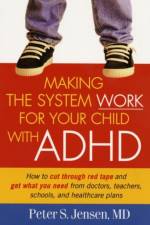
Theres lots of help out there for kids with ADHD, but getting it isnt always easy. Where can you turn when youve mastered the basics and doing everything right isnt enough--the insurer denies your claims, parent-teacher meetings get tense, or those motivating star charts no longer encourage good behavior?Dr. Peter Jensen has spent years generating ways to make the healthcare and education systems work--as the father of a son with ADHD and as a scientific expert and dedicated parent advocate. No one knows more about managing the complexities of the disorder and the daily hurdles it raises. Now Dr. Jensen pools his own experiences with those of over 80 other parents to help you troubleshoot the system without reinventing the wheel. From breaking through bureaucratic bottlenecks at school to advocating for your childs healthcare needs, this straightforward, compassionate guide is exactly the resource youve been looking for.
Now in a fully revised and expanded second edition, this work brings together in one volume the most important current perspectives on personality pathology.
Every day can be an ordeal for families struggling with the difficult, moody, "e;impossible"e; behavior that may point to childhood depression or bipolar disorder. Effective help for kids does exist, but it often requires a customized combination of medication, therapy, coping skills, and support. From esteemed clinician and researcher Dr. Mary Fristad and fellow treatment expert Dr. Jill Goldberg Arnold, this indispensable book explains how treatment works and what additional steps parents can take at home to help children with mood disorders--and the family as a whole--improve the quality of their lives. Explained are why symptoms look so different (and can be so much harder to manage) in children and teens than in adults, how to find the right doctor or therapist, and how to help kids develop their own "e;coping toolkits."e; Bursting with practical tools, FAQs, and examples, the book covers everything from dealing with medical crises to resolving school problems, sibling conflicts, and marital stress.
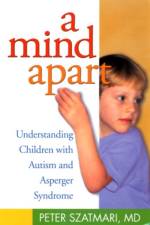
Why would a child refuse to talk about anything but wasp wings-or the color of subway train doors? What does it mean when a nine-year-old asks questions about death hundreds of times a day? And how can parents build a close relationship with a little girl who hates to be touched? In this compassionate book, leading autism authority Dr. Peter Szatmari shows that children with autism spectrum disorders act the way they do because they think in vastly different ways than other people. Dr. Szatmari shares the compelling stories of children he has treated who hear everyday conversation like a foreign language or experience hugs like the clamp of a vise. Understanding this unusual inner world-and appreciating the unique strengths that thinking differently can bestow-will help parents relate to their children more meaningfully, and make the "e;outer world"e; a less scary place.
In this work, Ellen Siegelman presents metaphor as a form of symbolization uniquely suited to bridging the known and unknown, the conscious and unconscious, the personal and universal.
This book demonstrates how the policies and imperatives of business and government influence and are influenced by environment and social change.
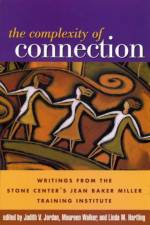
In this important third volume from the Stone Center at Wellesley College, founding scholars and new voices expand and deepen the Center's widely embraced psychological theory of connection as the core of human growth and development.
Now available in paper for the first time, this classic text is about how an analyst analyzes.
This book should be of value to practitioners and students of psychotherapy from a range of orientations including cognitive, dynamic and experiential, and to students and teachers of psychotherapy.
For parents fed up with constant challenges to their authority-but who dread becoming tyrants in their own homes-this book provides a powerful new alternative to "e;because I said so."e; Trusted family therapist and author Michael P. Nichols takes on the number-one problem of parents today with the insight and humor that has made his earlier The Lost Art of Listening an enduring bestseller. Presented is a simple, easy-to-follow, yet remarkably effective way to put an end to arguments by refusing to argue back. Instead, the techniques of responsive listening help parents open up better communication in the family; create an atmosphere of respect and cooperation; and take children's feelings into account-without giving in to their demands. Loads of realistic examples help parents defuse whining and defiance and manage common conflicts with preschoolers to teens.
This book should be value for all those who are interested in enhancing their self-understanding. It should also serve as useful classroom text for undergraduates and advanced students in personality and social psychology, counselling and psychotherapy.
A consideration of maps which evaluates the significance of the signs and myths which are inherent in them, and considers them as subjective depictions of reality rather than unbiased reference objects.
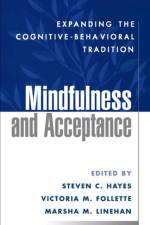
This volume examines a number of rapidly growing therapies that have emerged over the last decade and that share an emphasis on such nontraditional themes as mindfulness, acceptance, relationship, values, and spirituality.
Abonner på vårt nyhetsbrev og få rabatter og inspirasjon til din neste leseopplevelse.
Ved å abonnere godtar du vår personvernerklæring.