

Gjør som tusenvis av andre bokelskere
Abonner på vårt nyhetsbrev og få rabatter og inspirasjon til din neste leseopplevelse.
Ved å abonnere godtar du vår personvernerklæring.Du kan når som helst melde deg av våre nyhetsbrev.

In this extraordinary collection of twenty tales, Richard Ford, a master short-story writer in his own right, has selected his personal favourites, including familiar masterpieces as well as several brilliant lesser-known tales.
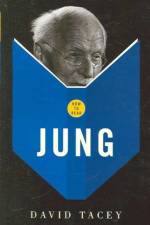
'These [How to Read] books let you encounter thinkers eyeball to eyeball by analysing passages from their work' Terry Eagleton, New Statesman
The gilt-lettered advertisement outside Madame Brulot's 'pension' in the shabby rue d'Armaille promises a 'first-class family boarding house' and 'modern conveniences'. One thing is certain: few emerge from their stay at the Villa des Roses unscathed.
'What Do We Believe?', a new series from Granta Books, introduces different beliefs from across the world in lively, accessible and intelligent short books.
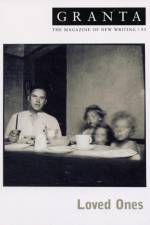
Looks at the nature of love: it can be hard to love the people we should love; sometimes objects of affection are easier. This issue includes an account of a boyhood spent caring for a father with Parkinson's Disease ('Who are you?'), Jeremy Seabrook on the twin brother he hardly knew, and Sean Wilsey on his devotion to bicycles.
'Above all else, Druidry means following a spiritual path rooted in the green Earth' John Michael Greer
Surprisingly funny and refreshingly different from any other writings on the Palestinian-Israeli conflict, Sharon and My Mother in Law describes Suad Amiry's experience of living on the West Bank from the early eighties to the present. Tells about the life and neighbourhood gossip, family history and the struggle to live a normal life.
A new edition of The Granta Book of Reportage featuring distinguished writers and reporters - John Simpson, James Fenton, Martha Gellhorn, Germaine Greer, Ryszard Kapuscinski - this book covers some of the signal events of our time.
'These [How to Read] books let you encounter thinkers eyeball to eyeball by analysing passages from their work' Terry Eagleton, New Statesman
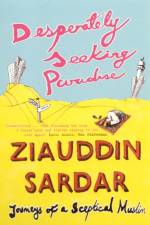
';A curious, often amusing travelogue of [Sardar's] quest for understanding and the Muslims he has encountered along his journeys.'Publishers Weekly Ziauddin Sardar, one of the foremost Muslim intellectuals in Britain, learned the Koran at his mother's knee in Pakistan. As a young student in London he set out to grasp the meaning of his religion, and, hopefully, to find ';paradise,' his quest leading him throughout the Muslim world, from Iran to China to Turkey. Along the way he accepts that he may never reach paradisebut it's the journey that's important. At a time when the view of Islam in the West is so often distorted and simplistic, Desperately Seeking Paradiseself-mocking, frank and passionateis essential reading. ';Intoxicating . . . upon finishing the book, I turned back and started reading it all over again.'Kamila Shamise, New Statesman ';At once and earnest and humorous, light-hearted and profound, this is a book that displays a sustained capacity for self-questioning of a kind that has few parallels in the liberal West.'The Independent ';This challenging book not only acts as a guide for Muslims but provides insight and clarification for those outside the Islamic faith.'Financial Times ';The only funny book I've read about Islam.'Mail on Sunday
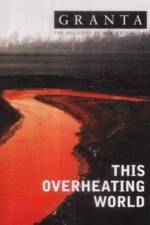
Not so much the state we're in as the mess we're getting into. Reports and stories from the frontiers of climate change and environmental (and human) catastrophe.
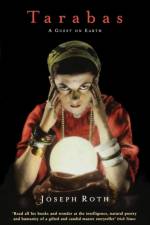
Set in the early days of the Russian Revolution, Tarabas tells the story of Nicholas Tarabas, a young revolutionary ignominously dispatched from St Petersburg to New York by his outraged family.
One of the last artistic expressions of life under communism, this novel captures the atmosphere in Prague between 1983 and 1987, where a dance could be broken up by the secret police, a traffic offence could lead to surveillance and where contraband books were the currency of the underworld.
'These [How to Read] books let you encounter thinkers eyeball to eyeball by analysing passages from their work' Terry Eagleton, New Statesman
In the early 1970s, Ian Frazier left a small town in Ohio to move to a loft in lower Manhattan. This book is his account of the city over thirty years - where every block is an event and where the denizens are larger than life.
'These [How to Read] books let you encounter thinkers eyeball to eyeball by analysing passages from their work' Terry Eagleton, New Statesman
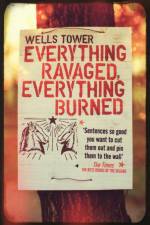
'Wells Tower's stories are written, thrillingly, in authentic American vernacular - violent, funny, bleak and beautiful. You need to read them, now' Michael Chabon
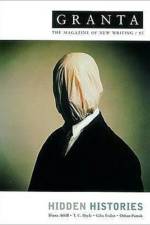
Repressed personal experiences, neglected battles, forgotten civilisations: an issue of Granta that excavates the unfairly buried event, the secret life, the overlooked.
Features articles by: Tim Parks, on the joys of commuting from Verona to Milan every day; Christopher de Bellaigue, on tracking down the Armenians in Turkey; Jeremy Treglown, following in the footsteps of V. S. Pritchett in Spain; Jeremy Seabrook, on being separated from his twin; and, Todd McEwen, on Cary Grant's trousers.
The author of the celebrated and widely-acclaimed The Smoking Diaries, returns to print, with a tender, affecting, and of course funny account of his friendship with Alan Bates, written as he waits in Barbados for Harold Pinter to turn up.
Britain invented the factory - Manchester was the world's first factory city. Where are they now? The anser, mainly, is China. An issue devoted to how and where we made and make things, from strawberries in the fields of Herefordshire to the car plants of Korea.
Country Life: how it is lived, how it has changed, and how the changes are far from over. An issue that ranges from English fox- hunters to the rice-planters of the Ganges delta.
Collection & anthologies of various literacy from John MCGahern on his mother's struggle for health & happiness in Catholic Ireland, Alexander Fuller on bearing a child in Africa, Ryszard Kapuscinski on his memories of the Second World War plus writings from Edmund White, Paul Theroux, Jim Lewis and others.
A celebration of Granta's first quarter century with new writing from the writers who made its reputation, including Martin Amis, Paul Auster, William Boyd, Amit Chaudhul, Richard Ford, James Hamilton-Paterson, Jan Morris, Blake Morrison, Jayne Anne Phillips, Paul Theroux and Edmund White.
Everybody has been a reluctant or willing member of one: the family, the school, the football side, the quiz team. Group photographs are their souvenir. In this issue of "Granta", writers take out their group photographs and evoke the times, places and people they used to know.
Granta magazine's 71st issue, "What We Think of America", was a prescient reflection of the USA's deepening political unpopularity among people outside its own borders. But what do Americans themselves think of their country's new imperialism - and of the world it rules?
Abonner på vårt nyhetsbrev og få rabatter og inspirasjon til din neste leseopplevelse.
Ved å abonnere godtar du vår personvernerklæring.