


















Gjør som tusenvis av andre bokelskere
Abonner på vårt nyhetsbrev og få rabatter og inspirasjon til din neste leseopplevelse.
Ved å abonnere godtar du vår personvernerklæring.Du kan når som helst melde deg av våre nyhetsbrev.

This work investigates the 'Janus face' of international relations, refracted through the prism of the duality of Jan Christian Smuts, as it manifested in his contribution to the League of Nations and his struggle against the emerging peace treaty. A predominant characteristic of international relations is its requirement to face two different ways at the same time - its Janus face. States profess their adherence to lofty ideals for humanity alongside the pursuit of their own immediate self-interest. This phenomenon in the behaviour of states has been referred to as the distance between vision and reality, and the gap between rhetoric and reality. International relations is, and is likely to remain, suspended between these two extremes: on the one hand, the pursuit of utopian ideals for the world, and, on the other, a defence of narrow self-interest, often prompted by the dictates of the realpolitik of the moment. How, then, are the values that underlie the founding of the first cornerstone of the current international order - the League of Nations - to be understood? An under-explored case study in understanding the complex framework of international relations is that of the visionary and controversial South African, Jan Christian Smuts (1870-1950). On the one hand, Smuts was one of the principal authors of the Covenant of the League of Nations, and the person directly responsible for the recognition of human rights as a founding value of the Charter of the United Nations. On the other, the Premier of racially segregated South Africa.
This book critically analyses the basic questions regarding the principle of beneficence within its moral domain, to suggest and work out a more credible form of Principle of Beneficence. The Moral Quest for a More Credible Principle of Beneficence evolves from the common goodness of the three major confronting theories of ethics, i.e., Utilitarianism, Deontology, and Virtue Ethics. After analysing and exploring the common ground of the three views, the aim is to prescribe a more convincing form of the principle of beneficence. The book starts with a brief discussion of the principle of beneficence and then critically analyses previous views related to the principle of beneficence, virtue of benevolence, and their relationship, and proposes a more credible form of the Principle of Beneficence. The Moral Quest for a More Credible Principle of Beneficence aims to provide a significant contribution towards the theory of beneficence.
Muslims, Islams and Occidental Anxietiesdeconstructs our common prejudices about both the compatibility and incompatibility of Muslim and Western civilizations. Rather than reinforcing the well-meant, but misinformed, opinion that the religions all fundamentally teach identical values, we identify what seem different distinctive Muslim "goods." Rather than offering the facile moral choice between an Islam either "all good" or "all bad," we argue the case for pluralism derived from Sir Isaiah Berlin. In many cases, Islam thus represents a distinctive system of alternative ethical and religious "goods" to those valued in the West. In other cases, differences will remain different and unresolved. Far from necessarily threatening Western moral and religious identity, we explore how the alternative "goods" Islam offers the West can enrich our notions of what constitutes "the good," even to the extent of reviving or enlivening certain Western religious practices. Along with instructional guidelines for classroom use, the book in informed by the powerful and intellectually rigorous device of investigative, empathetic "dialogue" or "conversation," as articulated by MIT's Sherry Turkle and Oxford's Theodore Zeldin, respectively. This form of dialogue steers clear of the didactic mode and instead recovers the open models of philosophical dialogues pioneered by Plato, Socrates, and the "tolerant" Renaissance humanists, such as Erasmus and Jean Bodin.
Community Asset Transfer in England evaluates whether Community Asset Transfer (CAT), a mechanism for disposing of public property assets by selling, leasing or giving them to community organisations at less than market value, has any effect in reducing place-based inequalities. CATs are set into the context of both theory and policy. Theoretical frameworks used to analyse the transfers include capability approaches and notions of social capital and social innovation. CATs are also considered in relation to other forms of community-led and asset-based development, as they can be seen as part of a historical continuum of social programmes and initiatives aimed at reducing poverty and regenerating deprived neighbourhoods.
Ethics of Inclusion captures fairness and social justice for all from an ethical perspective in our post-pandemic world. The book discusses inequality in Healthcare, Economics & Finance, Education, Digitalization, and the Environment, in order to envision economics of diversity and a transition to a more inclusive society. A wide-ranging approach addresses issues of inequality in access to innovations such as telemedicine and artificial intelligence, economic gains of robotics, and big data insights. A rising performance gap between the finance sector and the real economy opens in the post-COVID-19 era, with system-inherent inequality, given elevated inflation levels and disparate impacts of low interest rate regimes around the globe. Education offers social transfer hubs and inclusion potential for societal advancement and international development. The transition to a greener economy is addressed in an analysis of the Green New Deal and European Green Deal including the Sustainable Finance Taxonomy. The book sets out a hopeful agenda for equality and social justice to deliver a post-pandemic Renaissance.
The book examines the Law of Adverse Possession in both the UK and Nigeria, and gives a critique of the ways in which it is regarded by both the State and the judicial system in these jurisdictions. Although much has been written about adverse possession from an Anglo-American perspective, the Nigerian aspect of this book is unique and brings an important point of difference when thinking about the right to settle, work and own land in an international arena.This book will be of interest to students of law (especially comparative and property law); to scholars and activists with an interest in land settlement by indigenous and dispossessed peoples; a useful guide for the court in the dispensation of justice; and a pilot for the State in managing property relations.
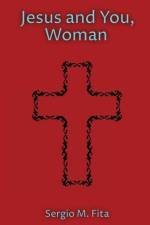
The present work contemplates the encounters of Jesus with the principal feminine figures of the New Testament in accord with the method of prayer proposed by St. Ignatius of Loyola in his Spiritual Exercises and offers material for silent meditation.In this interior journey, the reader is accompanied in a particular way by the philosopher and Discalced Carmelite, Saint Teresa Benedicta of the Cross (Edith Stein), and her insights, experiences and reflections on the mystery of woman.
Memoir by internationally acclaimed Chicago sculptor Margot McMahon.
Nettle Nook, A Year In The Life Of An Allotment, takes readers of all ages on a seasonal journey through the first year of being a plot holder - and the trials and errors of fruit and vegetable growing. Brought to life with observations with the myriad types of wildlife who share our land, using simple poetry and illustrations, this book defines the behaviours of some of our most well-loved and some of the most overlooked yet beneficial species to - either the novice, or most experienced of gardeners."Charlotte enriches Nettle Nook with simple watercolour illustrations which bring her work alive and she creates a thriving, magical and sometimes humourous look into gardening and vegetable growing, which she and her two sons have experienced whilst trying to create their own slice of Eden." - The Joyful Gardener
She's weathered all the storms life sent her way. A man who promised to love and cherish, cheated on her and left her penniless and homeless. Her mother's love came with conditions she had a hard time meeting. She works three jobs to survive, pay her college tuition and take care of her dog.Ivy reckoned she was equipped to face most anything life threw at her, but some things just aren't in your wheelhouse. What happens when she arrives to service a swimming pool in an exclusive community is something she never imagined and is not prepared to handle. Being a witness to the aftermath of a bizarre murder paints a virtual bullseye on her back and sends her on the run with only her dog and what she can carry in a suitcase.Now she has a choice. Trust a complete stranger or take her chances on her own. Were it not for the fact that her dog immediately trusts the hero who comes to her rescue, maybe she'd take her chances. Or not. This fear she feels is overwhelming and she's not sure she'll ever get to the other side of it without help.Could her hero be the answer to that or is she putting her trust in the wrong person? Find out in THE OTHER SIDE OF FEAR.
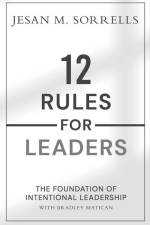
12 Rules for Leaders: The Foundation for Intentional Leadership explores the 12 areas that each leader should know about, as a prescription of encouragement to act intentionally in the face of the churning uncertainty.
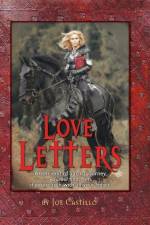
'Love Letters, ' is a medieval tale of a disconsolate young woman, enticed into a harrowing quest by passionate love letters written to her by a Prince she has never met.
Marry your enemy. Dare to survive. Disappear into this scintillating tale of mortal enemies forced into a perilous, passionate marriage. Yesenia Warwick artfully dodges her father's talks of marriage, set on proving she is just as capable as her brothers. Her three loves-kin, homeland, and independence-are all she needs. Corin Quinlanden suffers under the cruel contempt of his ruthless father and brother as they scheme and plot from their castle in the trees. He's given up wishing for happiness. A strategic marriage, far from home, is as high as he dare dream. But the king of this realm has his own plan. Everything the gilded Quinlandens have "earned" was stolen from the Warwicks. So when all the leaders of the realm are summoned to a celebration with the king, both houses approach this fete balancing on a sharp blade's edge. But the king's celebration quickly turns to horror. The lords and ladies can only watch, helpless, as the devious king masterminds a series of marriages between their children, spinning the kingdom into chaos. Brash, fearless Yesenia Warwick is now the unwilling bride of tender-hearted Corin Quinlanden. Neither her silver-tongued wit, nor her unmatched skill with daggers, can erase what has been done. The choice ahead of her is simple, but impossible. Embrace her dangerous new life in the den of her enemy, or send the kingdom to war. __The Book of All Things is a series of standalone fantasy romance tales set in the vibrant, epic world first introduced by USA Today Bestselling Author Sarah M. Cradit in the Kingdom of the White Sea trilogy. The Sylvan and the Sand is the first story in the Southerlands Cycle of The Book of All Things. The Southerlands Cycle: Arranged marriages, enemies to lovers, and salt & sand redemption in the Southern Reach (medium low heat)The Sylvan and the SandThe Flame and the ForsakenAnd more
Britain is divided, and Mara is on the wrong sideMara has built her life in Britain, but now she needs to prove her right to remain. Do the events of her first years in Britain hold the key to whether she will be allowed to stay?
For many parents reading a great book to their children is a chance to take a breath at the end of the day. It is when you realize that simple moments mean the most. Those moments are more important than ever before in our always moving, emotional and competitive world. "The Boy Who Couldn't Stop Running" is a delight for both parent and child. It follows one boy's quest to be the very best on his soccer team. His name is Chas and he comes to learn that too much of anything is not what creates true happiness. His journey of discovery is an inspirational tale and a reminder of finding balance and joy in life.
A young man with no past must progress into a warrior out of legend.Cinder Shade's life begins on a fateful afternoon at the bottom of a well where heawakens, bruised, battered, and bereft of all memory. His only understanding isa driving imperative-to protect those who can't defend themselves and become awarrior worthy of the name.He discovers within himself a peculiar gift, one in which the codes of combat aremade evident and the language of steel is made clear. When he earns a place ata prestigious elven warrior academy, Cinder fights to enhance his knowledge andperhaps even humble the proud elves who believe no human is their equal.His hard-earned skills are put to the test when strange rumblings emanate from deepin the Dagger Mountains. Monsters out of myth emerge. And so does something farworse . . .An ancient god. The world believes this deity long dead, but he is very much alive. And heremembers his enemies all too well. Even if they don't remember themselves.
Laos: mysterious, isolated, backpacker must-see, cultural melting pot, wonder of nature, or immersive experience into Buddhism? Tuk Tuks, Whiteboards and Sticky Rice is an invitation to join a teacher and his family as they seek to live out the life of faith in a beautiful and needy country. What is like to live in a far-away land among people with dramatically different languages, belief systems, and thought processes from your own? What are some ways of integrating teaching, family life, and daily routines with culturally relevant and sensitive witness to the God who offers good news for all people? What are some of the challenges and joys of trying to connect and share life with people from all strands of society? Tuk Tuks, Whiteboards and Sticky Rice is an encouragement for all who wonder how God can partner with ordinary people, everyday routines, and even mistakes to draw people closer to Him. It is for all who long to witness cross-culturally through their vocation, particularly for teachers, but also those concerned with South East Asian people from Buddhist backgrounds.
"Many of these essays appeared originally on my website, Torah Musings"--Volume 2, page 13
Little Turtle [1747-1812] was war chief of the Miami Indians, whose territory stretched from Chicago south to the Ohio River. Although he led native armies to significant victories over American forces, Little Turtle was ultimately convinced that only accommodation and peace would allow for coexistence with the growing American presence. This, the only major biography of Little Turtle, remains today an important contribution to the study of America's westward expansion, as well as the intricate frontier interactions between Americans, British military forces, and native peoples.
Abonner på vårt nyhetsbrev og få rabatter og inspirasjon til din neste leseopplevelse.
Ved å abonnere godtar du vår personvernerklæring.