

Gjør som tusenvis av andre bokelskere
Abonner på vårt nyhetsbrev og få rabatter og inspirasjon til din neste leseopplevelse.
Ved å abonnere godtar du vår personvernerklæring.Du kan når som helst melde deg av våre nyhetsbrev.

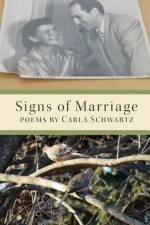
"My favorite is Turntable Park, which may be seen as a contest with nature: wind, rain, waves, with focus on the finish line. The vivid imagery draws the reader into this exploit in this nicely woven poem with no loose threads-a fresh, original creation."-Harris Gardener, poet and poetry editor, Ibbetson Street Press"As far as (Schwartz's) poems go, they are lovely and gut-wrenching in a good way!"-Jessica Frelow, writer and editor, Discretionary Love"I can't seem to get away from the truth of Contemplating Humanity While Swimming. It's such a startling piece of writing, the theme of it. We all have the capacity, I think, to do what we think we'd never do, what others would swear we'd never do. This poem captures that, the heinousness of possibility in being human."-Chila Woychik, writer and editor, Eastern Iowa ReviewOf Stones: "Of course, it's a love poem, but who would ever think of flirting and seducing a woman with stones? The journeys along the path to love and matrimony-from a joke to the heavy emotional boulders hauled by a come-along to the small hand-held face up crystal of a loving face at the end-extraordinary."-Robert Ober, poet
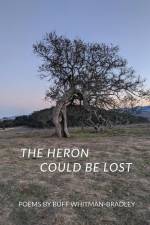
These poems are luminous and generous, making room for newts, crickets, stars, and a boundlessly tender view of the human condition. Each poem is laced with affection for humanity, and has a curious, intimate take on the natural world. They acknowledge the wobbliness, uncertainty, and danger of an unknown future, and they are superb company along the way. Buff Bradley brings a heartening and playful voice to grave matters; his sensibility is steeped in delight.-Julie SearleI have been reading Buff Whitman-Bradley's wonderful poems for many years now and am always grateful for the "sweet moment of pause" they give me to see the world with a fresh gaze. The poems offer not only new perspectives on the ordinary and everyday-a frog seeking a career in show biz, a mushroom praising its existence, a spring day arriving in a delivery truck-they also invite me to listen to and learn from the natural world, to "cultivate quiescence and pay more attention to owls." As a grandfather, I want to share with my grandchildren the encouragement these poems offer for looking more closely at the world around us; and I welcome the time spent with oatmeal cookies, crickets and stars, wayfaring ladybugs, and friendly porch lights from distant galaxies.-Rod Anderson
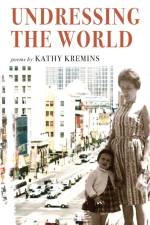
Even though the penultimate poem swears that it's not about Newark, Parents, Religion, or Longing, each poem in this collection gets to the heart of one child's experience of the profound and lasting impact of Vatican II and Vietnam, of the Civil Rights Movement in the U.S. and in Ireland. With evocative detail Kremins revisits the clashing of national and international politics with family values, joys, and traumas. Undressing the World removes layers of convention and silence to reveal a child who is both living innocently with her heroes "in a Technicolor imagination" and also living with the hard earned wisdom that even "Casper couldn't rescue my eyes." These poems are full of the hands that do the undressing: hands praying, hands working, hands caressing, hands harming: "Those hands, eighty seven years of history imprinted on callused / fingertips and broad palms..." In this collection, rich in poetic form and specific cultural and historical images, Kremins takes our hands and invites us to explore identity and loss and the body and tragedy, war and peace, and love and hope in all their variations.-Lynne McEniry, author of some other wet landscapeWhen was the last time you heard a good love song? Kat Kremins' Undressing the World is full of them, tough and tender lyrics about the hard truths of personal and collective histories: a childhood whose "Technicolor imagination" is "interrupted or canceled" by the Kennedy assassination, "the blood taste of Vietnam," the struggle for Civil Rights, a world undressed in a working class Irish immigrant Newark where a "dark green Oldsmobile" won in a church raffle is "a sign of wealth we didn't have." Kremins is a bard of the body as both "myth [and] narrative we are given as children" and "Republic," and reminds us that history is not a dead abstraction but a constant living presence urging us to attain the kind of love that "needs no words."-PaulA Neves, author of capricornucopia (the dream of the goats), winner of the 2020 NJ Poets Prize, co-founder Parkway North Productions.Undressing the World by Kathy Kremins is awe, experience, love, grief, joy, acceptance, and memory in one exhale. With the backdrop of a Newark, NJ in historical transition, Kremins' poems are technicolor hymns and elegies collectively displaying an ode to a life lived, living, and still learning where Undressing the World is not only the unpacking and reckoning of memory, but is a created space for the speaker to see "my face/ The map it is, lines of/ Every touch, tenderness."-Dimitri Reyes, author of Every First & Fifteenth
The Truth About the Sun is a collection of poems that meditate on human history, ancient myths, classic and contemporary art and literature, and the transformative power of dreams to reimagine the world and create new realities.
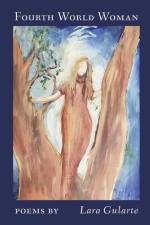
Gularte's identification with herself through the natural world and through the lives of others with whom she feels more than just symbolic empathy, provides us with something unique to the usual landscape that poetry's created in our late 20th and early 21st century: passion. Engaged to the particular, Gularte brings us closer to a world we all rarely have time to visit and she accomplishes this not with elaborate description or pretention of any kind, but with an immediacy that reveals something heretofore unseen or unheard. You don't stand still in these poems nor does their steady pace hurry you in any way. Each word matters and, without getting in their way, they allow us the opportunity to experience what we never knew was there.-Paul B. Roth, The Bitter Oleander PressPlant, wildlife and human converge into one unified voice of nature and spirituality in Lara Gularte's Fourth World Woman. The poet easily travels between dimensions and species, as ancestors drift through the pages. She manages to write from several layers at once, combing the depths of imagination while describing sensitive emotions involved in a mastectomy. "She waits for the test to come back negative/while death leans into the side of the house.... Her face at the open pane, half here and half there-/where her mother ghosts among the trees". Readers will find themselves entranced and unable to resist following Gularte to glimpse heaven and the afterlife when, the moon throws a rope down for her to climb.-Patty Dickson Pieczka, Beyond the Moon's White ClawLara Gularte's Fourth World Woman is both a wild read and a surrealistic delight. Inhabited by creatures from the natural and geophysical worlds-doves, a giant fish shape, wolves, even the moon and clouds-the poems surprise with some deft shape-shifting: a dead dove comes alive, a "brown bear bellows/from the voice of an old woman," and clouds are transformed into "a sky of old shoes." But there's a purpose to the flash and sleight of hand. Whether the startling poetic landscape is navigated by an unnamed "she" or by a first-person narrator, Gularte takes on issues like border crossings, family separation, the pandemic, the 2018 Camp Fire in California, and, ultimately, mortality. As she writes in "Leaves," "the distance between now/and my future shortens . . ." The most personal poems in this collection-"The Close Sky," "Transcending My Daylight Body," and "Beauty"-are probably the strongest. You will be deeply moved by this book.-Nancy Vieira Couto, Carlisle & the Common Accident
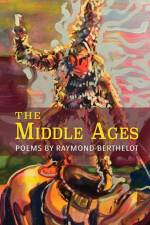
The Middle Ages is a work of poetry that stares directly into the eyes of an unknown future, realizing youth and all that the word entails, is far behind. Written from the perspective of a South Louisiana native, with roots in Honduras and the Caribbean islands, The Middle Ages is lush with nature, particularly alive with birds, yet grounded in the reality of everyday experiences. Rich with culture and grit, this work is a must read for all who are on the border betwixt one and the other.
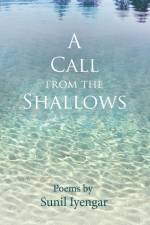
"How with this rage shall beauty hold a plea," Shakespeare writes, "Whose action is no stronger than a flower?" Sunil Iyengar answers the question in this dazzling debut collection with poems of poise, wit, and depth of thought. One seldom reads poetry with such a balanced, almost Augustan, sense of the poetic line and rightness of rhyme. A Call from the Shallows is a pleasure from beginning to end.-Richard TillinghastThe poems in Sunil Iyengar's A Call from the Shallows-classical motifs fixed in contemporary language-display an elegance rarely encountered in an era of professionalized, informal verse, as when his "roses in bloom, astonished at their own / brevity, throng the lip of the tall glass." Iyengar's formidable erudition and shrewd meditations come to life in each carefully constructed line. Even such reassuring comforts as a family home are thrown open, as when "a For Sale sign / sheltered against a fallen pine," announces an "old Colonial free / of any claims to privacy." Iyengar questions all we take for granted, permitting the reader a new way of understanding a confusing, yet, to Iyengar, still promising world, "so that we might transmit pity / instead of loss, defeat, or shame."-Ernest Hilbert, author of Last One Out
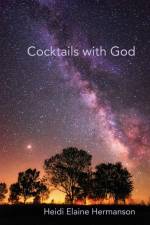
Hermanson takes readers on the open road, where the lusty movements of the world turn to uninhibited conversations with herself, her father, Buddha, a truck driver, and God. She writes with fierce awareness in a language the mystifies the small and familiar and is loaded with philosophical insights. Her poems breathe, stand ready, listening and absent of ego.-Amy Plettner, author of Undoing Orion's Belt and Points of EntryHeidi Hermanson is an itinerant, forever on the road. We are the hitchhikers she has picked up, and our fellow travelers are Grace (and grace) and the Buddha. Hermanson tells us, "There // must be something / beautiful waiting for me / down that dusty road" ("The Road"). And so there is. Hermanson says, "It is in the small things / we see it" ("Too Full"), and her book is a loving, careful recreation of such small wonders. What Hermanson says of a butterfly in "While the Sink Fills" might be said of each of them: "I transcribe your words / on my wings." And just like that, we have left the road and are in flight. There is no better flying companion than Heidi Hermanson.-Clif Mason, author of Knocking the Stars Senseless and The Book of Night & Waking All the characteristics I have always admired in Hermanson's work are writ large here-An exacting/fearless attention to the most subtle emotional rumblings, a deep love for the unheralded corners of life, a relationship to place that is as thorough as an old marriage, as sparky as new love. At times her poems feel like conversations had driving a country road at dusk, elsewhere, like the overheard pains and delights of a deeply interior life. Further, when she writes, "I am as sleepy as America, / eyes half-shut with her hair pinned back," she shows an ease and deftness with the best of broad ideas.-Rebecca Rotert, author of Last Night at the Blue Angel and All The Animals We Ever Were
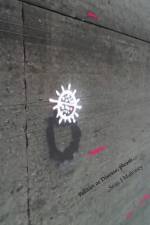
This is a stunning collection, technically proficient, verbally acute, outlining a vision that links the disability of the body with the disability of the nation and the nation's politics. This is not, however, a dour book; there is music and energy, beauty of metaphor and composition, the ha-ha's of black humor, the brute bite of wit. It is a book of intense, energetic questioning, of wonderings, and of compassion. It is a book of poems that by a poet who knows his voice, and knows how thin is the line between truth and untruth, ignorance and inattention. I believe that this is a book forged in love, seeking, for all of us, the good route between all the calamities that will lead finally to the place of our better selves.-Bob Herz, Editor, Nine Mile Magazine"The tongue does its best work untethered from polite conversation." So says poet Sean Mahoney in Politics or Disease, please... and from first poem to last Mahoney tackles issues of politics, disability and disability poetics. Viewed through the lens of a daily life with MS, the poems in this book advocate ardently for disability rights while not yielding to the pressure to couch their language in pre-approved parlance, making them an important contributor to the conversation.-Mike Northen, Editor, Beauty is a Verb: The New Poetry of Disability"The tongue does its best work," Sean Mahoney writes, " when untethered from polite conversation." In these poems, the lost public promise of a benevolent nation is intertwined with the lost personal promise of an individual human body, and this collection urgently calls for a new way of speaking about disability and disease-as both personal and national conditions. Mahoney speaks of the "opacity of the familiar" and his poems often turn familiar tropes inside out, twisting and tweaking them until we hear the language in a new way-until we see what the old language has been hiding. It's a powerful book, stunningly grounded in physicality and fact-the details of contemporary life-and filled with intense questioning, heart-piercing humor, and an unflinching voice. It will change you.-Corrinne Clegg Hales, Author of To Make it RightIn Politics or Disease, please...the reader is given the privilege of watching Mahoney work. Mahoney does the rare thing of commenting on his own writing. His book is an exploration of form, beauty, disability, and inclusion. It is an important book by a wonderful, emerging poet.-Jennifer Bartlett, Author of (a) lullaby without any music, and co-founder of Zoeglossia.org.
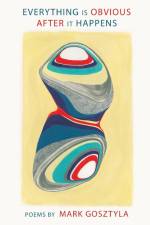
These poems are like those tiny fireworks wrapped in white paper: tiny, unassuming bundles that explode if you snap them between your fingers. Here, Gosztyla has mastered a syntax of magical compression-of contortion, too. As he bends language in ways that delight and unsettle, the laws of gravity become so surreal, you can almost drink the sky.-MRB ChelkoMark Gosztyla is the zeitgeist collagist you didn't know you needed. Here, at every turn, without contrivance or sentiment, he deftly lays bare our sparkling ennui and our oversaturated collective psyche: "pop lyrics and error messages" and "a verbal altercation over who's more vegetarian." These are salty, irreverent, often laugh-out-loud prose poems I want to live with in all the rooms of my daily life. So, I guarantee, will you.-Debora KuanTrying to set the record straight, that's the feel of things here. Trying to catch up, so you can get ahead. Trying to suss it out. Now! The life you came to lead, or the life that comes to lead you? It's all here, in these brilliant, funny, stinging, sad, shrewd, totally alive and kicking poems. This short book more full of magical transformations than a psilocybin mushroom. This book written by a saint, not an angel: Mark Gosztyla, the American great-grandson of Max Jacob.-David Rivard
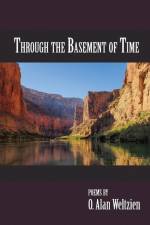
Through the Basement of Time meditates upon the intersection of human and geologic stories on the Colorado River in the Grand Canyon. This poetry chapbook distills the experience of a group of (mostly) strangers becoming more than fast friends across two weeks rafting down the river and through pre-Cambrian rock 2,000,000,000 years old. The poems capture images and moments on rapids or in side slot canyons or at campsites, the contrast of high dry heat with the cold Colorado River, as well as ways in which adults shed skins and turn playful, childlike and intimate.
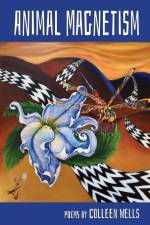
Animal Magnetism, by Colleen Wells is a think piece on the natural world and our place in it. Are we masters of the planet? Abusers? Supplicants? Prey? In this collection of thoughtful poems, the author gives voice to her deeply personal and highly relatable musings regarding our precious, limited time on earth and our connection to all living things. She lovingly describes the graceful drape of a bee's wing, the warm muzzle of a beloved dog, and then careens to a gruesome raccoon death that cannot be unseen. This achingly observant author takes her readers on a tour through the beautiful and sometimes brutal world as a metaphor for the unique, delicate, and enigmatic human psyche.-Dorothy Sabean, Author, Seventh of Eleven: An Illustrated MemoirColleen Wells's Animal Magnetism is raw emotion begging the reader to take a journey as perhaps only those with hurt can do. Through these sometimes gut-wrenching poems, one can see that the author feels so deeply what others brush off, to the point where the reader is not sure whether she is talking about herself, or the bee in the attic. The reader wants to pull the writer back from the edge at one point she talks about sitting in her back porch waiting for happy, but happy didn't come. Colleen has a way of reminding us all that we are in a vast world, that we all play a part. All small. Here, yet not. There are poetry books, and then there is Animal Magnetism. If there was any confusion as to what matters before reading this gem, there won't be when you are finished. To the last word it holds you and stays with you long after.-Sherry McCaulley Palmer, author of Life with CharleyIf there's a place deeper than the bottom of one's heart, then that's where these poems come from. Colleen's work explores the myriad of ways we've broken the compact with our fellow life forms, domestic and wild. Humor and the potential for redemption help leaven the pain, and throughout, Colleen demonstrates she cares deeply about the things many of us only briefly consider. These poems are an invitation to stop, pause and ponder the unfathomable beauty of the world in which we live, and appreciate all the creatures-great, small and everything in between.-Jim Poyser, Author, The Last Actor and Other Stories
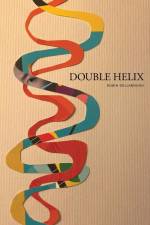
Double Helix is in three parts: the end of a thirty-year marriage; a son, who has struggled with substance abuse for more than twenty years; and discovering that the man who raised me was not my biological father and how that affected my thoughts and feelings toward the mother and father who raised me. Both fathers and my mother had died, so I wrote these poems as a way to make sense of a mystery.
I marvel at how involved these poems are with the world at large-very little 'navel gazing' here. I'm always looking for lines in poems that leave me with freshness. Here are a few from Milton Jordan's collection: 'neighbors who kept our twisted systems turning;' 'late morning shadows lying like leaves;' 'the language of dirt;' 'A Grammar of Good Trouble.'-Margie McCreless Roe, Author of the collection Call and ResponseThrough poetic conciseness and robust imagery, Milton Jordan responds to a year of pandemic and political upheaval, offering perspective and hope when both are needed.-Chip Dameron, Author of Mornings with Dobie's GhostDuring most of 2020 and into 2021 citizens of Texas and the United States faced the ravages of Covid 19. As this intriguing set of poems makes clear, official responses have too often been selfish or of little merit. Fortunately, people are resilient and will overcome ravages of disease and official dysfunction. One way for us to "revise our despair" is to read and consider this collection of poems by Milton Jordan.-Bruce Glasrud, Professor of History, Emeritus, California State University, East Bay
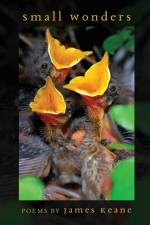
With brevity and musicality, the poems in Small Wonders make peace with the world. I recommend reading them through once and then rereading them often, as they act as a form of meditation. James Keane expresses his vulnerability and love in poems dedicated to his wife and son and also to inhabitants of the larger world, the victims of terrorist attacks, and to George Floyd. About a grandfather's company, he writes: "we managed our way / together down the long, slow streets / of your frailty. Then gradually, very / gradually, back the way we came." In other poems, he deftly observes the tension of a couple hiking to a waterfall: "we groped // until there was / nothing / to say, nothing / to do, but // listen / to the water." At seeing a child's coffin, he asks of the grieving mother: "Did you ever / know laughter, the respite / it can bring; smile with patience / at children, or anyone / imploring you to / sing." He ends the collection with a prayer for understanding, "through / all the beautiful shades / of our humanity / and the passion / we all share / for living." There is a reverence to these poems that presents them as "small wonders," but they resonate in very ample ways.-Ellen Foos, author of The Remaining IngredientsLike James Keane's powerful and touching debut collection, What Comes Next, his new volume, Small Wonders, upholds language's power to move intensely and capture experience precisely. Deeply grounded in the everyday, these engaging and resonant poems reveal the connections between the world and the other-worldly with precision and heart. In "When I Was Very, Very Young," a patient grandfather manages to keep up with a babbling, bouncing child who observes, many years later, that never once / did you disrupt the joy / propelling me. Pieces I admire particularly, "Thank You for Being My Son," "Facebook Photo" and "A Woman's Face," are exquisite examples of Jim's recurring themes of gratitude and the capacity to love, and show us how reverence and humor can grow from a common source. The book you hold in your hands contains, in abundance, the surprising and often uplifting words of a passionate and insightful storyteller.-Catherine Doty, author of Wonderama and Momentum
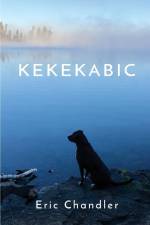
For a whole year, Eric Chandler wrote a poem after every cross-country ski, run, hike, and paddle. Chandler logged his observations both at home in Duluth, Minnesota and while traveling as an airline pilot. A few months into this project, he wrote a haibun (with its combination of prose and haiku) and stuck with that form for the rest of the year. He took one of the most adventurous, solo backpacking trips of his life that year: he and his dog Leo hiked for five days through the Boundary Waters Canoe Area Wilderness of Minnesota. They followed the Kekekabic Trail, inspiring the book's title. This unique poetry collection will inspire you to pay closer attention during your outdoor adventures whether close to home or far away.
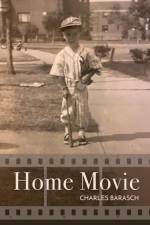
Home Movie by Charles Barasch contains a retrospective of his writing from the past 50 years,encompassing a wide range of subjects, including family relationships, baseball, nature, life in Vermont, and living with Parkinson's. The poems are accessible, inventive, and surprising, resonating with humanity and humor.
Abonner på vårt nyhetsbrev og få rabatter og inspirasjon til din neste leseopplevelse.
Ved å abonnere godtar du vår personvernerklæring.