![What I Know [How to Do] af Michael Garrigan](https://cdnbackdoor.tales.as/thumbnail/150x225/products/00191/83282/what-i-know-how-to-do.jpg)


Gjør som tusenvis av andre bokelskere
Abonner på vårt nyhetsbrev og få rabatter og inspirasjon til din neste leseopplevelse.
Ved å abonnere godtar du vår personvernerklæring.Du kan når som helst melde deg av våre nyhetsbrev.

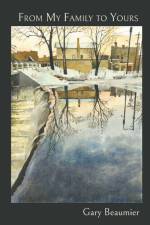
Gary Beaumier's From My Family to Yours mixes the individual human experience with universal themes and striking imagery, smoothly juxtaposing the personal and the historical. Reality lives side by side with with the magical in many of these poems--a harmonious coexistence for the most part, but sometimes a shock to the characters or the readers who are both asked to question whether the surreal might not be the truer reality after all.
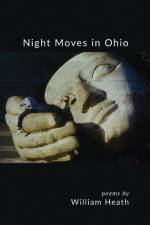
When William Heath began writing poetry in the 1960s, James Wright hailed him as "one of the most brilliantly accomplished and gifted young poets to appear in the United States in quite some time." Now after an award-winning career as a novelist, historian, and literary critic, he has returned to his first love. Night Moves in Ohio vividly captures his memories of growing up in Poland, Ohio, a suburb of mobbed-up Youngstown, the city at the heart of the thriving Steel Valley but notorious as Little Chicago for its numerous gang-land bombings ("Youngstown tune-ups"). Heath's poems, by turns raunchy and poignant, evoke via his unblinking eye, ironic asides, and acute ear for the American idiom, the dangers and delights of a by-gone era.
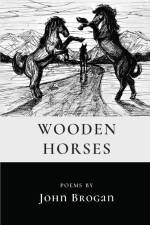
Wooden Horses is about the juxtaposition of family and work, love and society. Brogan's words highlight different aspects of everyday life and focuses on becoming a father for the first time. Brogan highlights these balances with at times naive, poetic forms that ring with subtle, yet relatable detail. We all must navigate the sometimes complicated waters of relationships and family, but where there is struggle, there is truth. Brogan's words will haunt the reader with familiar ghosts and inspire a fresh understanding.
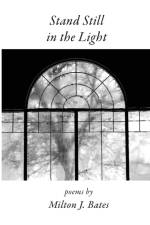
Milton J. Bates's poetry collection Stand Still in the Light opens with an evocation of place, capturing the people, animals, and rugged landscapes of Michigan's Upper Peninsula. Other sections of the book delve into the author's past, in particular his experiences as a soldier in Vietnam. The war poems were chosen as the runner-up for the Peter Meinke Prize when published separately in 2018.
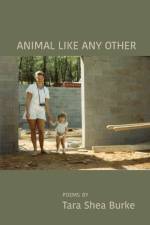
Animal Like Any Other is about love and loss, queer longing, and a rural Virginia upbringing that housed strange, yet loving familial relationships. These poems cross boundaries between prose and poetry, the narrative and lyric, truth and story, and sing a hungry body back to life after heartbreak. Awards include runner-up in Split This Rock's Poems of Provocation and Witness and publication in Reading Queer: Poetry in a Time of Chaos, an anthology from Anhinga Press.
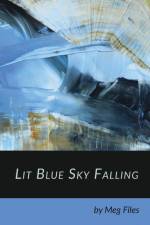
From the Galapagos Islands to Iceland to a retirement village barber shop, these poems mingle natural history, memory, and reflections on mortality. They conjure blue-footed boobies, wildfire, coral-adorned underwater sculpture, a post-election Fourth of July, the aurora borealis. They explore life with twin sisters, the enduring presence of the dead, the way wars cascade through lives, the making and meaning of art, and earthly love.
The Scenery of Saviors considers the savior in all of us as we do, every day, what we can for others, ourselves, and the common good.
Beginning in Pompeii, Nothing Remembers visits the US Midwest and Jerusalem, where Michael Dickel (the author) now lives. The musical contemporary and at times jazzy experimental poetry re-members loss, relationship, and human connections with the world, while at the same time questioning the fallibility of memory and failure of poetry in undertaking such an endeavor. The poems engage geography and geology in the world(s) they inhabit. Ghosts people these places as palimpsests, while the poetry ranges through Kabbalah, philosophy, physics, and psychology. These poems dive deeper than confession or angst and avoid autobiography. Instead, they engage the heart, body, mind, and soul of the reader in their rich and often surrealistic imagery. They observe the full range of reality while reaching for acceptance, but do not despair. In the end, the poems suggest hope for human relationships and communication. There is, here, a deep love of the world below the surface
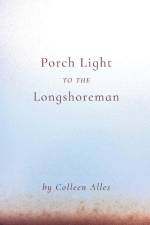
In a series of brave little poems, "Porch Light to the Longshoreman" brings to life what it means to be out in the world, having adventure, but being ultimately called back by the porch light of one's own home. The emotional interior of life in the Midwest is central to this collection. Some poems, like "Reeds Lake" highlight specific areas in West Michigan. Others speak to the challenges of having young children, or needy dogs to walk. All in all, this collection speaks to the every day as much as it speaks to the broad, collective scope of what it means to have life, love, and family.
The poems of Straight Jacket gather bravely at the intersection between LGBTQ identity and the politics of illness, and speak to the consequences of homophobia and social injustice. The book takes readers into the horrors of being committed into a mental hospital and does fierce linguistic battle with stigma, offering witness to failures within the mental health system and demonstrating expressions of the indomitable spirit's restlessness in times of helplessness and adversity. The collection chronicles in a personal way the oppressive experiences of dehumanization and institutionalization.
Abonner på vårt nyhetsbrev og få rabatter og inspirasjon til din neste leseopplevelse.
Ved å abonnere godtar du vår personvernerklæring.