


Gjør som tusenvis av andre bokelskere
Abonner på vårt nyhetsbrev og få rabatter og inspirasjon til din neste leseopplevelse.
Ved å abonnere godtar du vår personvernerklæring.Du kan når som helst melde deg av våre nyhetsbrev.

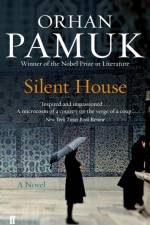
In an old mansion in Cennethisar, a former fishing village near Istanbul, an old widow Fatma awaits the annual summer visit of her grandchildren. She has lived in the village for decades, ever since her husband, an idealistic young doctor, first arrived to serve the poor fishermen. Now mostly bedridden, she is attended by her faithful servant Recep, a dwarf and the doctor's illegitimate son. Under the creeping shadow of right-wing nationalism and political revolution, they share memories, and grievances, of the early years, before their home became a high-class resort.Her visiting grandchildren are Faruk, a dissipated failed historian; his sensitive leftist sister, Nilgun, has yet to discover the real-life consequences of highminded politics; and Metin, a high school student drawn to the fast life of the nouveaux riches, who dreams of going to America. But it is Recep's nephew Hassan, a high-school dropout, lately fallen in with right-wing nationalism, who will draw this family into the revolution and the growing political cataclysm issuing from Turkey's tumultuous century-long struggle for modernity. By turns deeply moving, hilarious, and terrifying, Silent House pulses with the energy of a great writer's early work even as it offers beguiling evidence of the mature genius for which Orhan Pamuk, winner of the Nobel Prize in 2006, would later be world renowned.
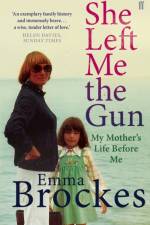
When Emma Brockes was ten years old, her mother said 'One day I will tell you the story of my life and you will be amazed.' Growing up in a tranquil English village, Emma knew very little of her mother's life before her. She knew Paula had grown up in South Africa and had seven siblings. She had been told stories about deadly snakes and hailstones the size of golf balls. There was mention, once, of a trial. But most of the past was a mystery. When her mother dies of cancer, Emma - by then a successful journalist at the Guardian - is free to investigate the untold story. Her search begins in the Colindale library but then takes her to South Africa, to the extended family she has never met and their accounts of a childhood so different to her own.She encounters versions of the life her mother chose to leave behind - and realises what a gift her mother gave her.Part investigation, part travelogue, part elegy, She Left Me the Gun is a gripping, funny and clear-eyed account of a writer's search for her mother's story.
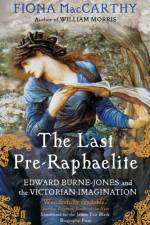
Winner of the James Tait Black Memorial Prize, this is the biography of celebrated nineteenth-century artist Edward Burne-Jones, who - with William Morris - connects Victorian and modern art.'A triumph of biographical art.' Independent'Magnificent.' Guardian 'Rarely are biographies both as authoritative and engaging as this.' Literary ReviewThe angels on our Christmas cards, the stained glass in our churches, the great paintings in our galleries - Edward Burne-Jones's work is all around us. The most admired British artist of his generation, he was a leading figure with Oscar Wilde in the aesthetic movement of the 1880s, inventing what became an iconic 'Burne-Jones look'. Widely recognised as the bridge between Victorian and modern art, he influenced not just his immediate circle but European artists such as Klimt and Picasso.In this gripping book, award-winning biographer Fiona MacCarthy dramatically re-evaluates his art and life - his battle against vicious public hostility, the romantic susceptibility to female beauty that would inspire his work but ruin his marriage, his ill health and depressive sensibility, and the devastating rift with his great friend and collaborator, William Morris, when their views on art and politics diverged. Blending new research with a fresh historical perspective, The Last Pre-Raphaelite tells the extraordinary story of Burne-Jones: a radical artist, landmark of Victorian society - and peculiarly captivating man.
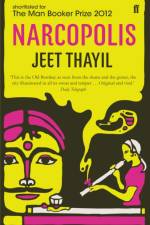
Wait now, light me up so we do this right, yes, hold me steady to the lamp, hold it, hold, good, a slow pull to start with, to draw the smoke low into the lungs, yes, oh my...Shuklaji Street, in Old Bombay. In Rashid's opium room the air is thick with voices and ghosts: Hindu, Muslim, Christian. A young woman holds a long-stemmed pipe over a flame, her hair falling across her eyes. Men sprawl and mutter in the gloom. Here, they say you introduce only your worst enemy to opium. There is an underworld whisper of a new terror: the Pathar Maar, the stone killer, whose victims are the nameless, invisible poor. In the broken city, there are too many to count. Stretching across three decades, with an interlude in Mao's China, it portrays a city in collision with itself. With a cast of pimps, pushers, poets, gangsters and eunuchs, it is a journey into a sprawling underworld written in electric and utterly original prose.
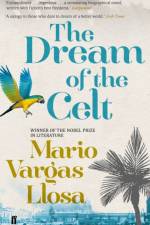
The Dream of the Celt explores the life of the Irish revolutionary Sir Roger Casement who was executed for treason after his involvement in the 1916 Easter Rising, travelling with its protagonist from Liverpool and Dublin to the Congo and Peru, where Casement worked as a British consul, and to London, where he ended his life in Pentonville jail.With its preoccupation with political issues and its international scope The Dream of the Celt sits firmly in the tradition of the greatest of Vargas Llosa's work.
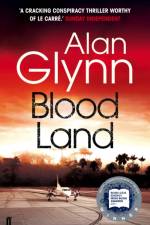
A private security contractor loses it in the Congo, with deadly consequences, while in Ireland the ex-prime minister struggles to write his memoir. A tabloid star is killed in a helicopter crash and three years later a young journalist is warned off the story. As a news story breaks in Paris, a US senator prepares his campaign to run for office.What links these things and who controls what we know?With echoes of John Le Carre, 24 and James Ellroy, Alan Glynn has written another crime novel of and for our times - a ferocious thriller that moves from Dublin to New York via West Africa, and thrillingly explores the legacy of corruption in big business, the West's fear of China, the fate of ex-military, the role of back room political players, and the quick fix of online news.
'A splendid tale of human ingenuity in the service of taste, sedulously researched and told with great flair.' Loyd Grossman Sunday TimesAuthor of such cookery classics as Italian Food and French Provincial Cooking, Elizabeth David (1913-1992) found that the literature of cookery, as well as the practical side, was of absorbing interest, and she studied it throughout her life. Spices, Salt and Aromatics in the English Kitchen was published in 1970, followed by English Bread and Yeast Cookery, for which she won the Glenfiddich Writer of the Year award, in 1977. At the time of her death in 1992 she was working on this equally epic study of the use of ice, the ice-trade and the early days of refrigeration, which was published posthumously in 1994 as Harvest of the Cold Months.'An awe-inspiring feat of detective scholarship, the literally marvellous story of how human beings came to ingest lumps of flavoured frozen matter for pleasure ... There is much, much more - about the making and breaking of reputations, the founding of Parisian caf, culture, the great and rivalrous confectioners of eighteenth- and nineteenth-century London, about Russian ice-cream (surprisingly superior) and Persian sherbets ... sumptuous.' Independent on Sunday'This survey of the use of ice in cookery takes us on a fascinating journey from 1581, where in Florence they put snow in the wine glasses, to that modern phenomenon, the growth of the ice-cream business. A scholarly social history, which makes a fitting finale to the work of the greatest of our writers on foods and its contexts.' Harpers & Queen
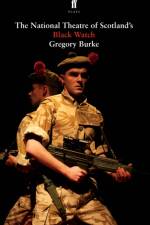
Viewed through the eyes of those on the ground, Black Watch reveals what it means to be part of the legendary Scottish regiment, what it means to be part of the war on terror and what it means to make the journey home again.This book contains Gregory Burke's award-winning text, with production notes by the director John Tiffany and colour photographs that capture the powerful and inventive use of movement in this visceral, complex and urgent piece of theatre.The National Theatre of Scotland's production of Black Watch opened at the Edinburgh Festival Fringe in 2006 where it won a Herald Angel, a Scotsman Fringe First, a Best Theatre Writing Award from The List, a Stage Award for Best Ensemble, the Critics' Circle Award and the South Bank Show Award for Theatre. In 2007 it began a world tour in Scotland. "e;Completely brilliant."e; Daily Telegraph "e;Black Watch is a glorious piece of theatre, raw, truthful, uncomfortable, political, funny, moving, graceful and dynamic."e; Scotland on Sunday"e;A brilliantly realised piece."e; Evening Standard "e;A magnificent piece of social and political theatre. A high point not just of the festival but of the theatrical year"e; Observer
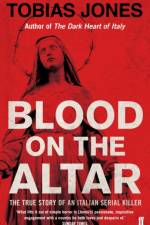
One Sunday morning in 1993 a 16-year-old girl named Eliza Claps goes missing from a church in the centre of Potenza, Italy. Shortly before her disappearance, Elisa had met Danilo Restivo, a strange local boy with a fetish for cutting women's hair on the back of buses. Elisa's family are convinced that Resitvo is responsible for their daughter's disappearance, but he is protected by local big-wigs: by his Sicilian father, by a doctor with links to organised crime, by a priest who had vices of his own. Years went by and Elisa's family could find only false leads.2002, and Restivo is now living in Bournemouth. In November that year, his neighbour is found murdered, with strands of her own hair in her hands. Once again the police are at a loss to pin anything on him. It's not until 2010, when Elisa's decomposed body is found in the church where she went missing, that the two cases are linked and Restivo is finally dealt with. Blood on the Altar combines a gripping true crime case with Jones's deep understanding of Italian culture - the impunity it offers to the powerful - he so expertly demonstrated in his bestseller: The Dark Heart of Italy.
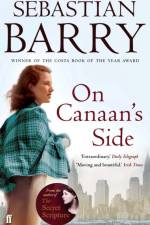
'As they used to say in Ireland, the devil only comes into good things.'Narrated by Lilly Bere, On Canaan's Side opens as she mourns the loss of her grandson, Bill. The story then goes back to the moment she was forced to flee Sligo, at the end of the First World War, and follows her life through into the new world of America, a world filled with both hope and danger. At once epic and intimate, Lilly's narrative unfurls as she tries to make sense of the sorrows and troubles of her life and of the people whose lives she has touched. Spanning nearly seven decades, it is a novel of memory, war, family-ties and love, which once again displays Sebastian Barry's exquisite prose and gift for storytelling.
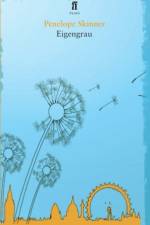
Eigengrau / [ay-gen-gr-ow ] - noun. intrinsic light; the colour seen by the eye in perfect darkness Rose believes in true love and leprechauns. Her flatmate Cassie is engaged in a fervent struggle against patriarchal oppression. Across London, Mark believes in the power of marketing. His flatmate Tim Muffin is engaged in a fervent struggle against his own waistline. In a city where Gumtree can feel like your closest friend, looking for the right person can lead you all the wrong places.Penelope Skinner's Eigengrau premiered at the Bush Theatre, London, in March 2010 in a Strawberry Vale production.
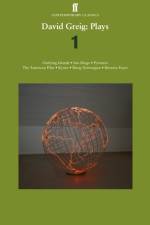
David Greig: Plays 1 brings together four key plays by the playwright described by the Daily Telegraph as 'one of the most interesting and adventurous British dramatists of his generation'. In Outlying Island two young Cambridge ornithologists are sent to a remote island. Together with its authoritarian leaseholder and his niece they observe an innocence that is about to be destroyed forever. San Diego offers a strange and occasionally nightmarish journey into the heart of the contemporary American dream, weaving together stories of illegal immigrants, of film stars and whores, and even of the playwright himself. Pyrenees follows a man found lying in the snow in the foothills as he tries to piece together his identity. In The American Pilot a crash-landing in a remote valley in a distant country raises questions about how the world sees America and how America sees the world. The collection also includes a trilogy of short plays, Being Norwegian, Kyoto and Brewers Fayre, published here for the first time. Outlying Island 'I can't recommend it highly enough . . . A rich, charged play, veering between the comic and the poetic as innocence gives way to experience.' Telegraph San Diego 'A surreal and intriguing piece of theatre . . . dazzling . . . Home and awake from the mythical dream that is San Diego, the name David Greig remains imprinted on our minds.' Independent Pyrenees 'All the wit and intelligence of previous works, probing away at concerns that are both contemporary and timeless...A classy, rewarding, engaging drama, Greig's best to date.' The TimesThe American Pilot 'One of the most intellectually stimulating dramatists around. A richly provocative new play.' Guardian
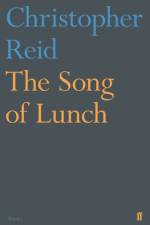
Lunch in Soho with a former lover - but Zanzotti's is under new management, and as the wine takes effect fond memories give way to something closer to the bone. A mock-elegy for the heady joys of old-time Soho, The Song of Lunch displays the full range of Christopher Reid's wit, craft and human sympathy.
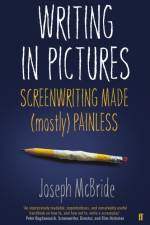
Unlike most how-to books on screenwriting, Writing in Pictures is highly practical, offering a realistic guide to the screenwriting profession, as well as concrete practical guidance in the steps professional writers take to write a screenplay that comes from the heart instead of the pocketbook. The readeris taken through the nitty-gritty process of conceiving, outlining, constructing, and writing a screenplay in the professional format, with clear and concise examples offered for every step in writing a short dramatic film.Writing in Pictures offers straight talk, no mumbo-jumbo or gimmicks, just a methodical, step-by-step process that walks the reader through the different stages of writing a screenplay -- from idea to outline to character biography to treatment to step outline to finished screenplay. Using well-known films and screenplays, both contemporary and classic, to illustrate its lessons, Writing in Pictures also offers comments from famous screenwriters past and present and insightful stories (often colorful and funny) that illuminate aspects of the craft.
From a motorway service area to her ambivalent relationship with religion, Wendy Cope covers a wide range of experience in her new collection. Her mordant humour and formal ingenuity are in evidence, even as she remembers the wounds of a damaging childhood; and in poems about love and the inevitable problems of aging she achieves an intriguing blend of sadness and joy. Two very different sets of commissioned poems round off a remarkable volume, whose opening poem sounds clearly the profound note of compassion which underlies the whole.
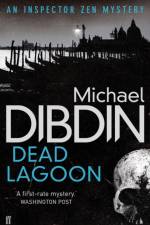
When the man in white appeared, blocking his path, Giacomo felt a brief surge of relief at the thought that he was no longer alone. Then he remembered where he was, and terror rose in his throat like vomit.Aurelio Zen returns to his native Venice to investigate the disappearance of a rich American resident but he soon learns that, amid the hazy light and shifting waters of the lagoon, nothing is what it seems. As he is drawn deeper into the ambiguous mysteries surrounding the discovery of a skeletal corpse on an ossuary island in the north lagoon, he is also forced to confront a series of disturbing revelations about his own life.If you enjoyed the Inspector Zen Mystery series you may also like The Last Sherlock Holmes Story, another crime novel by Michael Dibdin.
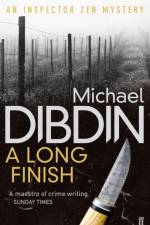
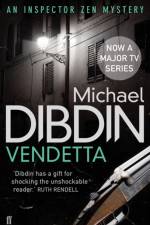
After his adventures under sun-drenched Neapolitan skies in Cosi Fan Tutti, Aurelio Zen finds himself back in Rome, sneezing in a damp wine cellar and being given another unorthodox assignment: to release the jailed scion of an important wine-growing family who is accused of a brutal murder. Zen travels north to an Italy as outwardly serene as Naples was manic. Amid the quiet fields, autumnal skies and crumbling farmhouses of Piedmont, Zen must try to penetrate a traditional culture in which family and soil are inextricably linked. Here secrets can last for generations, and have a finish as long and lingering as that of a good Barbaresco. Zen must also face up to mysteries from his own past, as well as grapple with the greed, envy, hatred and love that are the human components of any landscape.
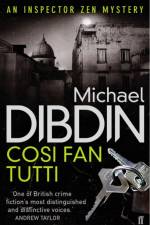
At this point there is a welcome touch of comedy as the man's feet appear above the tail-gate of the garbage truck. Clad in highly polished brogues and red-and-black chequered socks below which a length of bare white leg is just visible, they proceed to execute a furious little dance, jerking this way and that like puppets at a Punch and Judy show - possibly a knowing allusion to the commedia dell'arte, which of course originated in this city.Inspector Zen has been posted to Naples in disgrace, where he is asked to oversee the clean-up of the city's corrupt authorities. Like the rest of Italy, Naples is concerned about its image and is trying to reform itself. Zen, however, finds that someone else is already at work. Corrupt politicians, shady businessmen and eminent members of the Italian Mafia are disappearing off the streets at an alarming rate and Zen must find out who is behind the murders.
There was something about the Burolo case which was different any other he had ever been involved in. He had known cases which obsessed him professionally, taking over his life until he was unable to sleep properly or to think about anything else, but this was even more disturbing.Inspector Zen has a problem: an impossible murder, recorded on the closed-circuit video of Oscar Burolo's top-security Sardinian fortress. As he gets to work, he is once again plunged into a menacing and violent world where his own life is soon at risk.If you enjoyed the Inspector Zen Mystery series you may also like The Last Sherlock Holmes Story, another crime novel by Michael Dibdin.
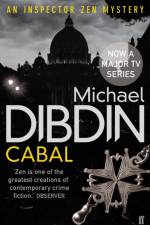
'As you may have gathered, there was a suicide in St Peter's this afternoon. Someone threw himself off the gallery inside the dome. Such incidents are quite common, and do not normally require the attention of this department. In the present instance, however, the victim was not some jilted maidservant or ruined shopkeeper, but Prince Ludovico Ruspanti.'When, one dark night in November, Prince Ludovico Ruspanti fell a hundred and fifty feet to his death in the chapel at St Peter's, Rome, there were a number of questions to be answered. Did he fall or was he pushed? Inspector Aurelio Zen finds that getting the answers isn't easy, as witness after witness is mysteriously silenced - by violent death. To crack the secrets of the Vatican, Zen must penetrate the most secret place of all: the Cabal.If you enjoyed the Inspector Zen Mystery series you may also like The Last Sherlock Holmes Story, another crime novel by Michael Dibdin.
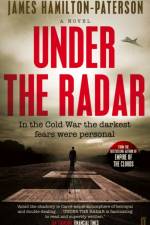
1961. A squadron of Vulcan aircraft, Britain's most lethal nuclear bomber, flies towards the east coast of the United States. Highly manoeuvrable, the great delta-winged machines are also equipped with state of the art electronic warfare devices that jam American radar systems. Evading the fighters scrambled to intercept them, the British aircraft target Washington and New York, reducing them to smoking ruins. They would have done, at least, if this were not an exercise. This extraordinary raid (which actually took place) opens James Hamilton-Paterson's remarkable novel about the lives of British pilots at the height of the Cold War, when aircrew had to be on call 24 hours a day to fly their nuclear-armed V-bombers to the Western USSR and devastate the lives of millions. This is the story of Squadron-Leader Amos McKenna, a Vulcan pilot who is suffering from desires and frustrations that are tearing his marriage apart and making him question his ultimate loyalties. Relations with the American cousins are tense; the future of the RAF bomber fleet is in doubt. And there is a spy at RAF Wearsby, who is selling secrets to his Russian handlers in seedy East Anglian cafes.A macabre Christmas banquet at which aircrew under intolerable pressures go crazy, with tragic consequences, and a dramatic and disastrous encounter with the Americans in the Libyan desert, are among the high points of a novel that surely conveys the beauty and danger of flying better than any other in recent English literature.
Winner of both the Queen's Gold Medal and the Whitbread Prize for Poetry, James Fenton has given readers some of the most memorable lyric verse of the past decades, from the formal skill that marked his debut, Terminal Moraine, to the dramatic and political monologues of The Memory of War and Children in Exile, through to the unforgettable love poems of Out of Danger and his most recent work: Poems is an essential selection by, as Stephen Spender put it, 'a brilliant poet of technical virtuosity'.Don't talk to me of love. I've had an earfulAnd I get tearful when I've downed a drink or two.I'm one of your talking wounded.I'm a hostage. I'm maroonded.But I'm in Paris with you.From 'In Paris With You' by James Fenton
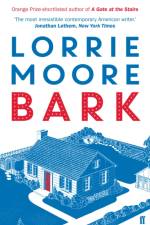
In these eight masterful stories, Lorrie Moore, explores the passage of time, and summons up its inevitable sorrows and comic pitfalls.In 'Debarking', a newly divorced man tries to keep his wits about him as the US prepares to invade Iraq. In 'Foes', a political argument goes grotesquely awry as the events of 9/11 unexpectedly manifest at a fundraising dinner in Georgetown. In 'The Juniper Tree', a teacher, visited by the ghost of her recently deceased friend, is forced to sing 'The Star Spangled Banner' in a kind of nightmare reunion. And in 'Wings', we watch the unraveling of two once-hopeful musicians, who neither held fast to their dreams, nor struck out along other paths.Gimlet-eyed social observation, the public and private absurdities of American life, dramatic irony, and enduring half-cracked love wend their way through each of these narratives, in Moore's characteristic style that is always tender, never sentimental and often heartbreakingly funny.
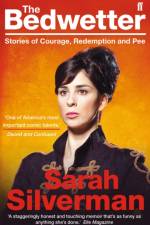
Sarah Silverman's father taught her to curse-at the age of three. She was a chronic bedwetter-until she was old enough to drive. She lost her virginity at age 19-but didn't really know it. These are just a few of the outrageous true tales that Silverman shares in her alternately hilarious and moving collection of autobiographical essays. With her signature taboo-breaking humour, Silverman writes on everything from her epic struggle with hairy arms (there wasn't enough wax in the world) to the death of her infant brother (It was Nana's fault) and always leaves the reader with a smile. Mixed in among the essays are scores of embarrassing photos, mortifying childhood diary entries, and truly humiliating e-mails to and from her comedian friends.
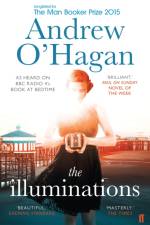
How much do we keep from the people we love? Why is the truth so often buried in secrets? Can we learn from the past or must we forget it? Standing one evening at the window of her house by the sea, Anne Quirk sees a rabbit disappearing in the snow. Nobody remembers her now, but this elderly woman was in her youth a pioneer of British documentary photography. Her beloved grandson, Luke, now a captain with the Royal Western Fusiliers, is on a tour of duty in Afghanistan, part of a convoy taking equipment to the electricity plant at Kajaki. Only when Luke returns home to Scotland does Anne's secret story begin to emerge, along with his, and they set out for an old guest house in Blackpool where she once kept a room.
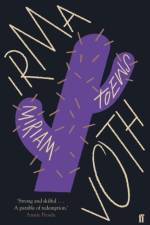
The stifling, reclusive life of nineteen-year-old Irma Voth, recently married and more recently deserted, is turned on its head when a film crew moves in to make a movie about the strict religous community in which she and her family live. She is drawn to the creative passion and warmth of their world but her domineering father is determined to keep her from it at all costs. The confrontation between them sets her on an irrevocable path towards something that feels like freedom as she and her young sister, Aggie, wise beyond her teenage years, flee to the city, upheld only by their love for each other and their smart wit, even as they begin to understand the tragedy that has their family in its grip. Irma Voth delves into the complicated factors that set us on the road to self-discovery and how we can sometimes find the strength to endure the really hard things that happen. It also asks that most difficult of questions: How do we forgive? And most importantly, how do we forgive ourselves?The new novel from Miriam Toews returns to the subject of a Mennonite community, so powerfully rendered in her award-winning, number-one bestseller A Complicated Kindness.
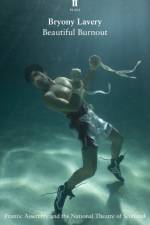
Keep your guard up. Protect yourself at all times. Protect your boy. Keep him safe. Keep him close. That is all that matters.Cameron is going places. He's going to see lights. He's going to make the world take notice and kneel at his feet. He's fighting for his club, his mum, his place in the world. And this boy is a natural. He has an affinity with the violence, the balance, the ritual, the grace and the power. He is indestructible.Beautiful Burnout is about the soul-sapping three-minutes when men become gods and gods, mere men. It's about the second when the guard drops, that moment when the eyes blink and miss the incoming hammer blow.Beautiful Burnout premiered at the Pleasance Forth as part of the Edinburgh International Festival in August 2010 before touring the UK in a co-production between Frantic Assembly and the National Theatre of Scotland.
This is the first life of Napoleon, in any language, that makes full use of the new version of his Correspondence compiled by the Fondation Napoleon in Paris to replace the sanitized compilation made under the Second French Empire as a propaganda exercise by his nephew, Napoleon III. All previous lives of Napoleon have relied more on the memoirs of others than on his own uncensored words. Michael Broers' biography draws on the thoughts of Napoleon himself as his incomparable life unfolded. It reveals a man of intense emotion, but also of iron self-discipline; of acute intelligence and immeasurable energy. Tracing his life from its dangerous Corsican roots, through his rejection of his early identity, and the dangerous military encounters of his early career, it tells the story of the sheer determination, ruthlessness and careful calculation that won him the precarious mastery of Europe by 1807. After the epic battles of Austerlitz, Jena and Friedland, France was the dominant land power on the continent.Here is the first life in which Napoleon speaks in his own voice, but not always as he wanted the world to hear him.
Gustav Mahler is the most influential symphonist of the twentieth century. In this pioneering study, Norman Lebrecht reveals the man and musician through the words of his contemporaries.Using many previously unpublished documents, he constructs a profile of Mahler even more complex and compelling than that familiar from his letters and the often unreliable memoirs of his widow, Alma. Compassionate or callous, idealistic or pragmatic, Mahler aroused violently contrasting impressions and emotions in those who lived and worked with him.Accounts of the composer include the artist Alfred Roller's description of Mahler's naked body, a Nazi-era reappraisal by one of his closest relatives, Natalie Bauer-Lechner's unpublished jottings of Mahler's childhood, and Stefan Zweig's report of his final voyage. Together, they form a remarkable and deeply illuminating image of a formidable personality.'The effect is cumulative, sometimes contradictory and vivid - like a written version of a radio or film portrait.' Classical Music'Norman Lebrecht's Mahler Remembered is quite breathtakingly interesting.' Birmingham Post
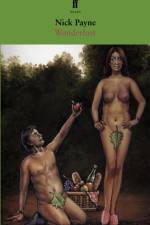
-Sex isn't just about how big and how long.-What is it about then?-All sorts of things.Joy is struggling to remain interested in sex. Her husband thinks of little else. And their teenage son is ready to burst.Nick Payne's frank and compassionate play explores sex and intimacy - and asks whether the two are inevitably and inextricably linked.
Abonner på vårt nyhetsbrev og få rabatter og inspirasjon til din neste leseopplevelse.
Ved å abonnere godtar du vår personvernerklæring.